
A hiking tour of Madeira and Lanzarote
Sophy James
May 2026
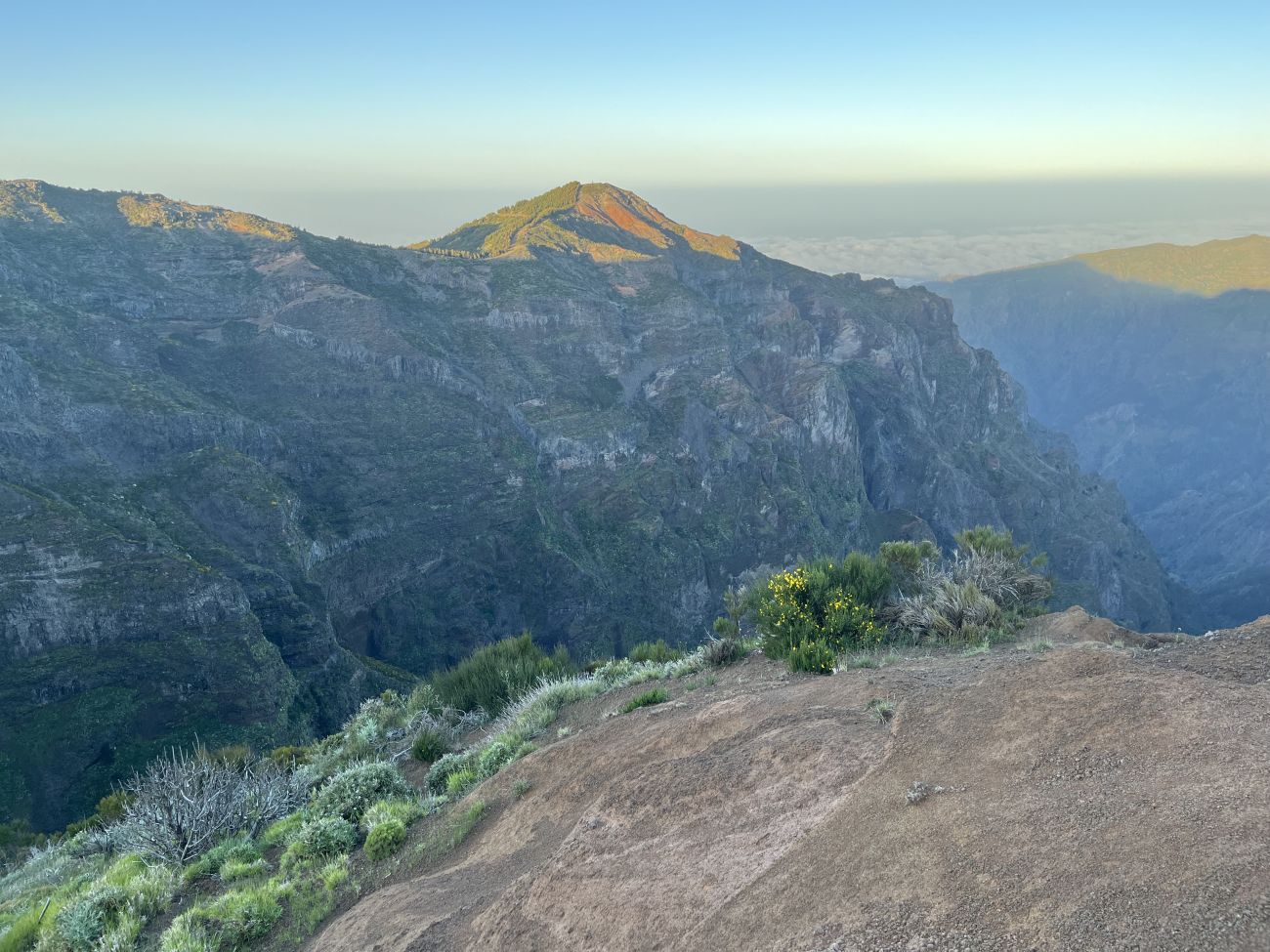
View from Pico Areeiro to Curral Martinho, Madeira
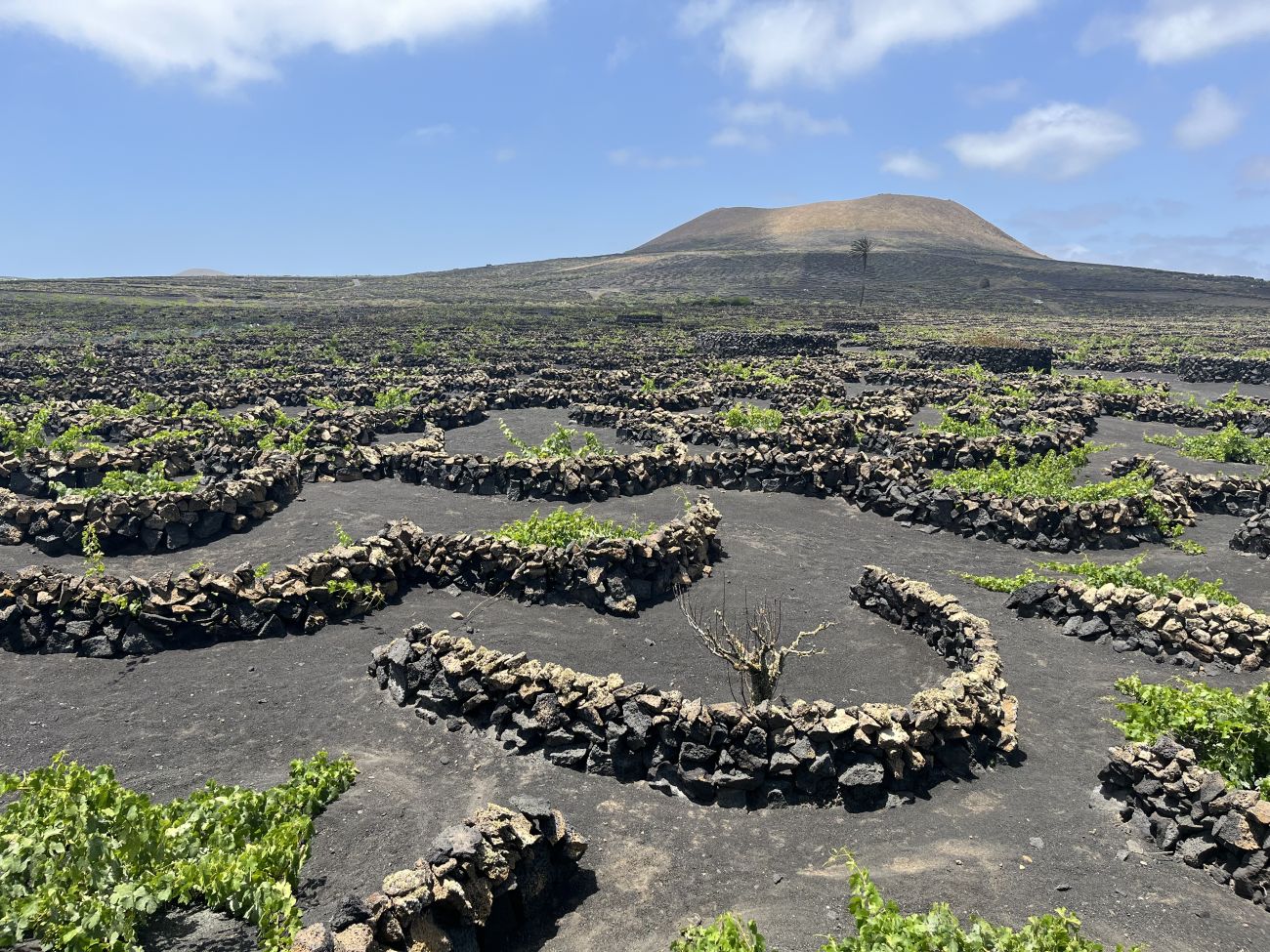
Chabocos in front of Montana Juan Bello, Lanzarote
In late May 2026 I set off for Madeira and Lanzarote, islands 250 miles apart in the Atlantic Ocean. I was drawn to Macaronesia because of the exceptional plant endemism within the volcanic landscapes and, as a Kew propagation student, I know that successful cultivation depends not only on technical skill, but also on understanding native ecology. My aim was to explore these landscapes firsthand, challenge myself to botanise in-situ, and overall to better understand the ecology of their endemic flora. I also visited various nurseries and botanic institutions to see their endemic collections and learn from them about their cultivation. I will be covering my experiences of hiking and botanising in both regions, and seed-collecting in Lanzarote. I am incredibly grateful to Mediterranean Plants and Gardens for providing me with funding, which enabled this trip to happen.
Pico do Areeiro
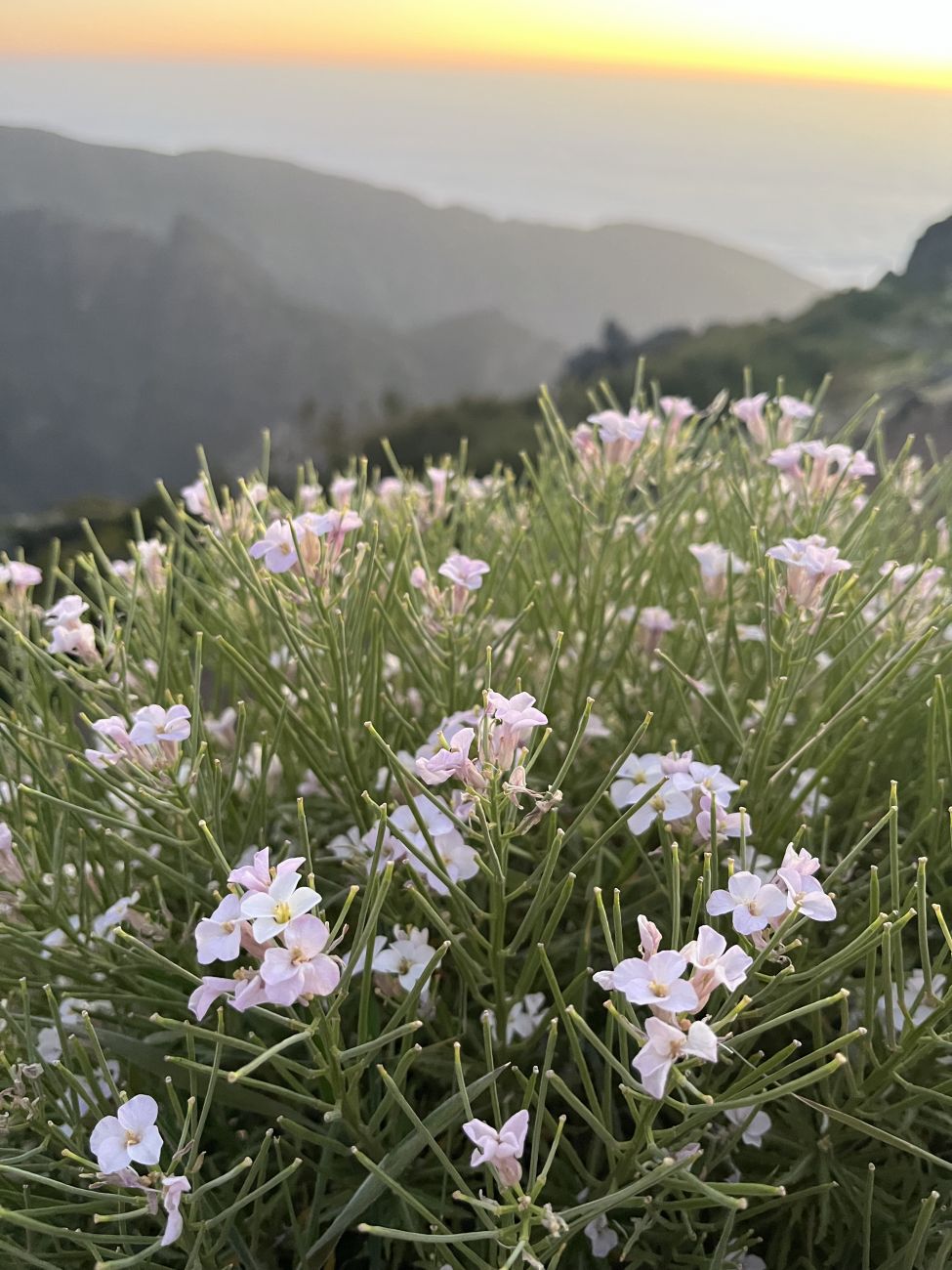
Erysimum bicolor
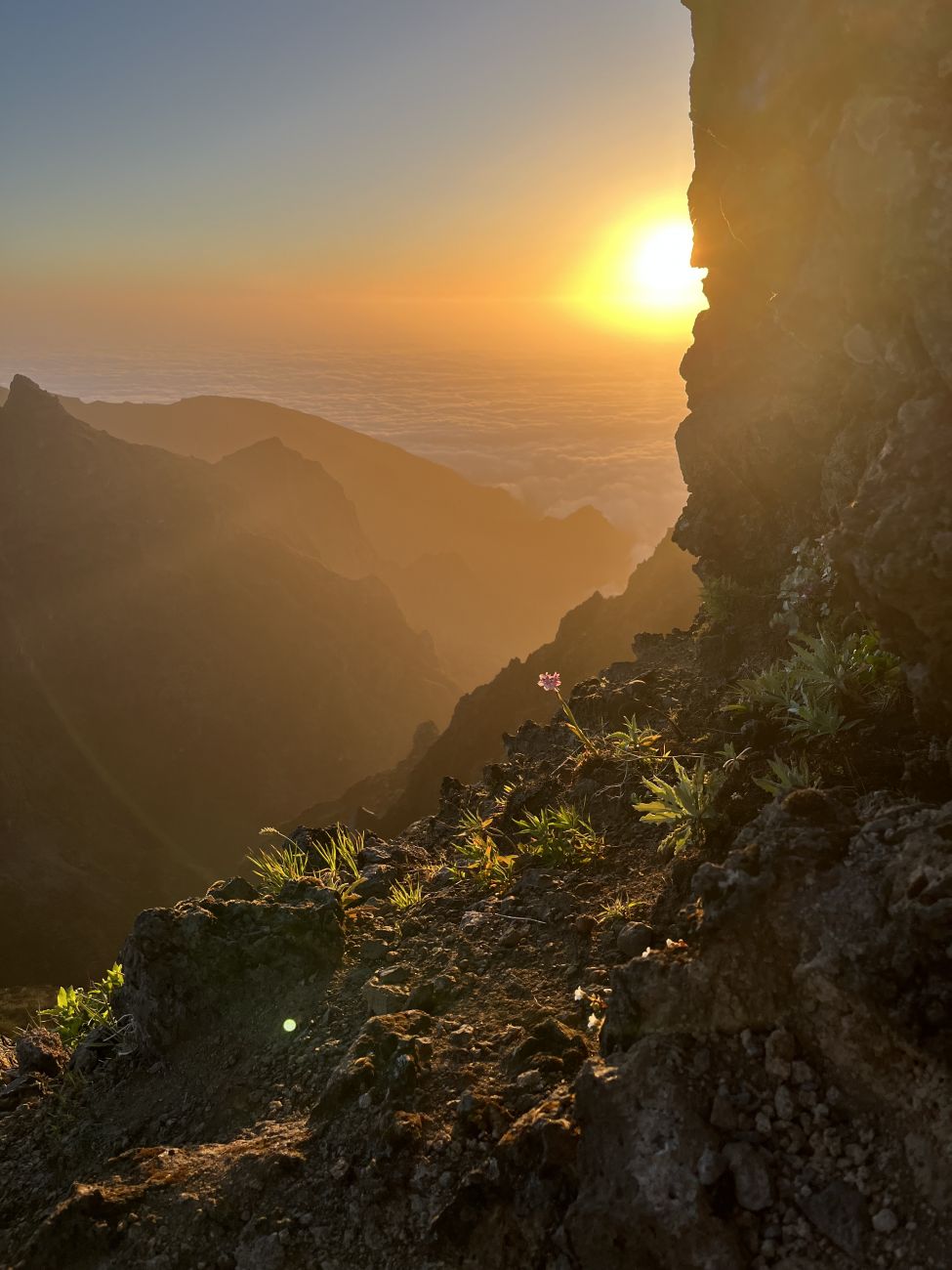
Sunrise
My trip to Madeira began with a hike around Pico do Areeiro, Madeira’s third highest peak (1,818m). The peak is reachable via a 6am “sunrise bus” – an early, but worthwhile start. Areeiro marks the beginning of the PR1 trail (to Pico Ruivo, Madeira’s tallest peak) – within minutes of joining the path I spotted several endemics, whilst eavesdropping on a tour guide: “The cracks in the rock are due to quickly changing temperatures. The basis for all of the roots of the plants are these cracks”.
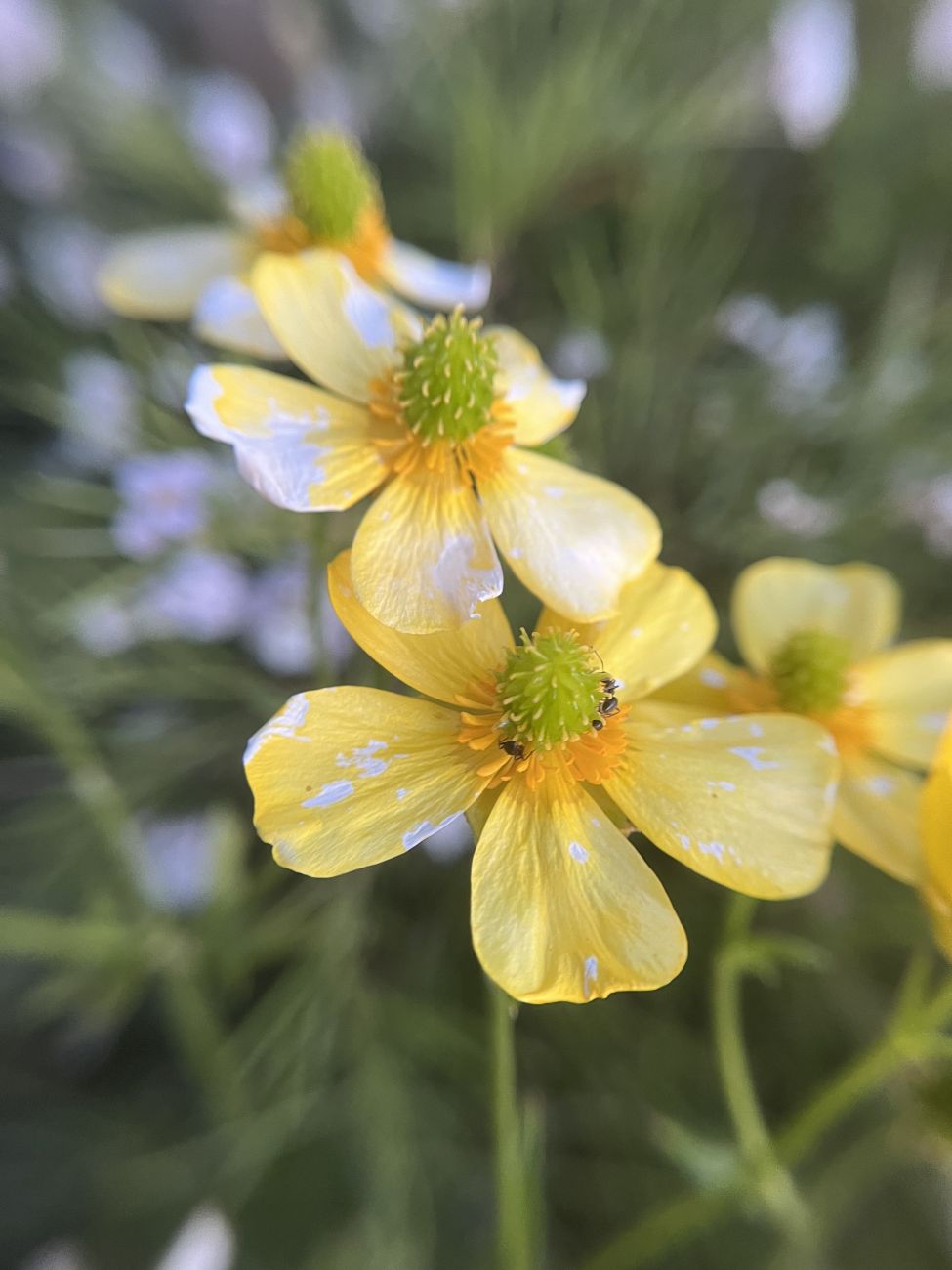
Ranunculus cortusifolius, a Macaronesian native
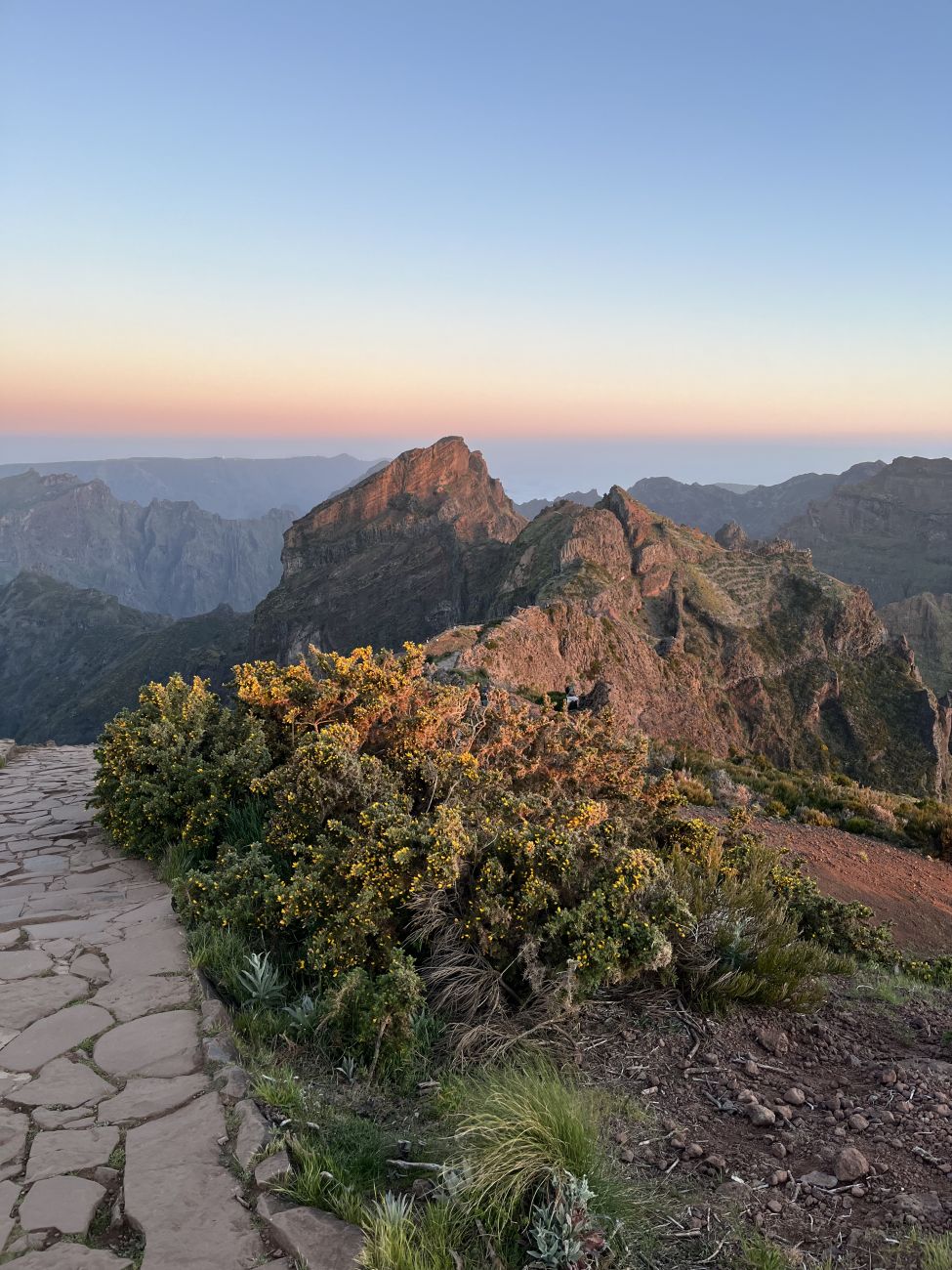
The path ahead
I later learned that what the guide was referring to is hotspot volcanism – millions of years ago columns of magma rose from within the Earth to melt the crust above, creating spots of volcanic islands such as Madeira and the Canaries. The alternating layers of basalt and volcanic ash are stark here, jumping between brick red, khaki brown and slate grey. I noticed that plants had made their homes amongst the ridges and cracks between these striations – likely to access the little bit of moisture that these peaks collect and shelter them from the harsh winds. Despite having worked with Kew’s alpine plants, something about seeing these plants in their natural habitat rather than a created display felt meaningful – this is where they belong.
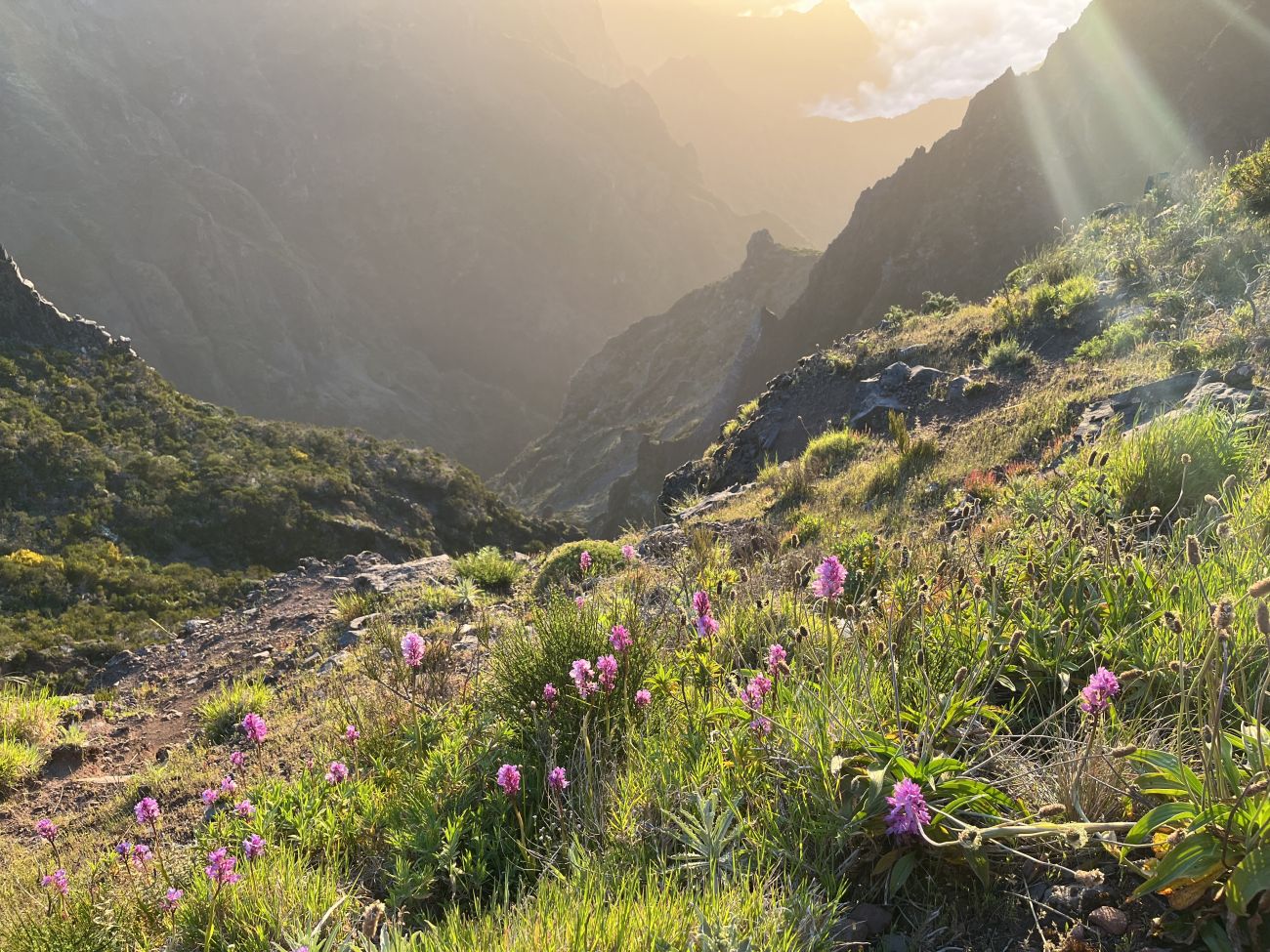
Orchis mascula subsp. scopulorum meadow
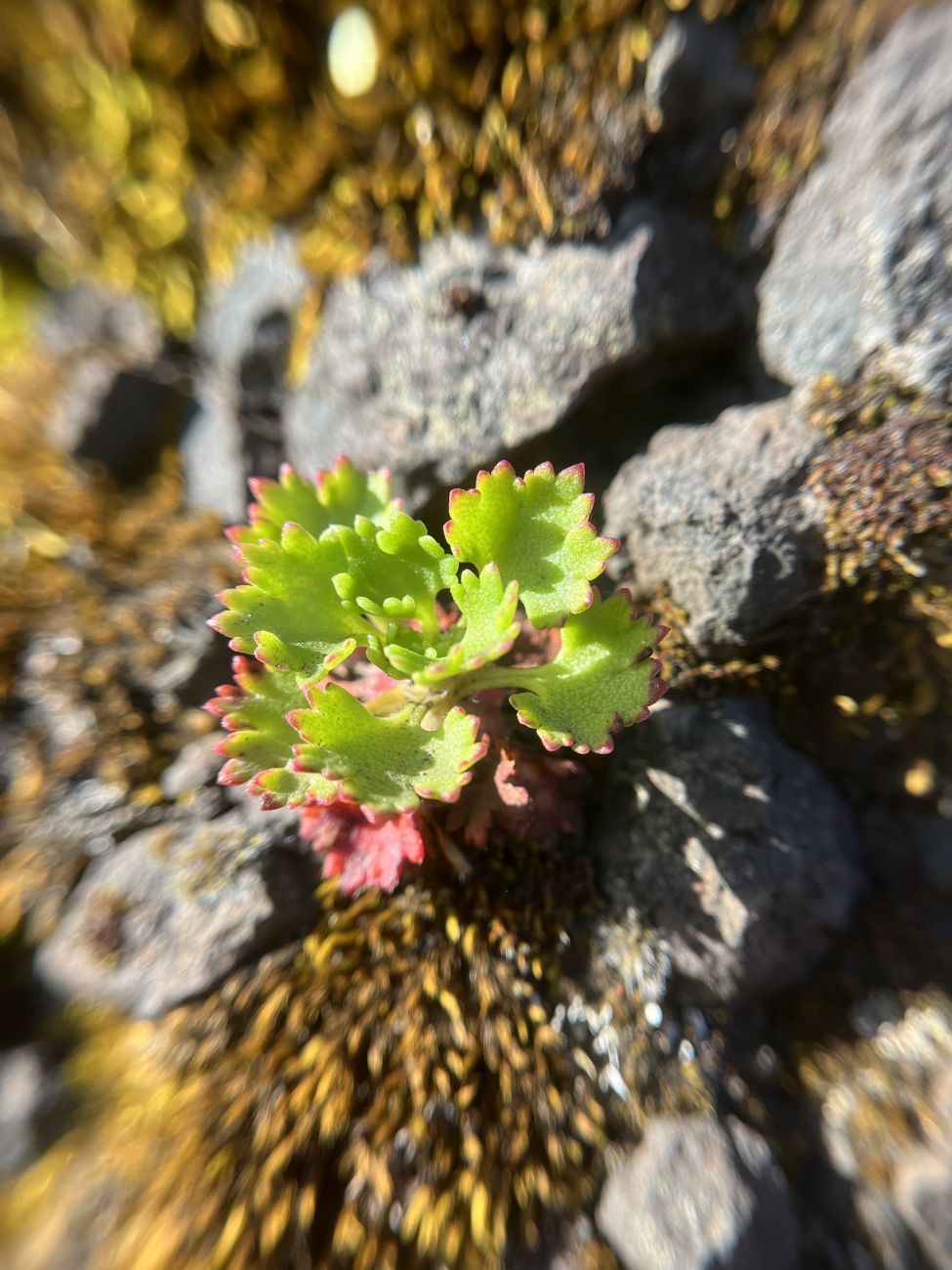
Saxifraga maderensis var. pickeringii up close
Clumps of Saxifraga maderensis var. pickeringii (Syn. Saxifraga pickeringii) revealed themselves beside the stone steps – a plant that only a few months ago I was propagating for the Alpine department. The flowers are standard saxifrage fare – the leaves are the true giveaway that this plant adapted to Madeira’s warm, windy peaks, feeling fleshy and thick with slight red colouration. In Kew, Saxifraga grows into dense balls in the nursery, unrestricted by rock. Here, they cling horizontally onto rockfaces or grow in grassy shelves alongside other Madeira natives such as Orchis mascula subsp. scopulorum. Seeing it in its native habitat forced me to remove my “propagation student goggles” and think instead about the importance of ecology and habitat in plant cultivation: could ex-situ specimens be grown in a way that is reminiscent of their natural environment?
During the hike I recorded numerous other endemic and native species, including Aeonium glandulosum, Aichryson villosum, Armeria maderensis and Ranunculus cortusifolius. Despite belonging to different families, many shared similar strategies for surviving exposed volcanic slopes, including fleshy leaves, red colouration, compact growth, and thriving within rock fissures. It was an enjoyable challenge to observe and record the similarities between these families and consider how they were adapted to the sun exposure, moisture levels and high winds.
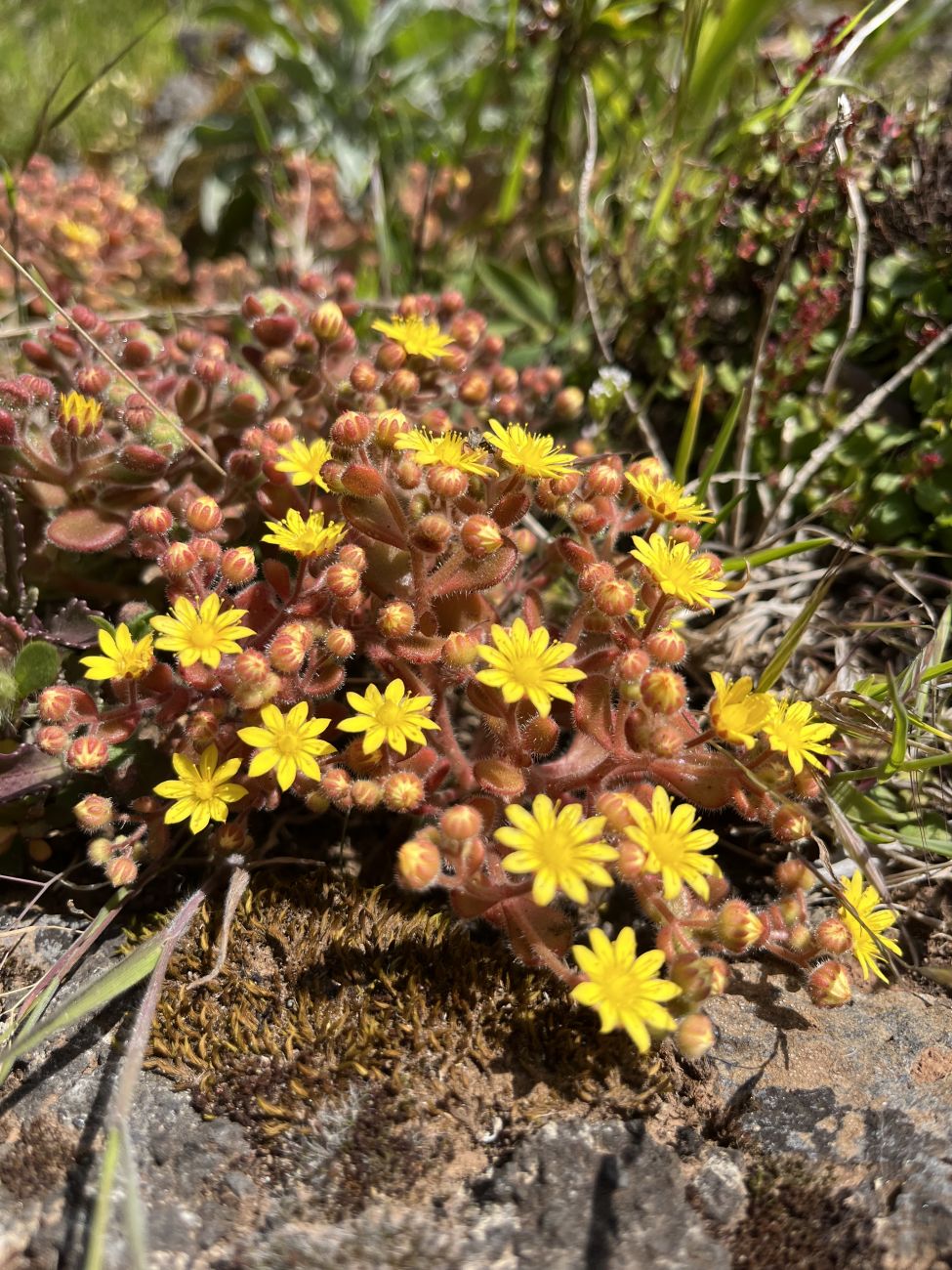
Aichryson villosum
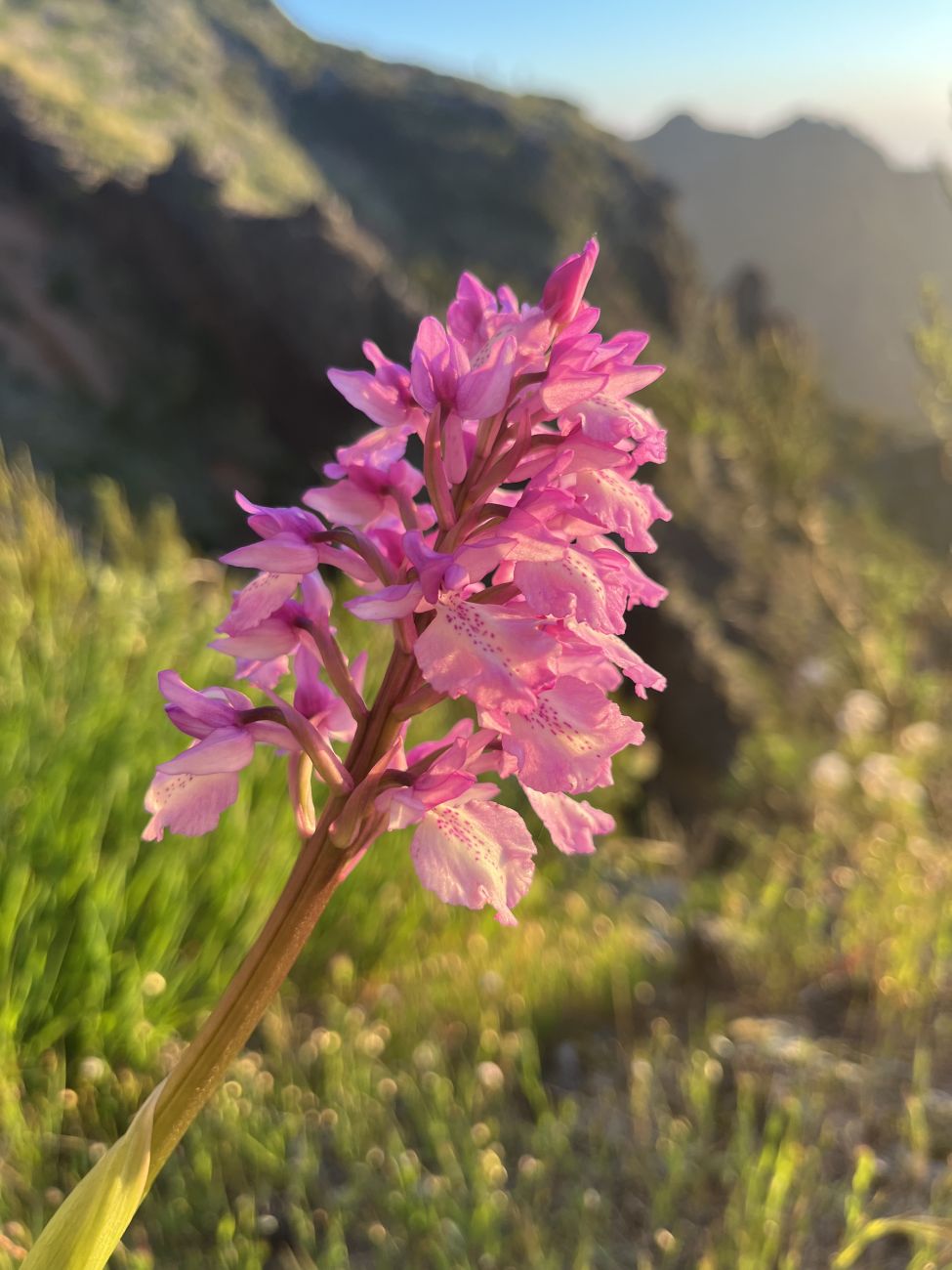
Orchis mascula subsp. scopulorum
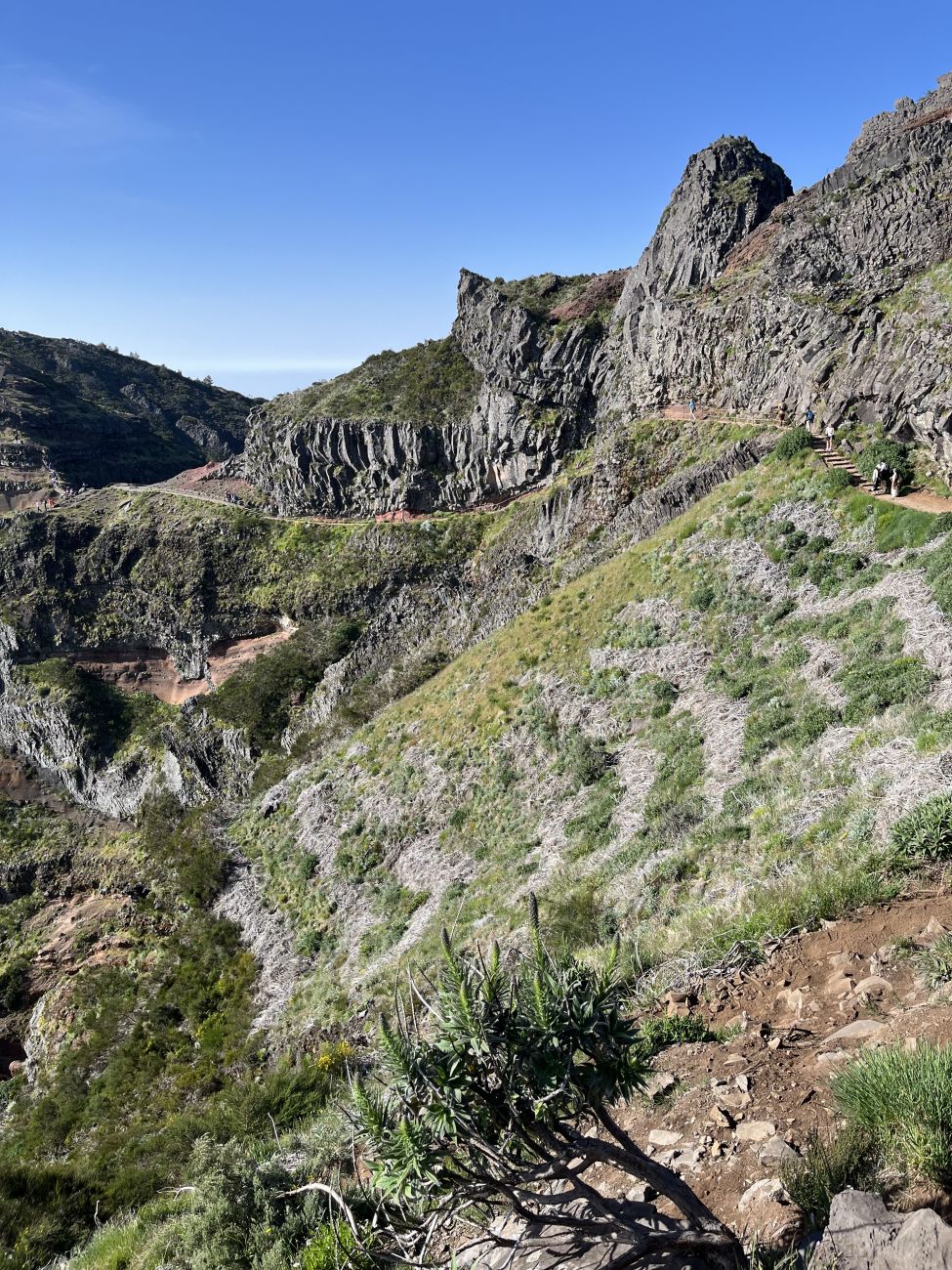
I then hiked from Areeiro towards Curral Martinho, via the valley that sits between them. The plants here, despite being only 30m lower in altitude, were distinctly woodier, the path framed by huge specimens of Cytisus scoparius and C. multiflorus. Despite the heady scent and covering of bees and hoverflies, these species are introduced and invasive – I could see where Cytisus had been chopped back in neat rows. Upon completion of my hike, I contacted the LIFE Pterodromas4future project, which I saw signage for throughout my hike, to see what impact these plants were having.
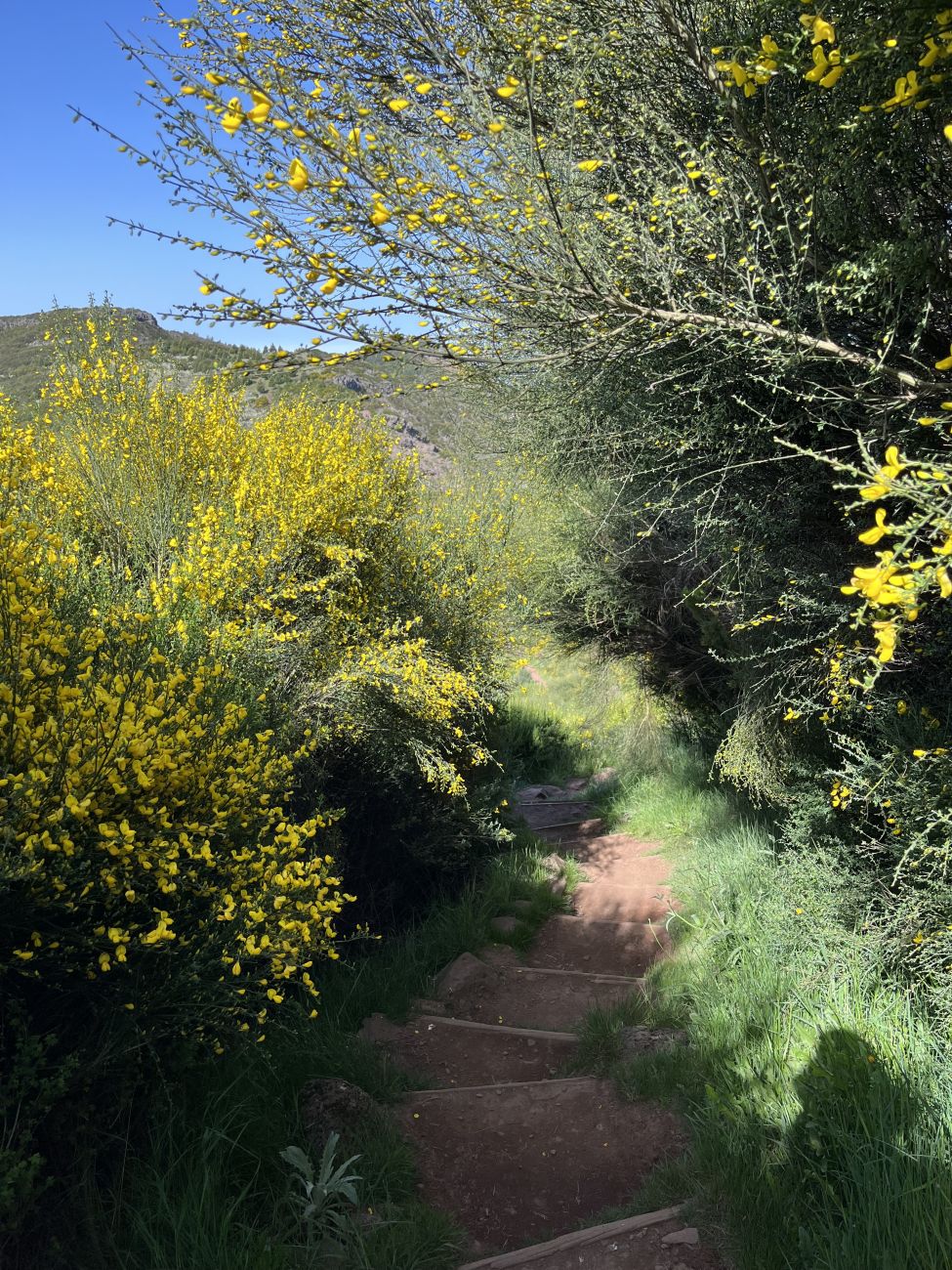
Cytisus corridor
Cytisus management
“What you had the opportunity to observe was an area currently undergoing restoration through the control of invasive plants […] a conservation project focusing on Madeira’s petrel species”. Petrels, an order of seabird, have two native Madeiran species: Pterodroma madeira and P. deserta. The former uses mountain cliffs, including Pico Ruivo, for nesting, but as LIFE Pterodramas4future explained, Cytisus obstructs nesting habitats and increases wildfire risk. The project removes invasive vegetation and relies on the native soil seed bank to regenerate the flora naturally. Madeira experienced wildfires as recently as August 2024, with 14 per cent of forested areas being affected, the worst in 14 years. Thus, invasives are routinely cut back and arranged along contour lines to decompose.
Rather than viewing propagation as an isolated, technical process, I saw firsthand how the geology, exposure, moisture and ecological relationships impact how endemics grow, but also what challenges are posed by invasive plants and how local projects are involved.
Lanzarote
In Lanzarote, I was kindly hosted by Matias Gonzalez Hernandez, head of the NGO Arrecife Natura. Arrecife Natura is an initiative to conserve Lanzarote plants whilst also engaging local communities. During my stay Matias invited me to collect endemic seeds; a major part of the NGO being Chaboco Natura, a nature reserve for ex-situ endemics.
Barranco Elvira Sánchez / Charco del Palo
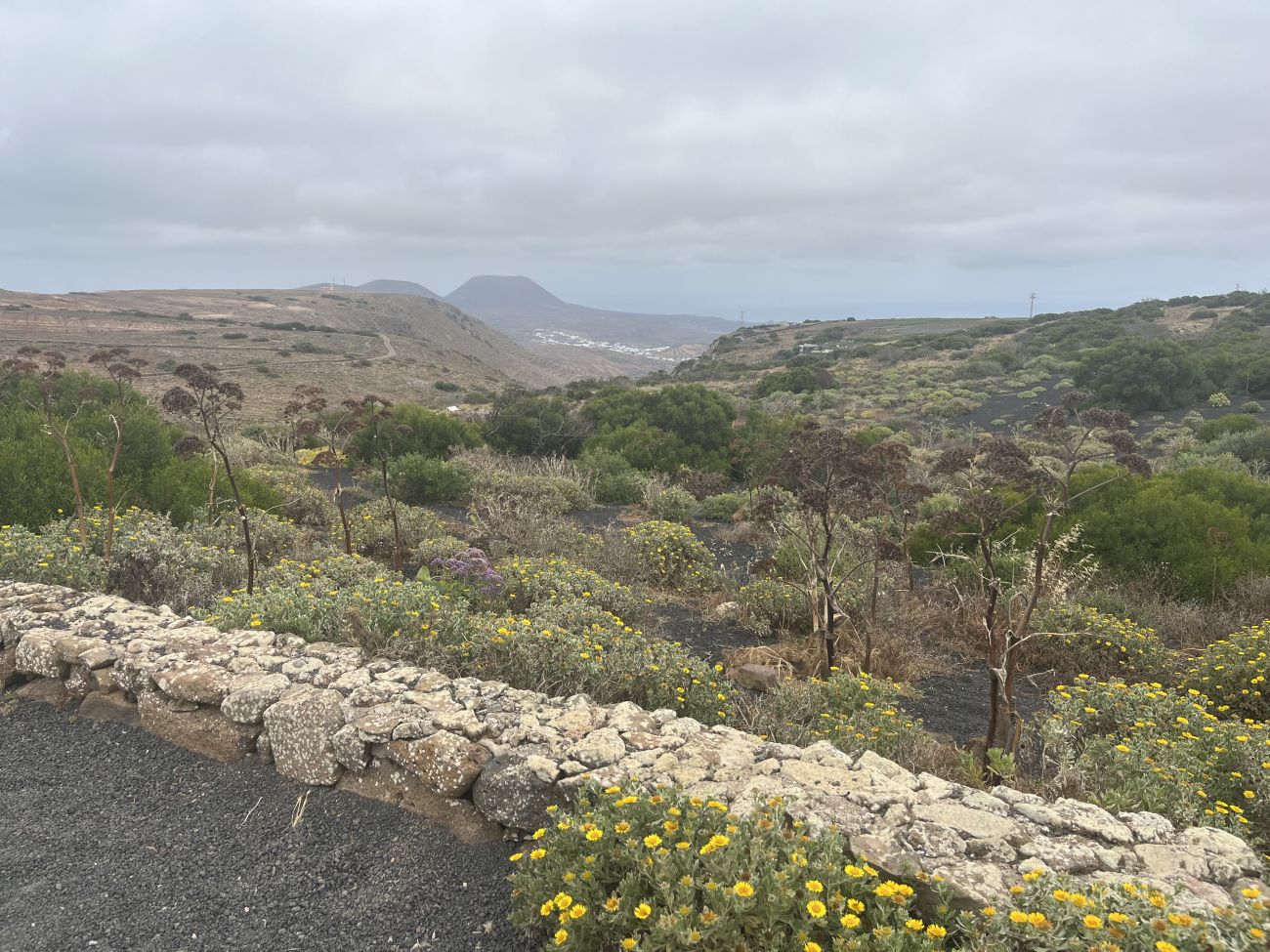
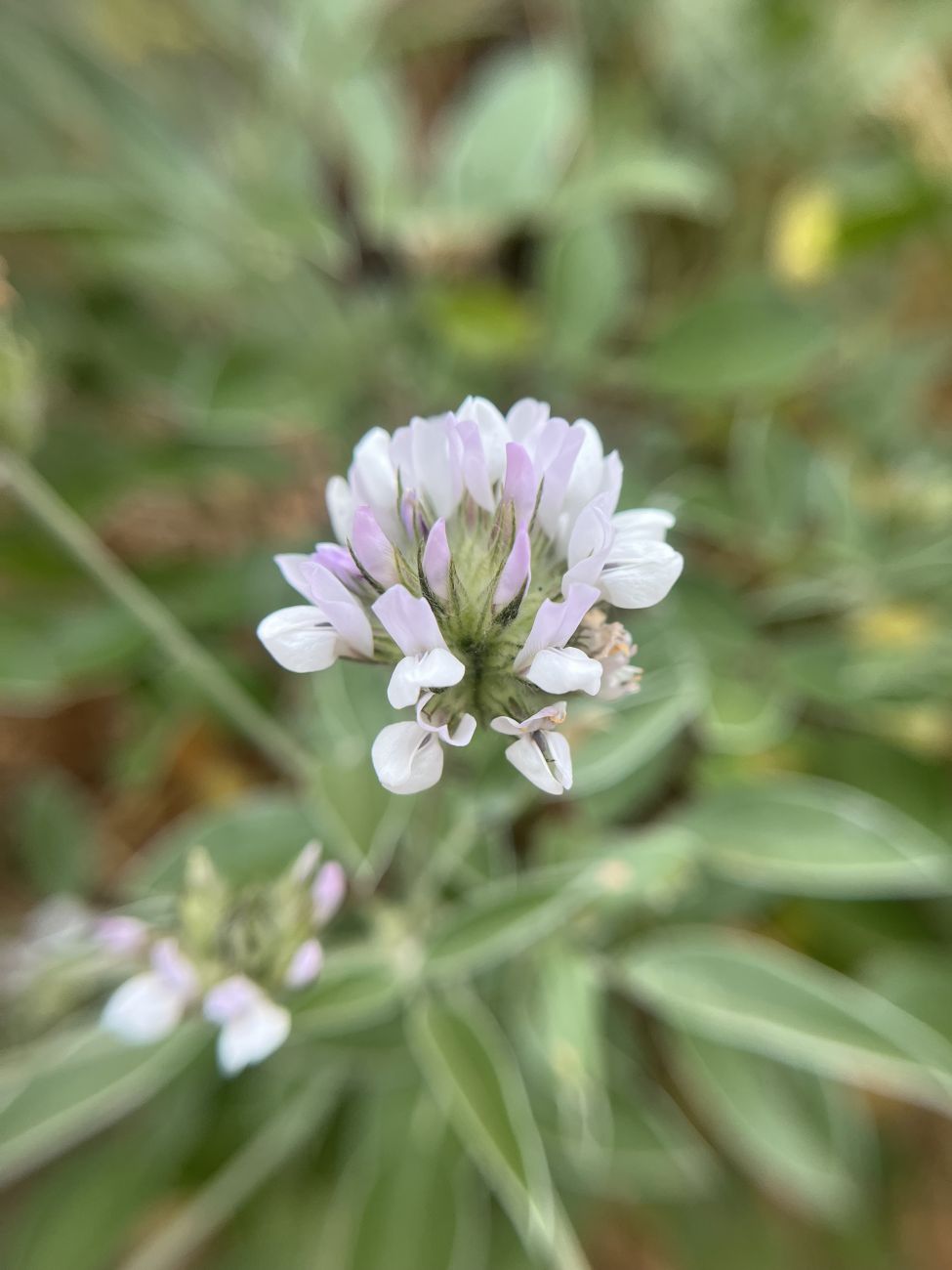
En route to the first collecting site, Matias pointed out endemics along the roadside, explaining that farmers are motivated to remove them, not because they complicate crop production but because of government initiatives. “There is this idea that the black ash fields are more beautiful than native brown plants,” he tells me, pointing out empty fields. We then stopped at a roadside viewpoint where numerous endemics grow, such as Helianthemum canariense, and Lavandula pinnata. L. pinnata, interestingly, is the only plant shared by mainland Madeira and Lanzarote. A common theory is that the plant is originally from one but transported by travellers to the other. I saw L. pinnata on multiple occasions in Madeira – my personal opinion is that it looks at home in Lanzarote’s ashy landscape!
Roadside endemics
Bituminaria bituminosa, another seed collection candidate
We then made our way to Charco del Palo, a nudist holiday village. We were hunting for Cistanche phelypaea, which grows alongside the dirt road at one end of the village. Very quickly Matias spots a flowering specimen behind a signpost, sheltered from the harsh winds. Driving a little further, we started to see hundreds of specimens along the road, absolutely bursting with seed. Parasitic plants are not necessarily my wheelhouse – but seed collecting most certainly is.
Montana Chimbesque
Aeonium lancerottense flowers
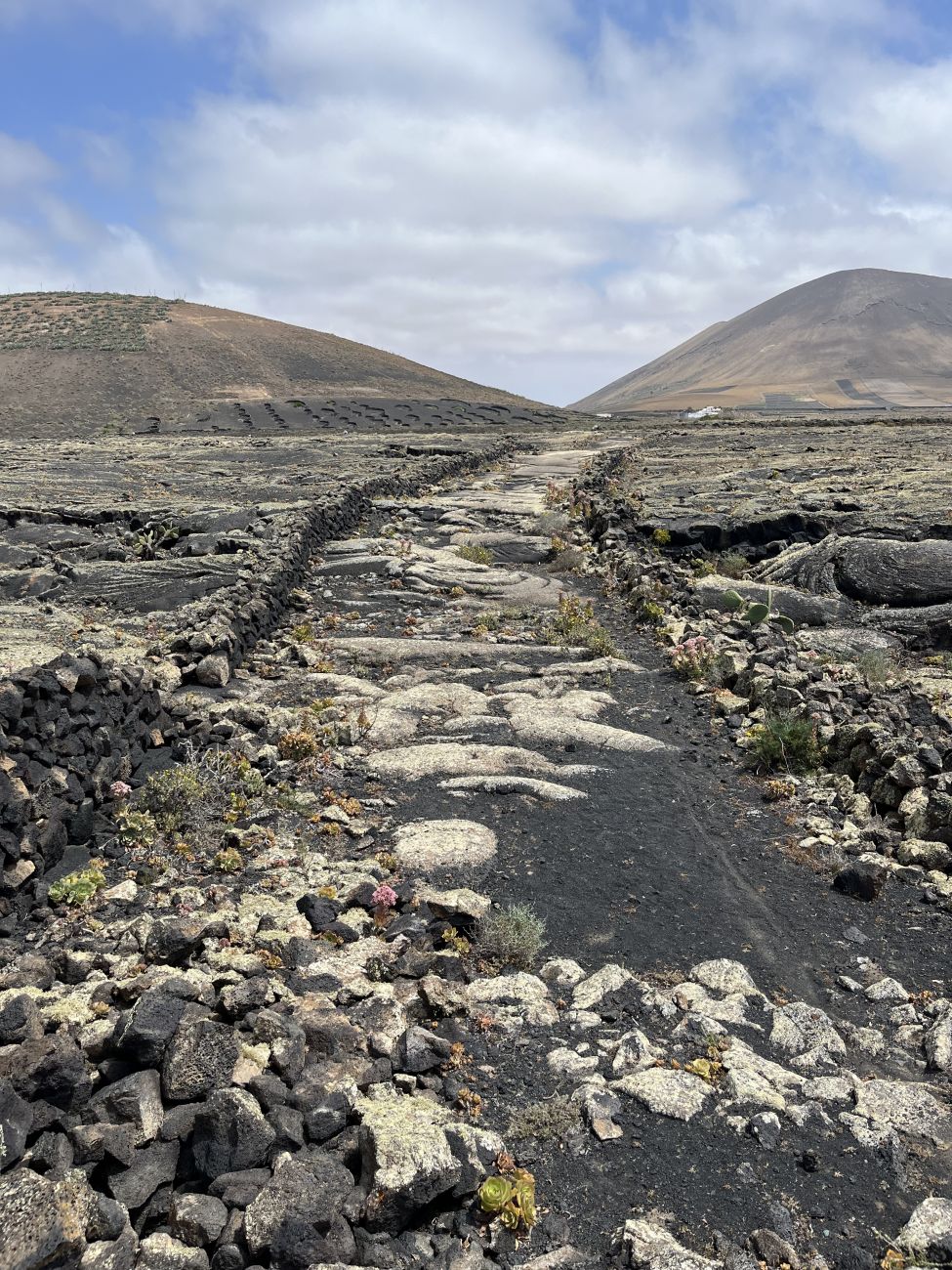
The path to Montana Chimbesque
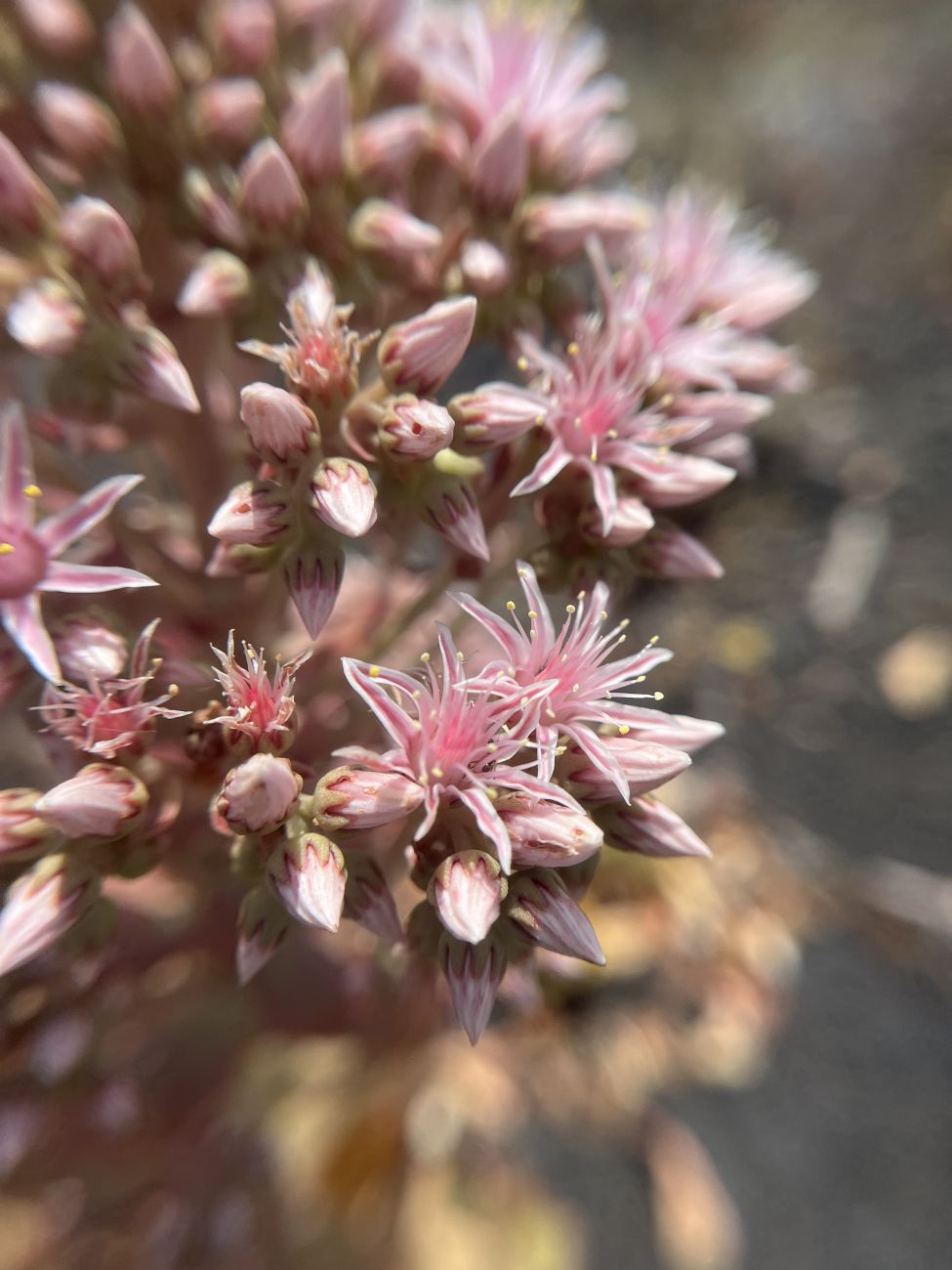
During some free time before seed processing, I hiked from my base, El Islote, to a nearby volcano, Montana Chimbesque, with the same goal as Areeiro – botanising. The walk itself was flat, but weaving through heavily cracked lava fields and chabocos – deep pits historically used for farming. The predominant feature of this landscape is Aeonium lancerottense. This time of year (early June) is perfect – their red-edged leaves and pink flower spikes stand out against the dark ash. Walking through this landscape made me appreciate how easily horticultural displays can detach plants from the environments that shaped them. I had never considered how a pot-grown Aeonium actually thrives in the cracks of lava shelves.
This path leads to Montana Chimbesque, a 354m peak. Hiking towards it, trees are covering the western side. Inching closer however, I realise that these are actually flower spikes of Agave, reaching at least 4m in height. This Central American genus was introduced to the Canaries in the 16th century, when trade between these regions increased. Matias mentioned that Agave, as well as Opuntia, thrived in this windy volcanic habitat, and were utilised by farmers. They can be turned into strong fibres but also the plants themselves function as impenetrable barriers around cattle fields. Looking towards Chimbesque, I wonder if this population is a remnant of a previous, abandoned Agave farm – the base of the mountain is covered in chabocos. Nowadays, it is considered invasive.
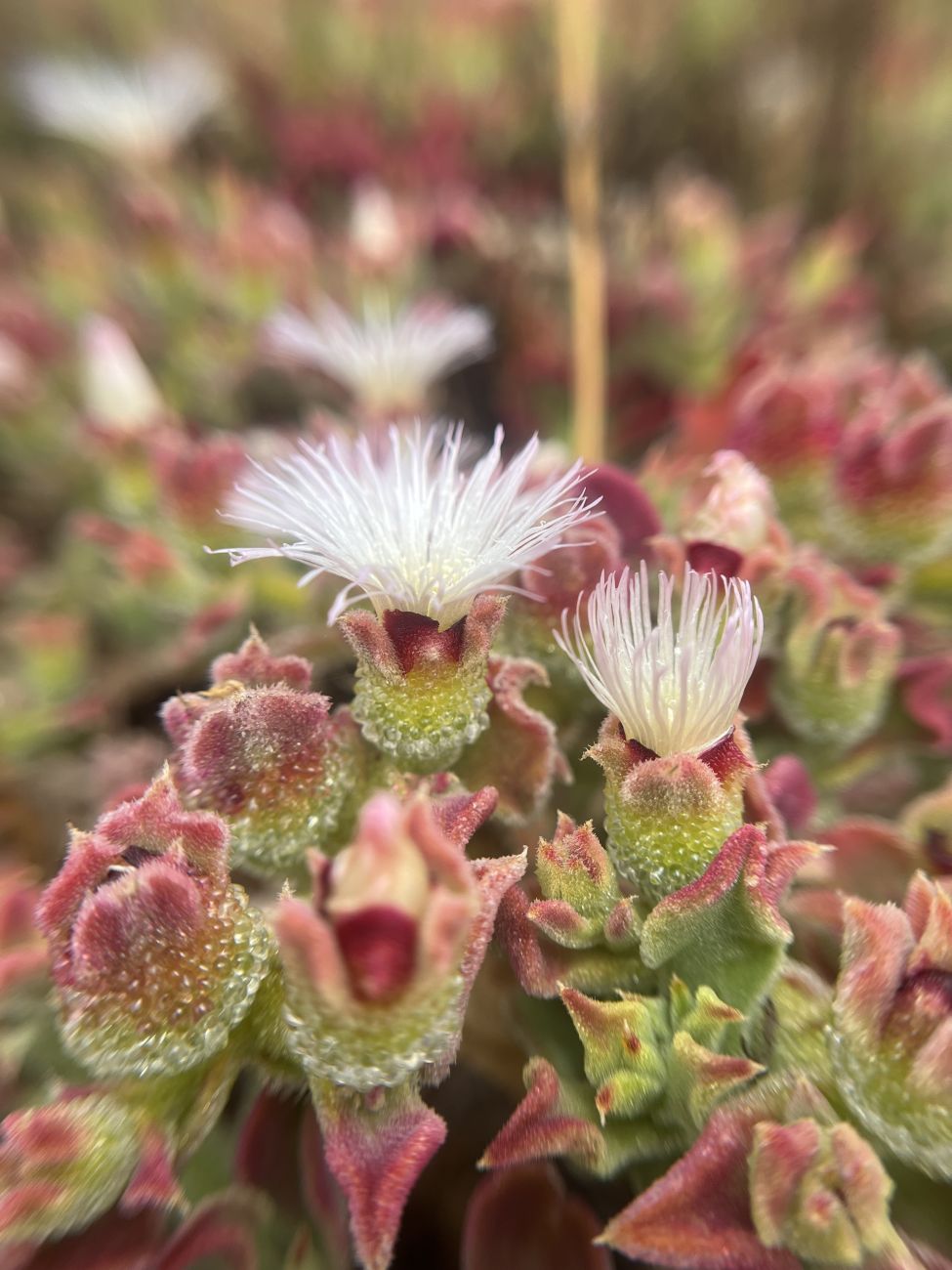
Bladder cells on Mesembryanthemum crystallinum
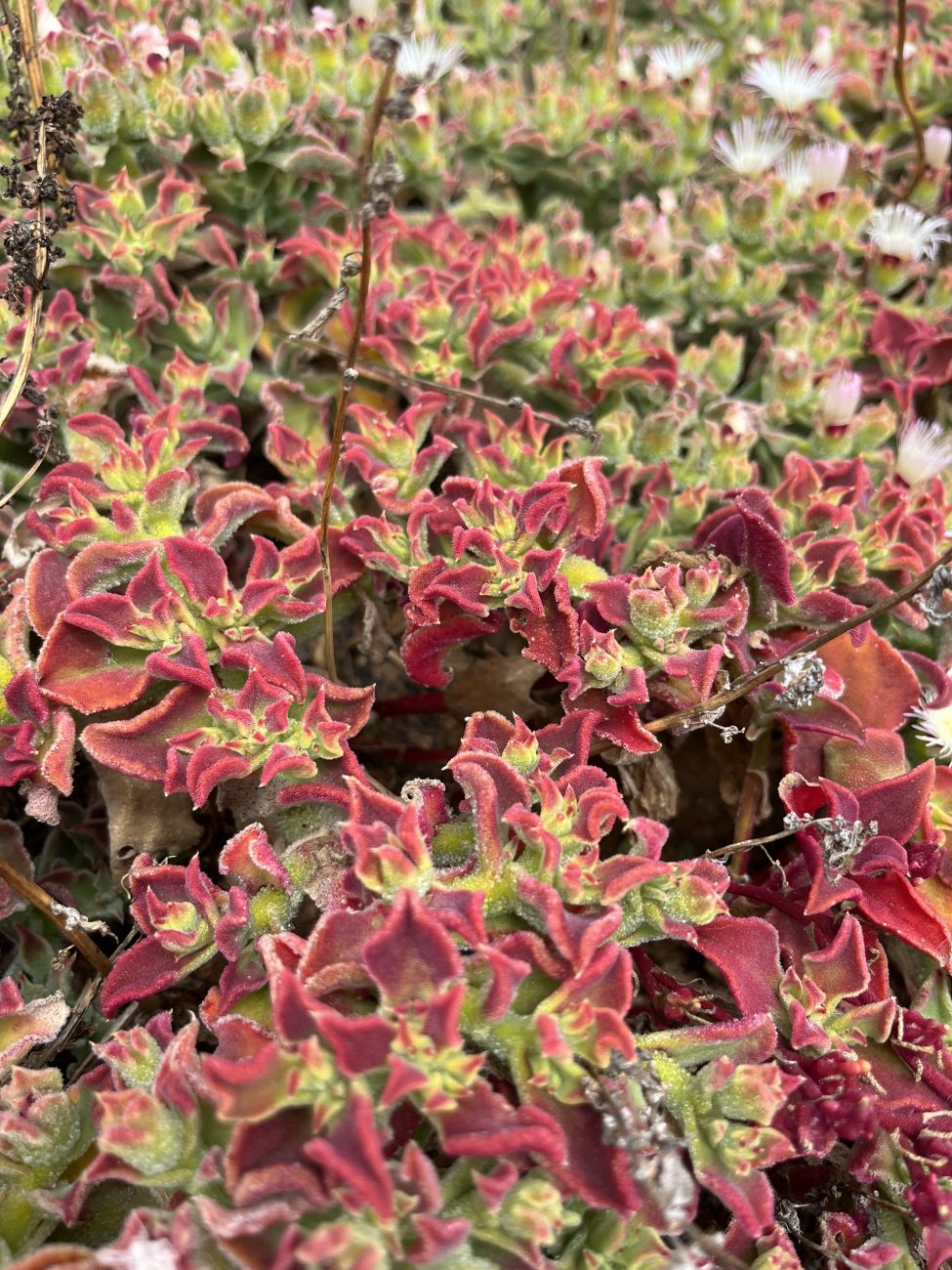
M. crystallinum foliage
An endemic standout was Mesembryanthemum crystallinum. Between clumps of Aeonium and Bassia, M. crystallinum carpets the ground with thick, curled leaves of lime green and ruby red. The species name is easily deciphered; looking closely, they resemble glass, being covered in small, crystal-like beads. I later learned these are bladder cells, an enlargement of epidermal cells, adapted to reserving water in dry conditions. Returning to Chaboco Natura, Matias showed me how as a child he would use this plant to wash his hands after picking berries – the bladder cells burst when you crush the leaves, providing enough water to clean your hands of sticky berry residue. The afternoon was of course then spent picking mulberries before cleaning ourselves up to process the collected seeds.
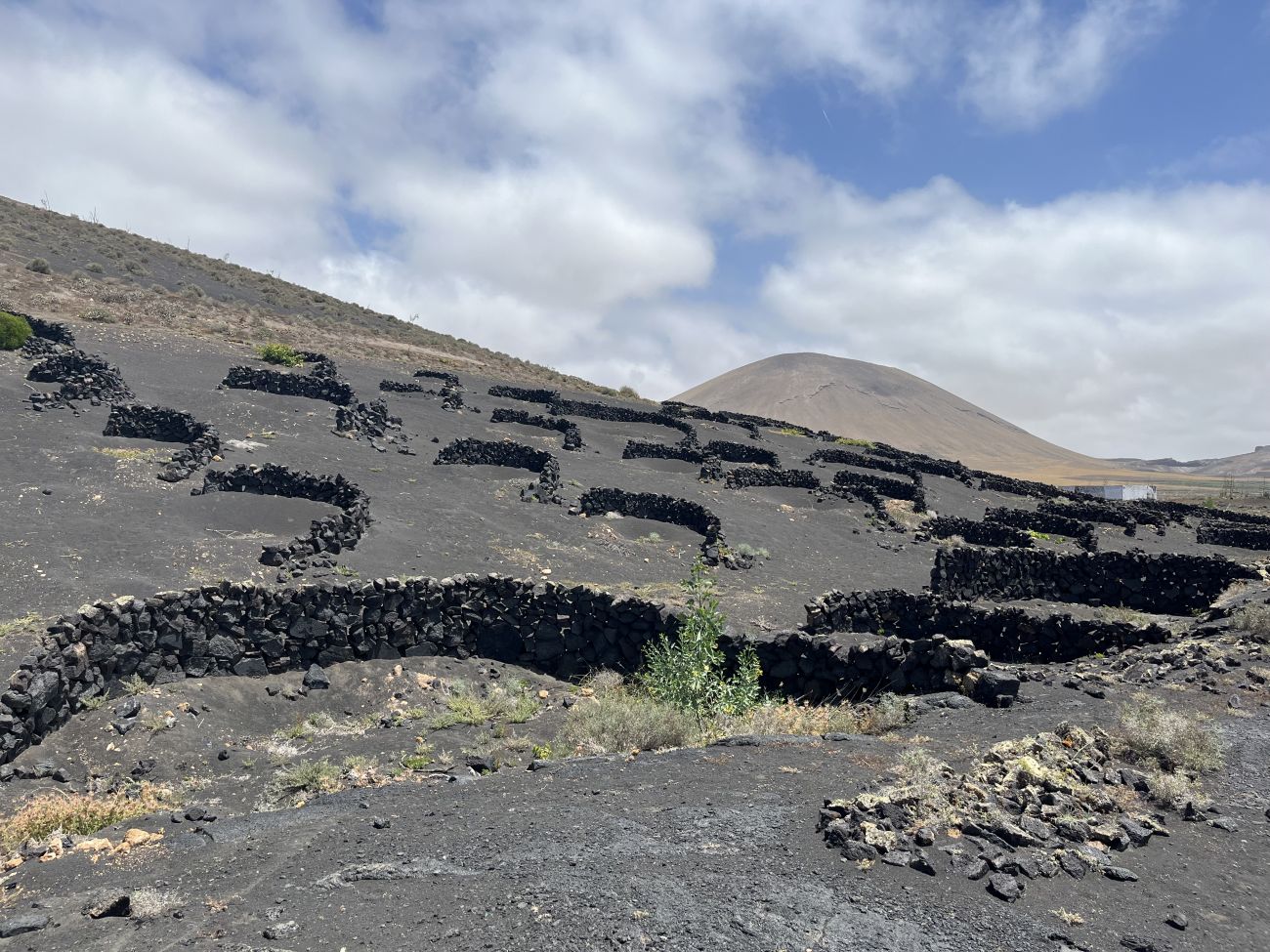
Chabocos at the base of Chimbesque
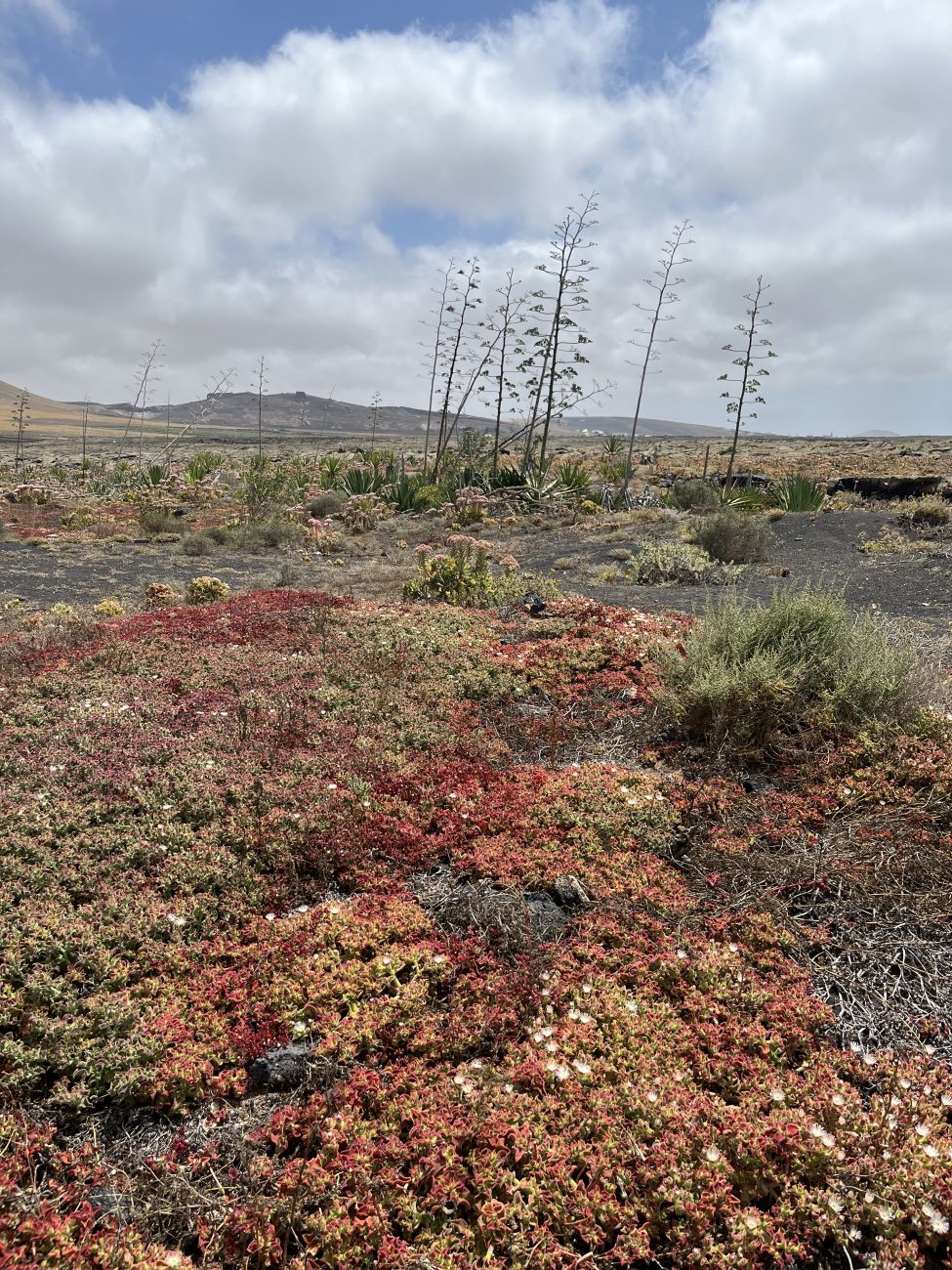
Endemics tapestry with Agave sp.
Madeira and Lanzarote differ dramatically in appearance; the former, characterised by humid mountain forests and the latter being described to me as “akin to visiting the moon”. I came away from both islands however with an appreciation that islands can create remarkably specific ecological conditions, which in turn create remarkably specific plants. Seeing these plants in habitat reinforced that successful cultivation, conservation and restoration cannot rely solely on technical horticultural skill, but also on understanding the landscape that shaped them. For me, this trip was hugely valuable and I have come away wanting to apply what I’ve learned about Macaronesian plants to my work at Kew.
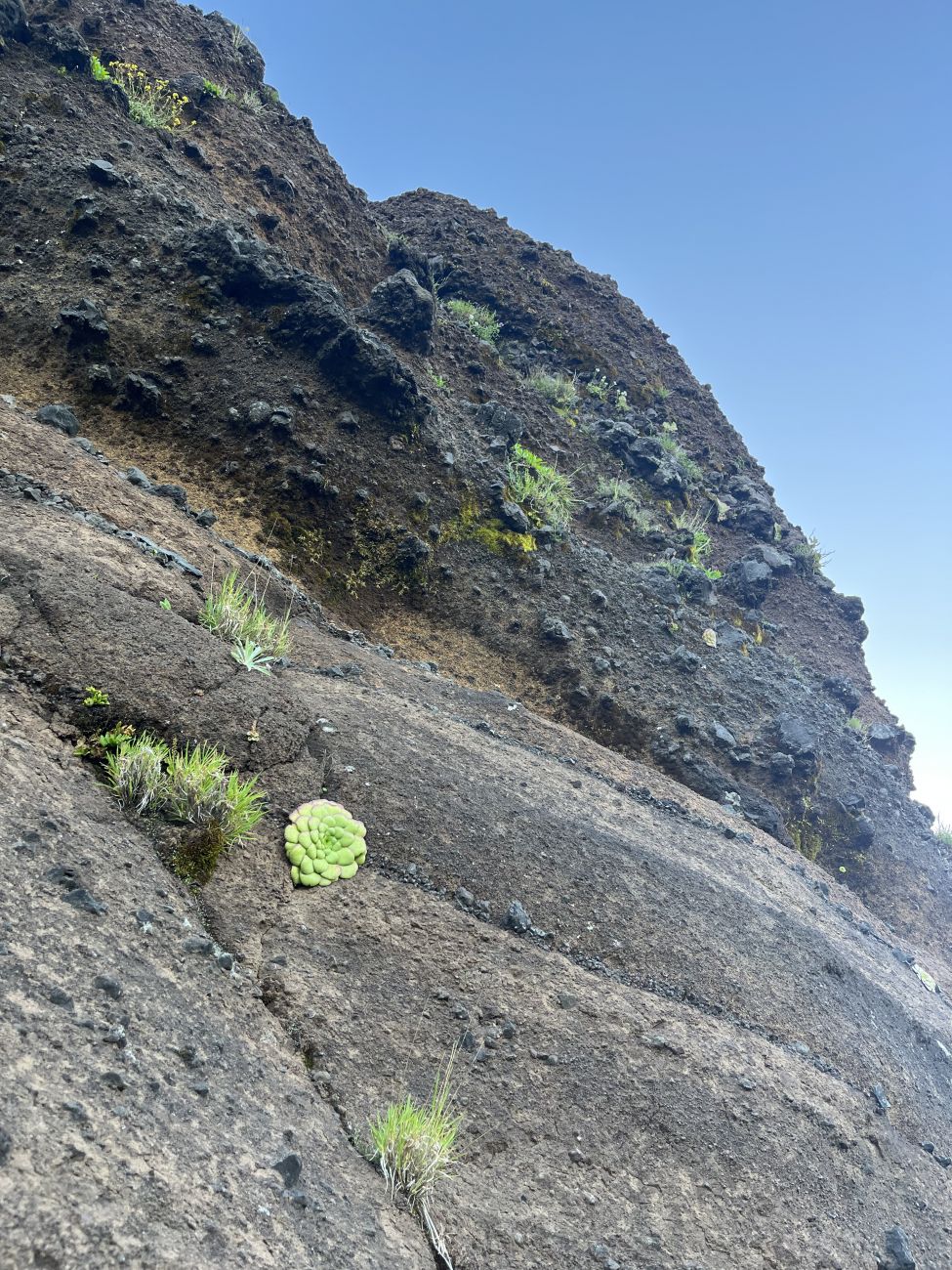
Volcanic layers