

RHS Wisley Formal Team trip to gardens of the Italian Lakes
8 – 13 June 2026
Bursary Report by Nicholas Petters
Acknowledgements
I am grateful for the generous support of Mediterranean Plants and Gardens, the Hardy Plant Society, and the RHS Bursaries Scheme for funding this trip to Italy.
Thank you to Mario Mirani, Luig Fiorina, Simone Boggia, Alessio Maccagni, Camilla Cippà, Andrea Corneo, Francesco Blardoni, Mattia Godio and Marco Grosso, Guido and Ursula Piacenza, Fabrizio Buttè, Diego Cerutti, and Alessandra Sana, for taking the time out of your busy schedules to show us around the gardens that you care for, pointing out all of the interesting plants in your collections and sharing your passion and enthusiasm with us.
Alessandra Sana, a former colleague and member of the Formal Team at RHS Garden Wisley, was instrumental in arranging the trip. Originally local to the region, she suggested the best gardens to visit, she made arrangements for us to meet and be shown around by the people who care for each garden, and she managed to gain us access to some special private gardens in the area.
Organising this trip was a group effort, and I am indebted to the rest of the Formal Team at Wisley for planning this week.
Itinerary
Monday 8 June
Fly from London to Milan and drive to Verbania on Lake Maggiore
Tuesday 9 June
Isola Bella, Lake Maggiore – Tour with Head Gardener, Mario Mirani
Isola Madre, Lake Maggiore – Tour with Head Gardener, Luigi Fiorina
Wednesday 10 June
Villa Carlotta, Lake Como – Tour with Head Gardener, Simone Boggia
Thursday 11 June
Isole di Brissago, Lake Maggiore – Tour with Curator, Alessio Maccagni, and Head Gardener, Camilla Cippà
Villa Anelli, Oggebbio – Tour with owner, Andrea Corneo
Private Garden, Pallanza – Tour with owner, Tropical Botanist Francesco Blardoni
Friday 12 June
Jay Blue House Garden – Tour with owner Mattia Godio
Private garden of the Piacenza family, Pollone – Tour with Guido and Ursula Piacenza
Saturday 13 June
Villa Taranto – Tour with Assistant Curator, Alessandra Sana
Drive to Milan and fly back to London
Objectives
The Formal Team at RHS Garden Wisley planned this trip to learn and take inspiration from the gardens of the Italian Lakes region in northern Italy. These gardens provide exceptional examples of classical, formal garden design and we hoped they would also present examples of plants for the future that we might be able to grow in the south-east of England, especially in the context of a rapidly changing climate. We aimed to gain first-hand insight into the design, planting, and long-term maintenance of historic and contemporary Italian gardens, and sought to engage directly with gardeners, curators and owners, creating valuable professional connections while learning practical approaches that could be applied to our work at RHS Wisley.
Each garden was chosen to offer direct relevance to the work we undertake daily in the formal areas at Wisley. Collectively, we sought to deepen our knowledge of topiary, rose cultivation, Mediterranean and drought-tolerant planting, dry gardening, water feature management, and the maintenance of formal herbaceous and woody plantings. By experiencing a wide range of sites, each specialising in different aspects of horticulture, we aspired to return with practical knowledge, creative inspiration, and informed strategies to adapt our planting and maintenance. We also intended to gain insight into irrigation and water management practices used in different environments, which could inform our own approaches to sustainable gardening at Wisley, and to learn about pest and disease threats affecting the region that we may be exposed to in the future.
We went on this trip as a team to experience these gardens together to strengthen our collaboration and shared understanding. Engaging with international horticultural practice provided an opportunity to enhance our professional growth and confidence, enriching both our individual development and the expertise we brought back to the UK.
Isola Bella
Isola Bella, owned by the Borromeo Family since the 17th century, is one of the Borromean Islands on Lake Maggiore. The baroque garden was designed as an extension of the adjoining palazzo and is built around the dramatic Teatro Massimo, a monumental ‘amphitheatre’ of ten flower-filled terraces rising in a pyramid, topped by a sculpture of the Borromeo family unicorn (Figure 1). The garden is laid out with the symmetry characteristic of Italian formal gardens. The Giardino d’Amore features box-hedge parterres, a water-lily pond, citrus trees, and geometrically shaped topiary (Figure 2). The Serra Elisa greenhouse shelters rare and botanical curiosities (Figure 3), and the Piano della Canfora (named for a monumental old camphor tree) is home to free-roaming white peacocks (Figure 4). Seasonal colour is provided by azaleas in April, climbing roses on the Terrazza delle Rose, which are visible from the lake (Figure 5), and swathes of seasonal bedding.
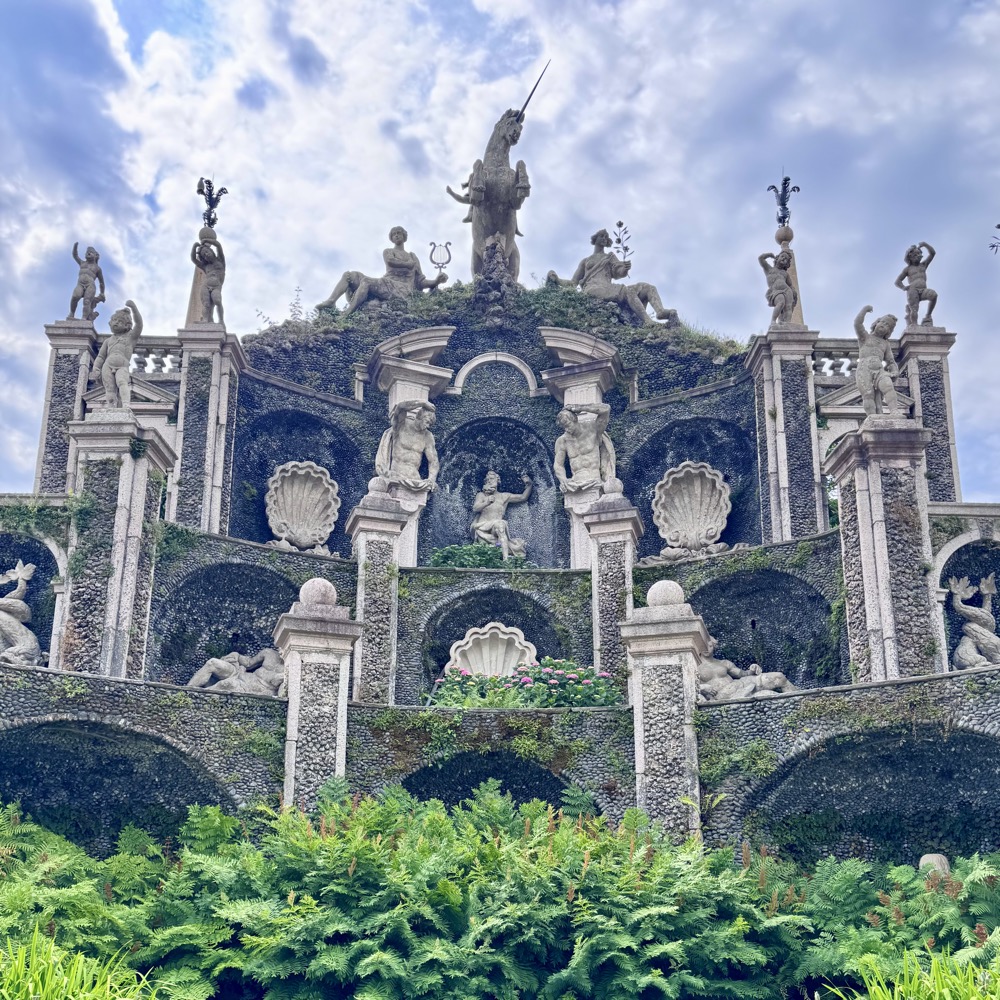
Figure 1
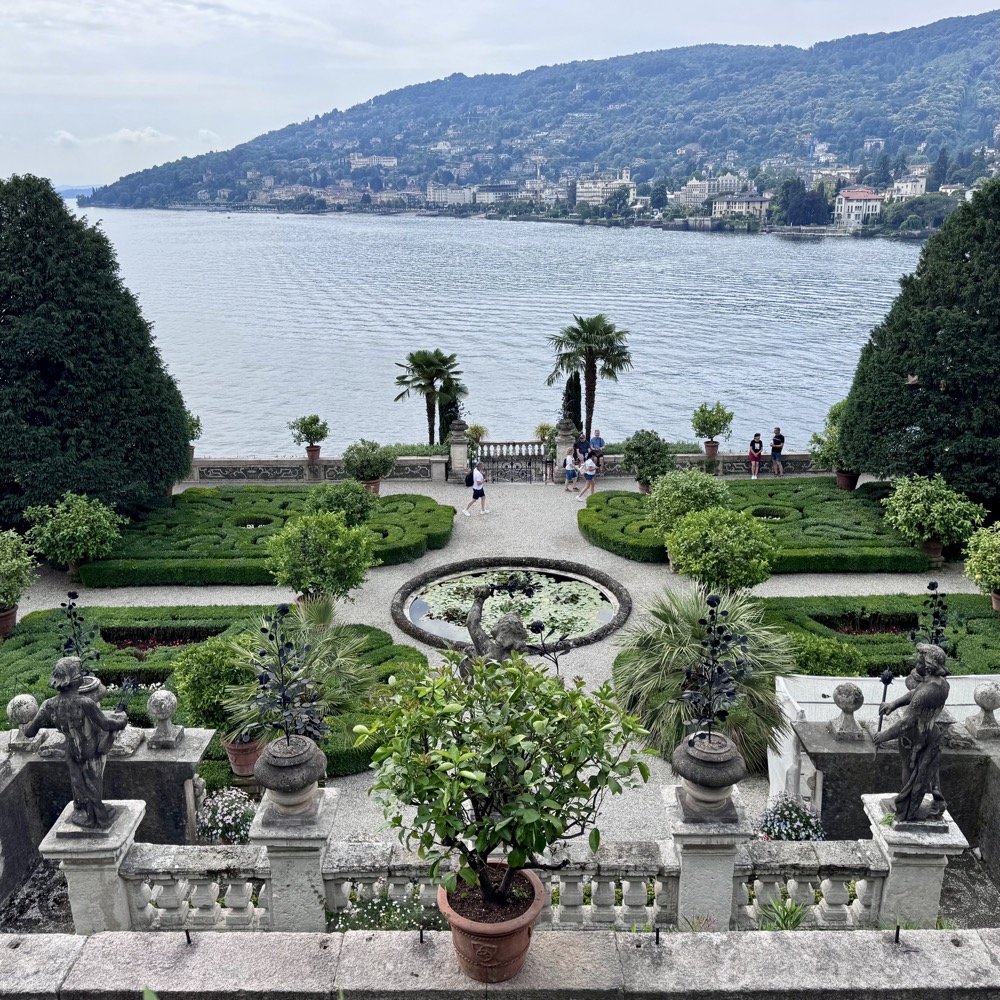
Figure 2
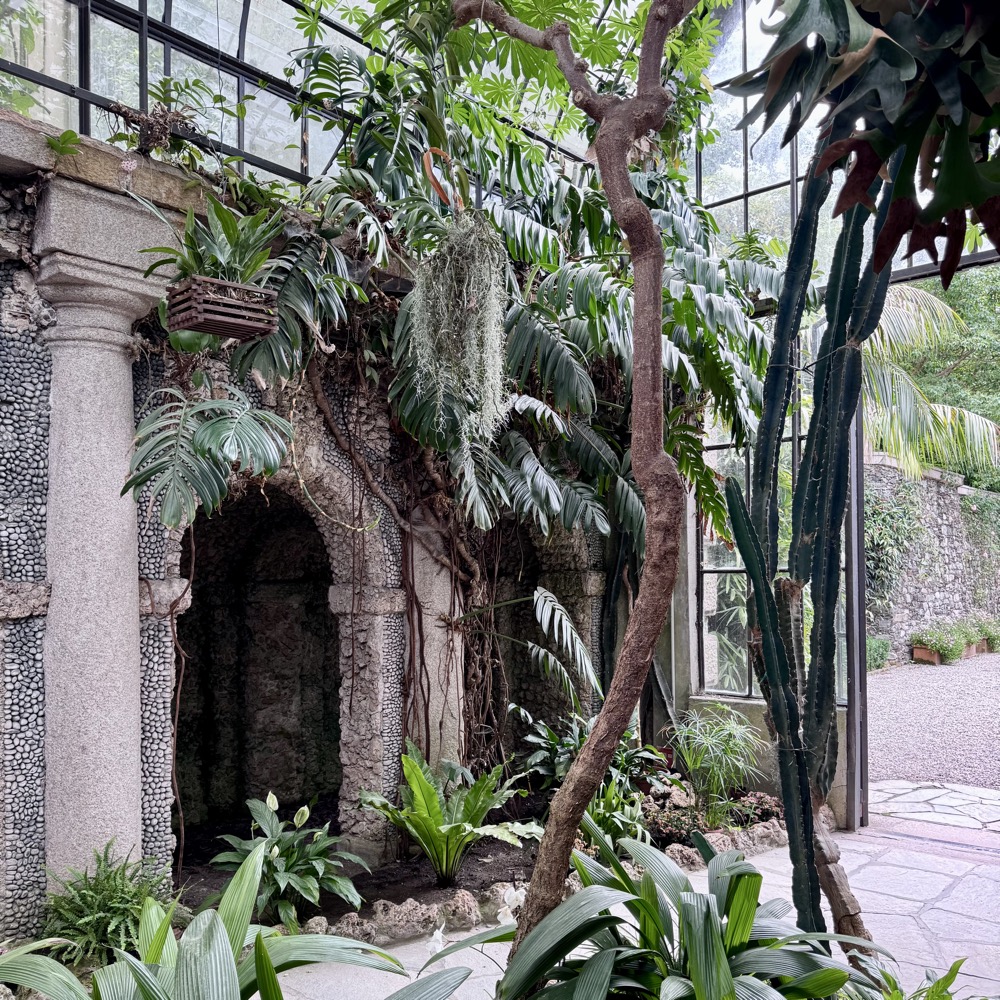
Figure 3
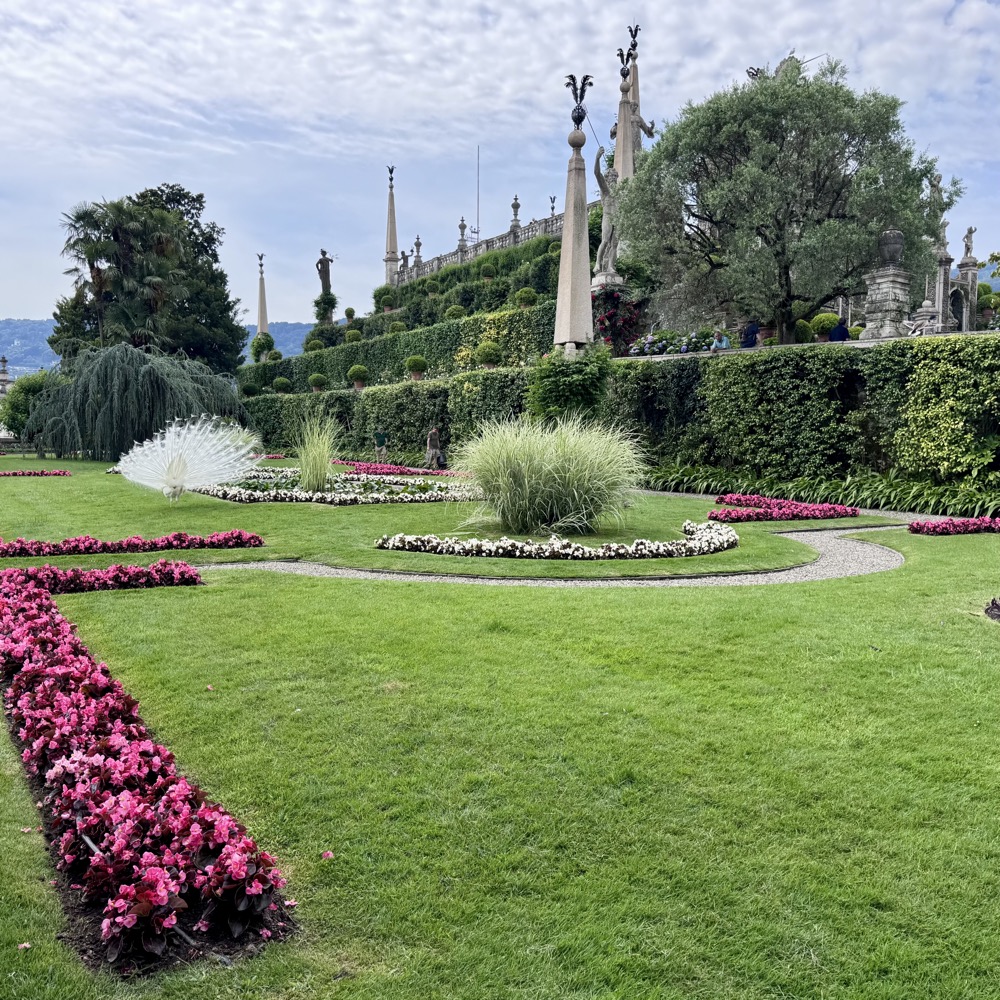
Figure 4
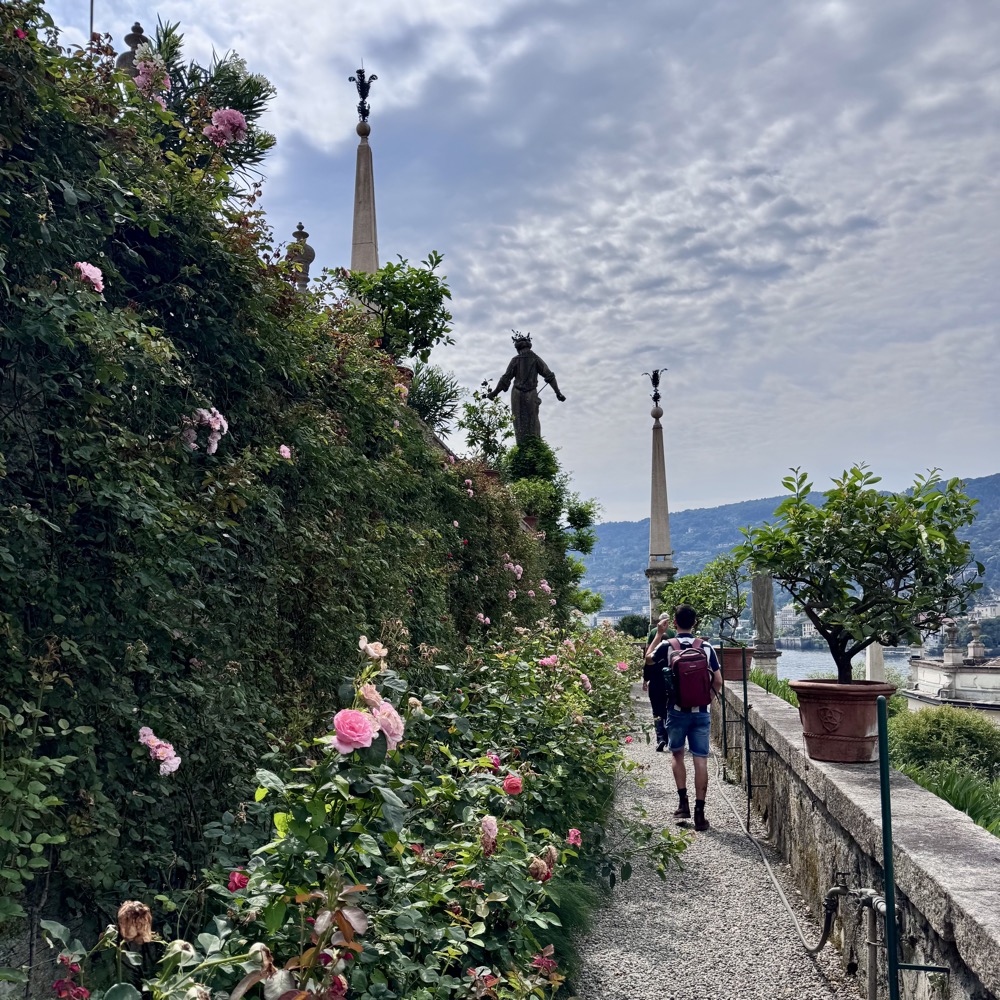
Figure 5
The visit
We were given a tour of the garden by Head Gardener Mario Mirani. We started at the entrance into the garden from the palazzo, in the Atrio di Diana (Figure 6). Unfortunately, we had just missed the flowering of the highly scented Holboellia latifolia that hangs down from the terrace above, but we still enjoyed this relatively cool and calm space before we ascended to the drama of the Teatro Massimo. We walked around each of the terraces, many of which are closed to the public as they are intended to be seen either from the lake or from above, from the top terrace. Some of the terraces are filled with low-level cold frames used for raising bedding plants. These are cleverly obscured so that they are not visible from the lake, or from the accessible terraces above (Figures 7 and 8). On the top terrace, Mario lifted a stone slab to give us a peek into the large water reservoir that sits beneath (Figure 9). Water is pumped from the lake up into this reservoir and from here it is used to irrigate the garden. Rainwater is fed into the reservoir too but is also distributed down through the terraces in channels carved into the stone. Some of these channels have decorative flourishes which add to the theatre of the garden (Figure 10). We then descended to look at some of the other private areas of the garden, including the potting area and an attractively cool service greenhouses built into the underside of terrace structure (Figures 11 and 12). These are used to overwinter some of the garden specimens (including citrus in pots and tropical waterlilies), to propagate plants, and to house the stock plants of an extensive 54-cultivar Coleus collection (Figure 13). We walked around to look at the display greenhouses and admired some of the mature palm specimens growing outside. Mario left us here to spend a little time exploring the garden on our own.
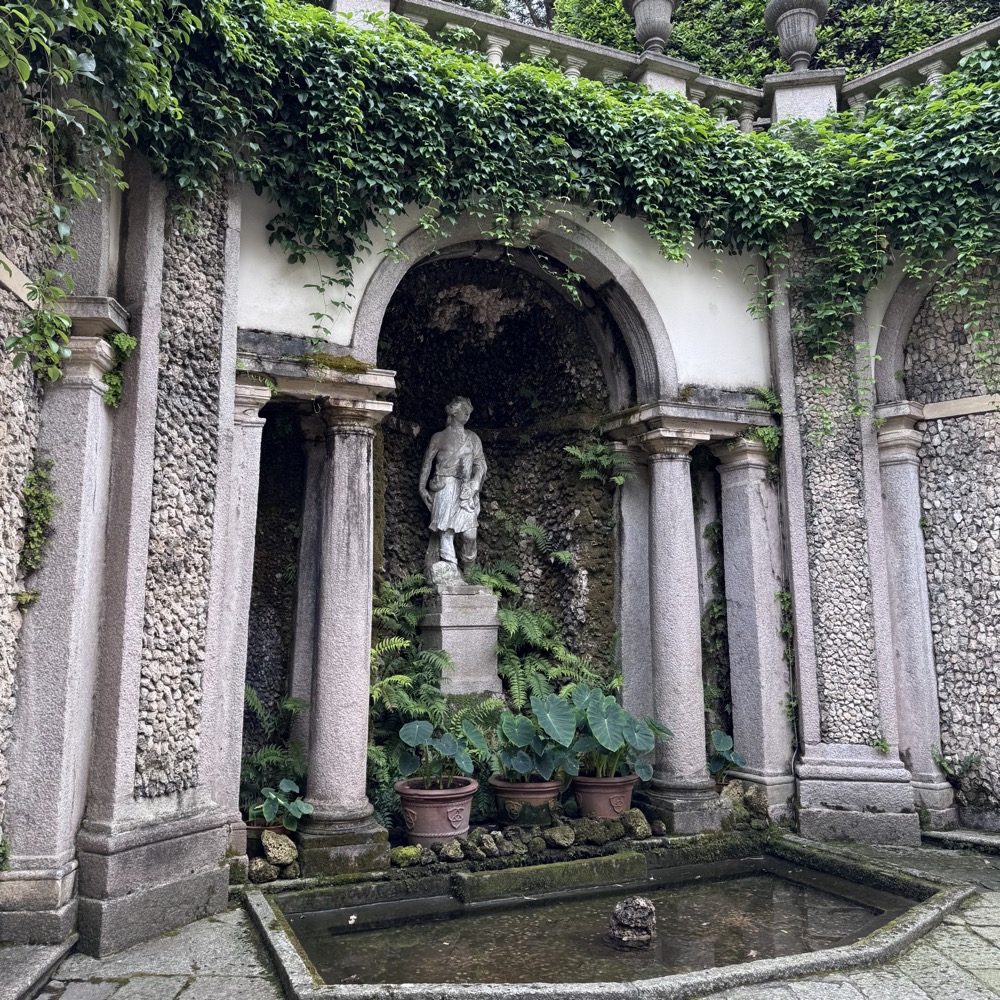
Figure 6
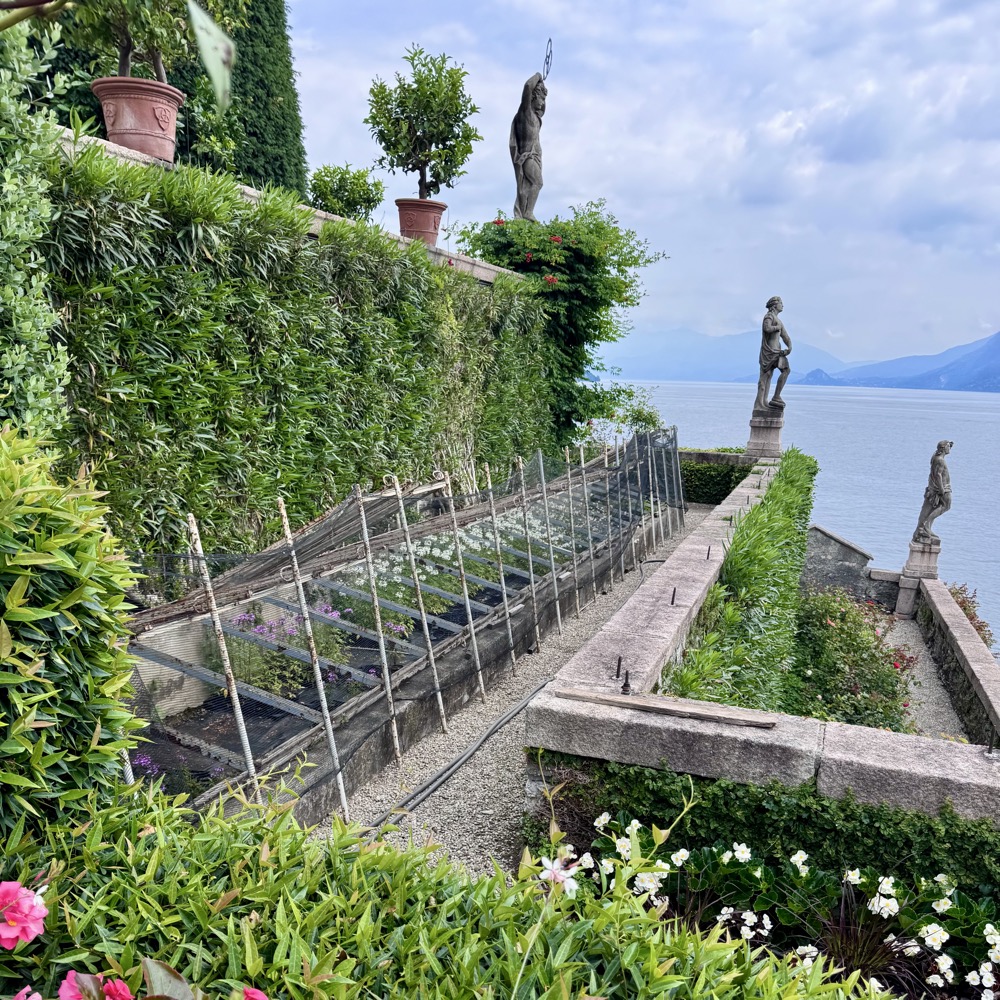
Figure 7
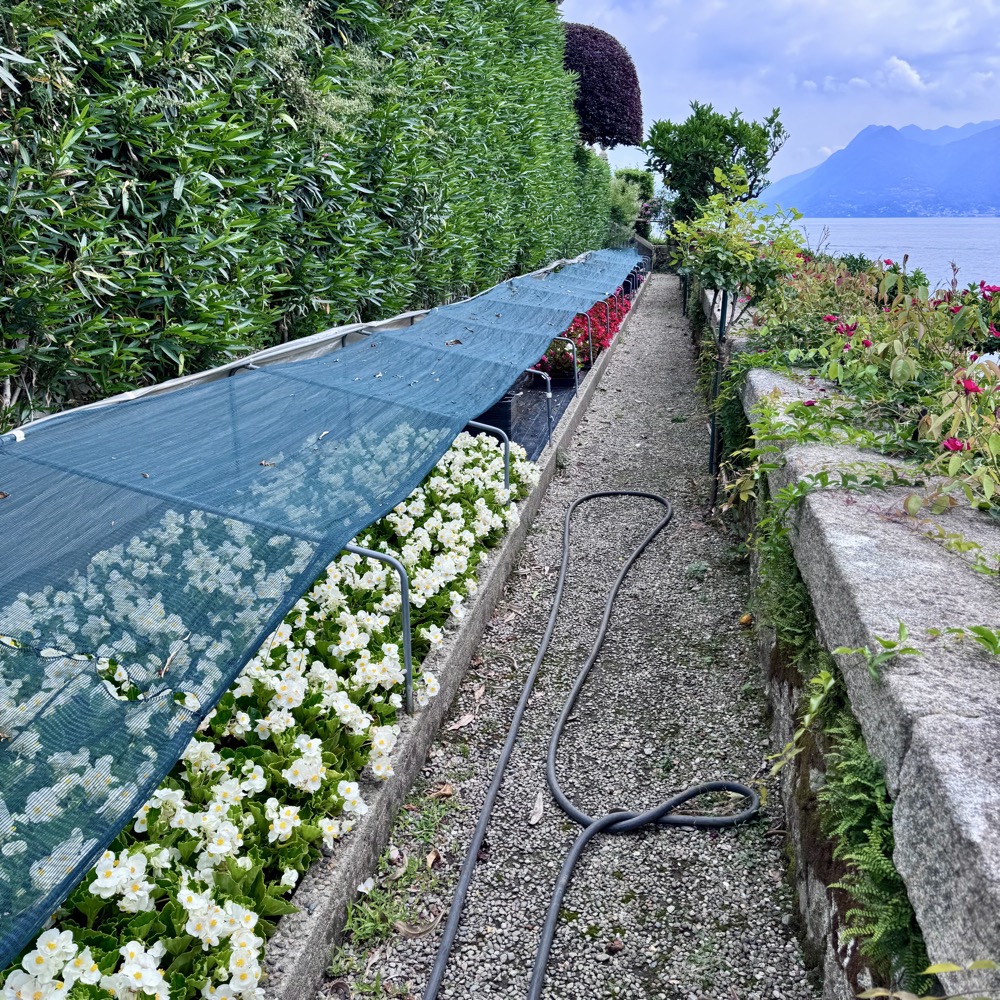
Figure 8
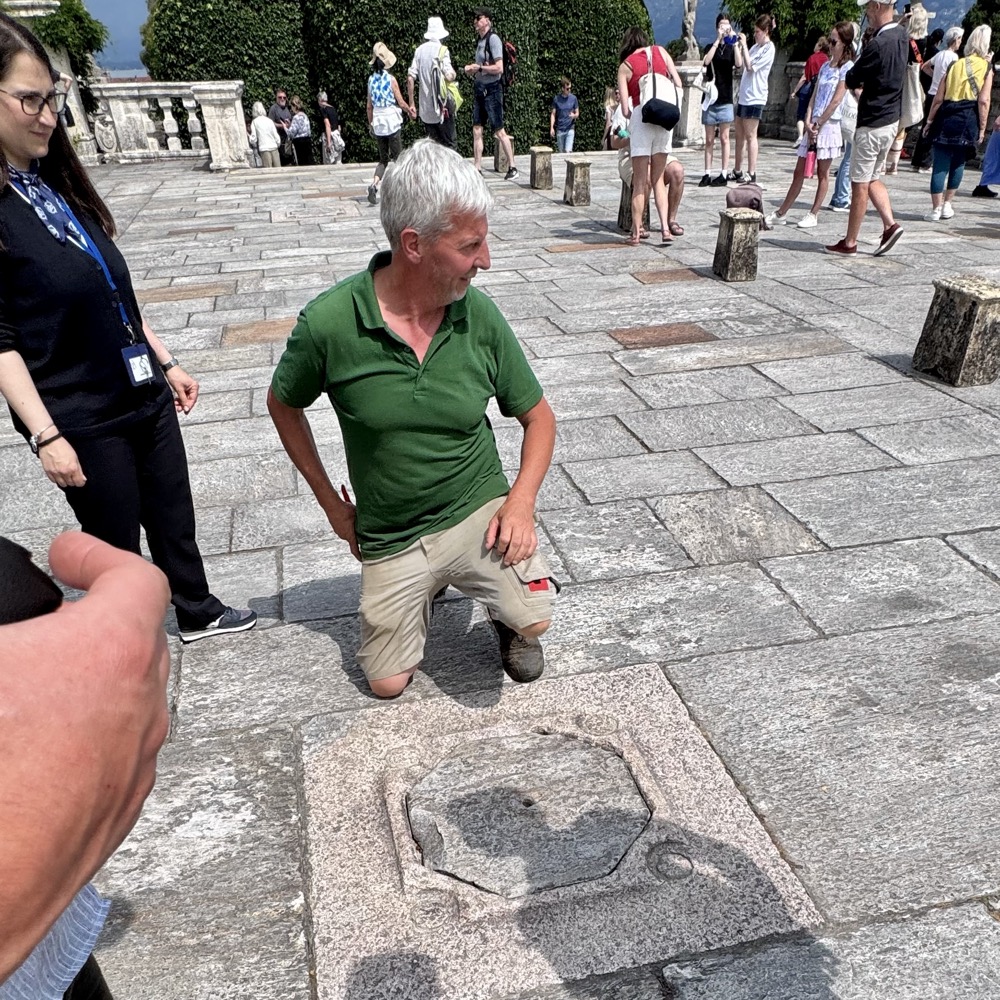
Figure 9
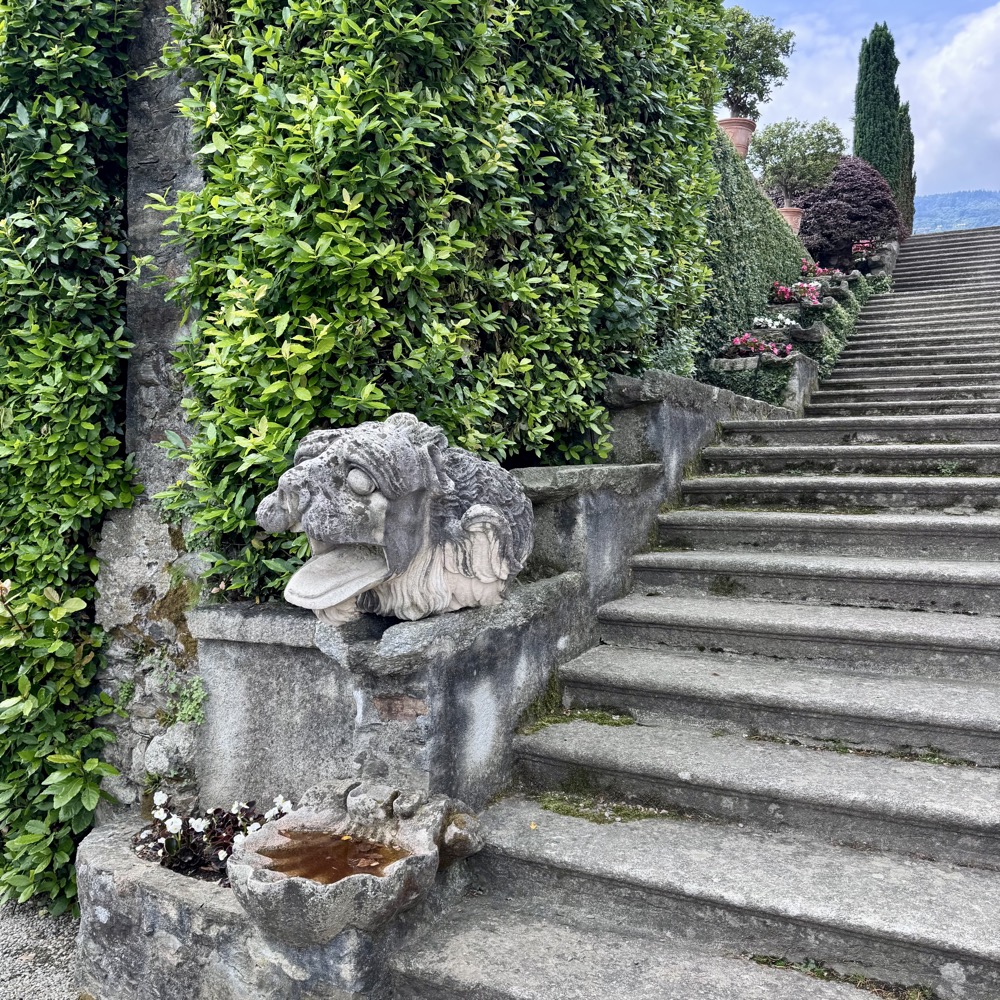
Figure 10
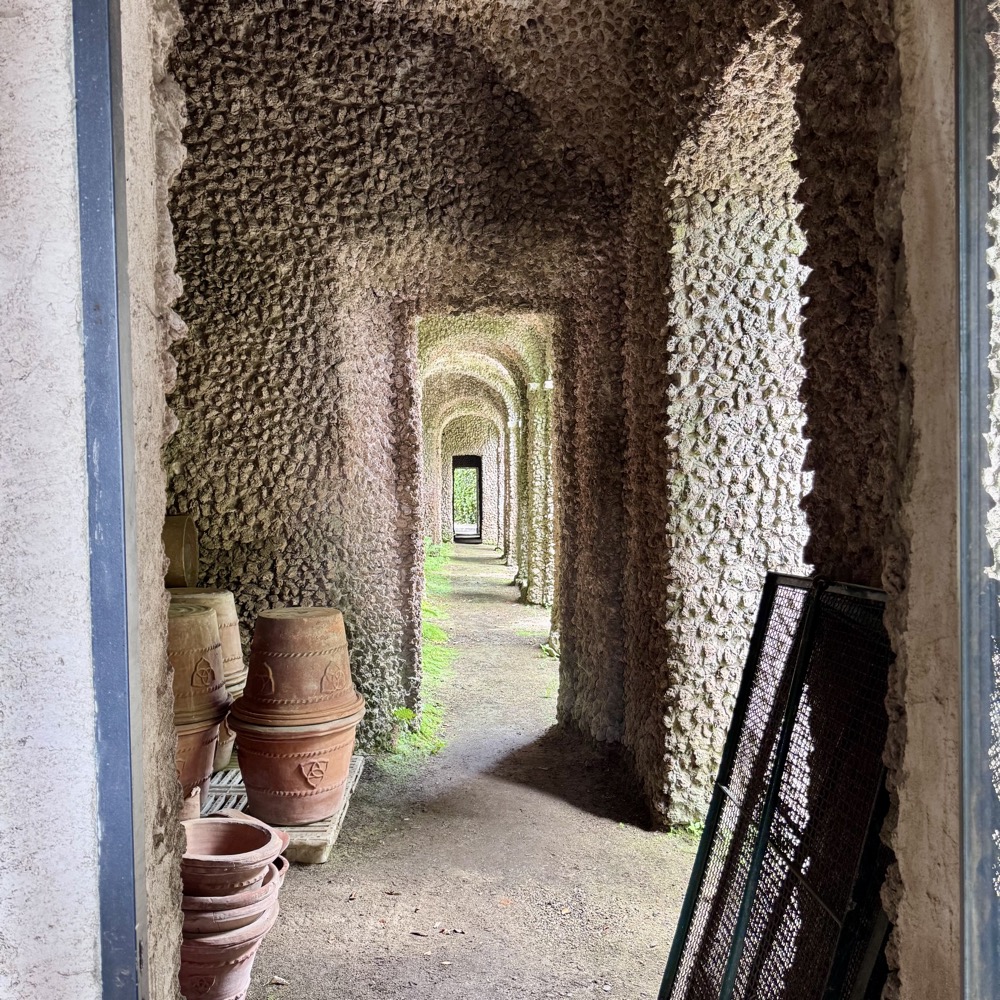
Figure 11
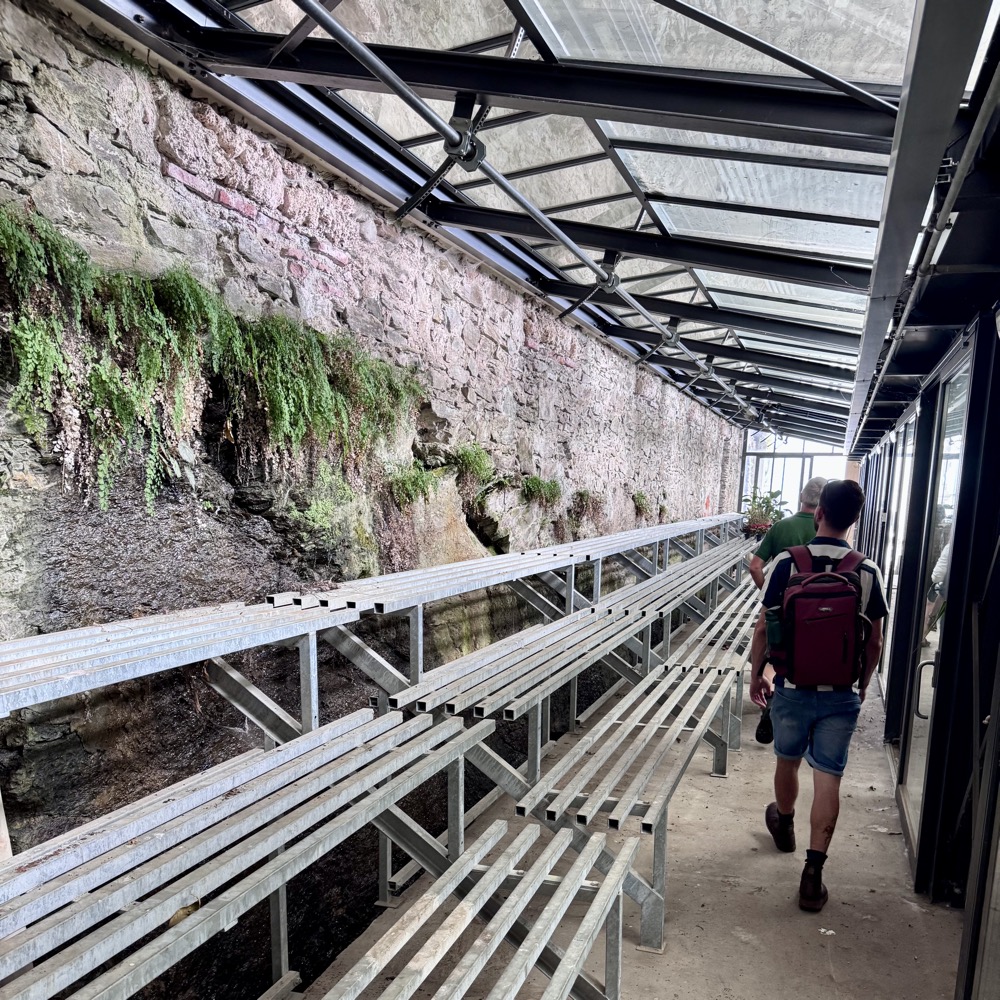
Figure 12
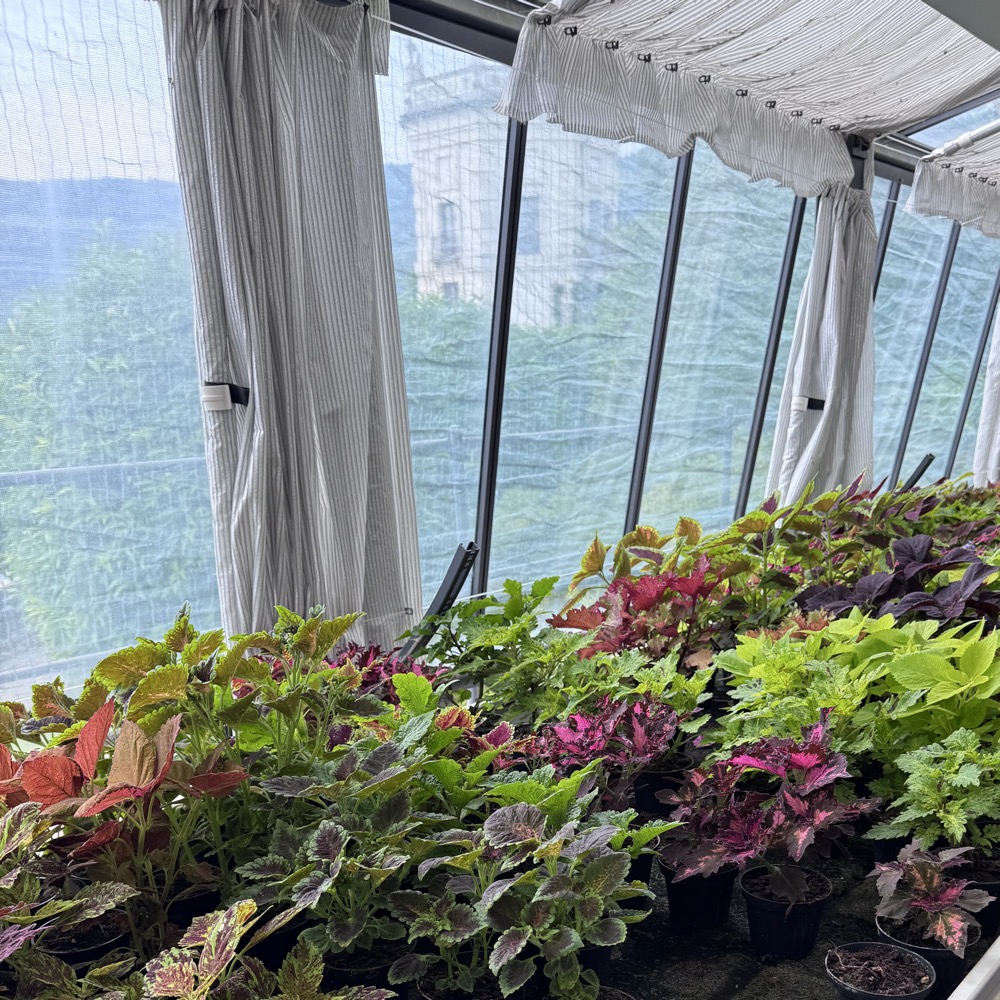
Figure 13
Highlights
A mature and majestic Cryptomeria japonica ‘Globosa Nana’ (Figure 14) was one of the plant highlights in the garden. Mario took us around the back of it to see inside the tree (Figure 15).
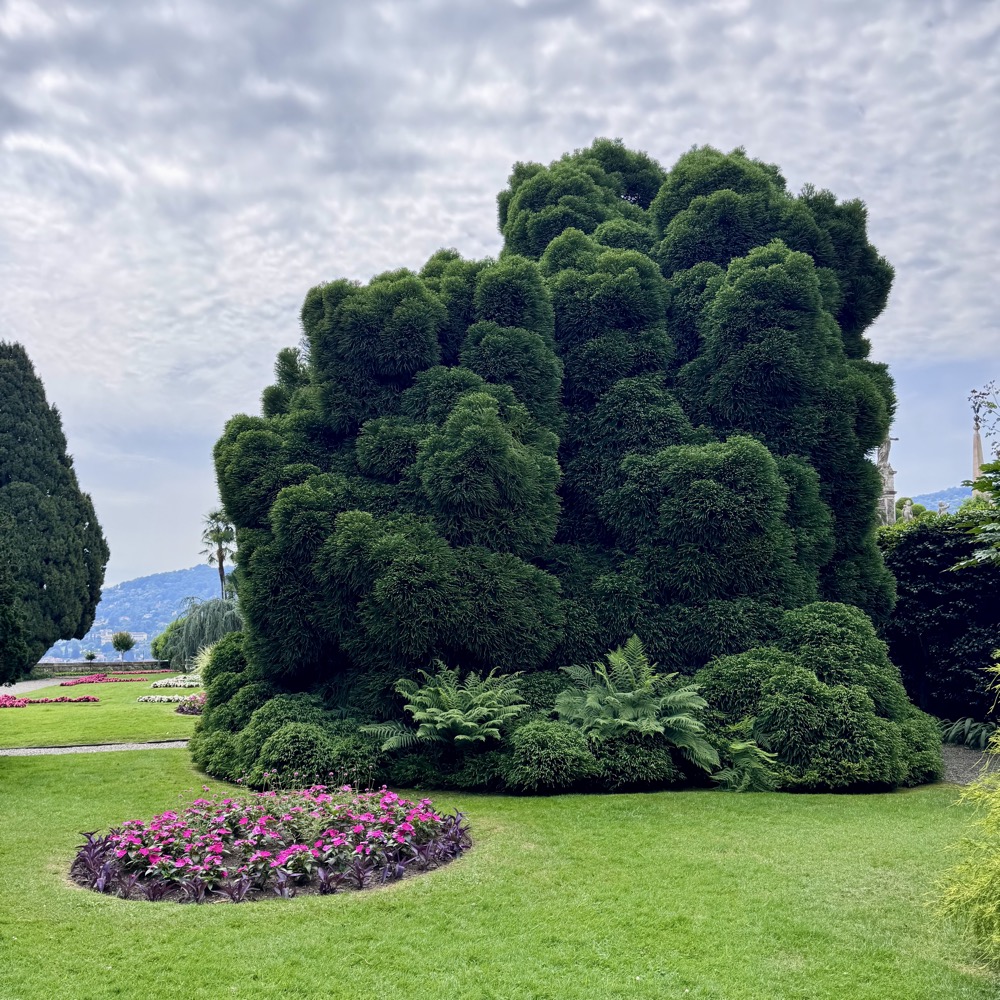
Figure 14
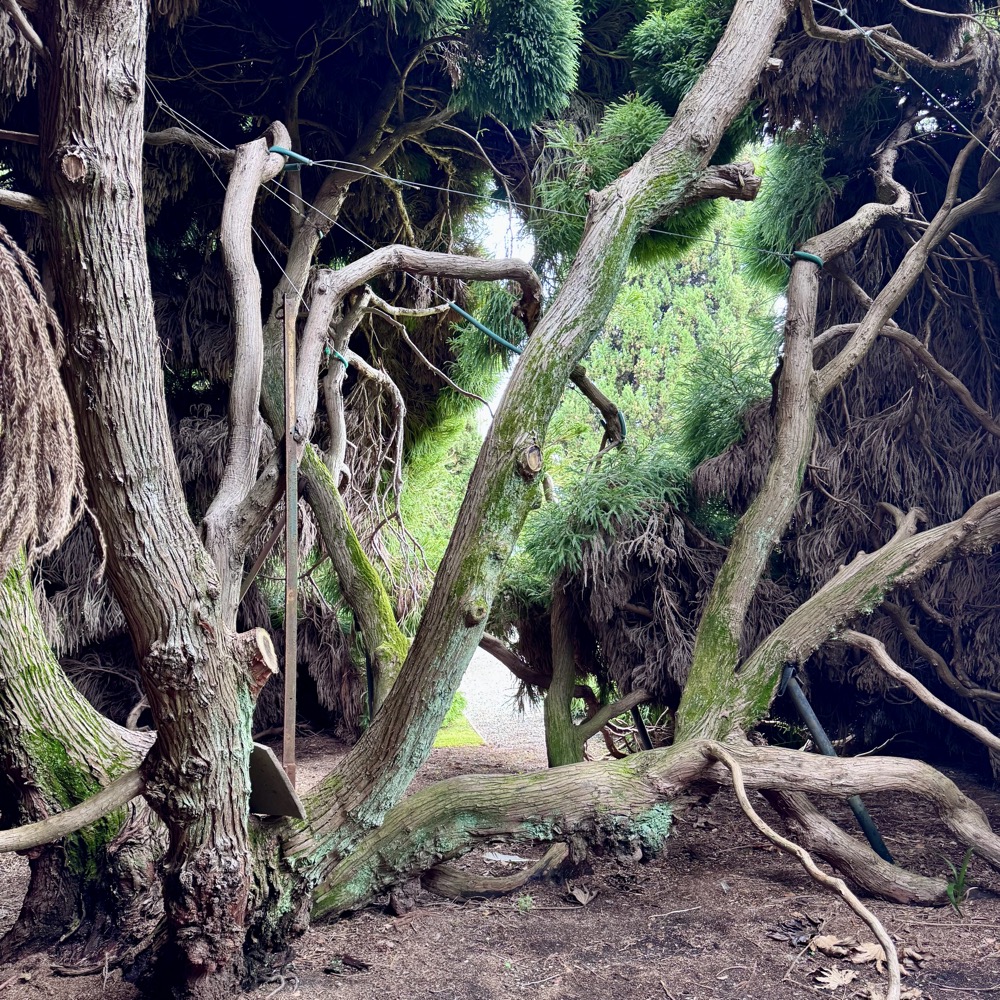
Figure 15
Learnings
Gardening on an island in the middle of a large lake presents certain logistical challenges around moving materials and removing waste. However, it comes with two big advantages: the lake mitigates both summer and winter temperature extremes, and there is an enormous reservoir of water available to irrigate. Most of the gardens we visited that were located on islands rarely experience sub-zero temperatures even though the mainland around them might be covered in snow. The lakes act as a heat reservoir through the winter, slowly releasing heat that has accumulated in the water throughout the previous summer. These relatively mild winters allow them to grow plants that would not survive the cold on land close by.
The climate here is changing though, and there is a steady increase in maximum summer temperatures, and they are starting to notice that more of the temperate plants that they grow are beginning to struggle. The leaves of many of the Lagerstroemia specimens in the garden were covered in mildew. Maintaining the health of mature specimens through hotter, dryer summers, and in the face of increasing pest and disease pressures, is a concern. Camellia cultivars are rapidly declining, the low Buxus sempervirens hedges in the parterre are suffering with blight and caterpillar infestation, and an enormous topiary specimen of Taxus baccata has recently died (Figures 16 and 17). They are trialling newer Camellia cultivars that are supposedly more resilient, and they will be replacing the Buxus with Ilex crenata.
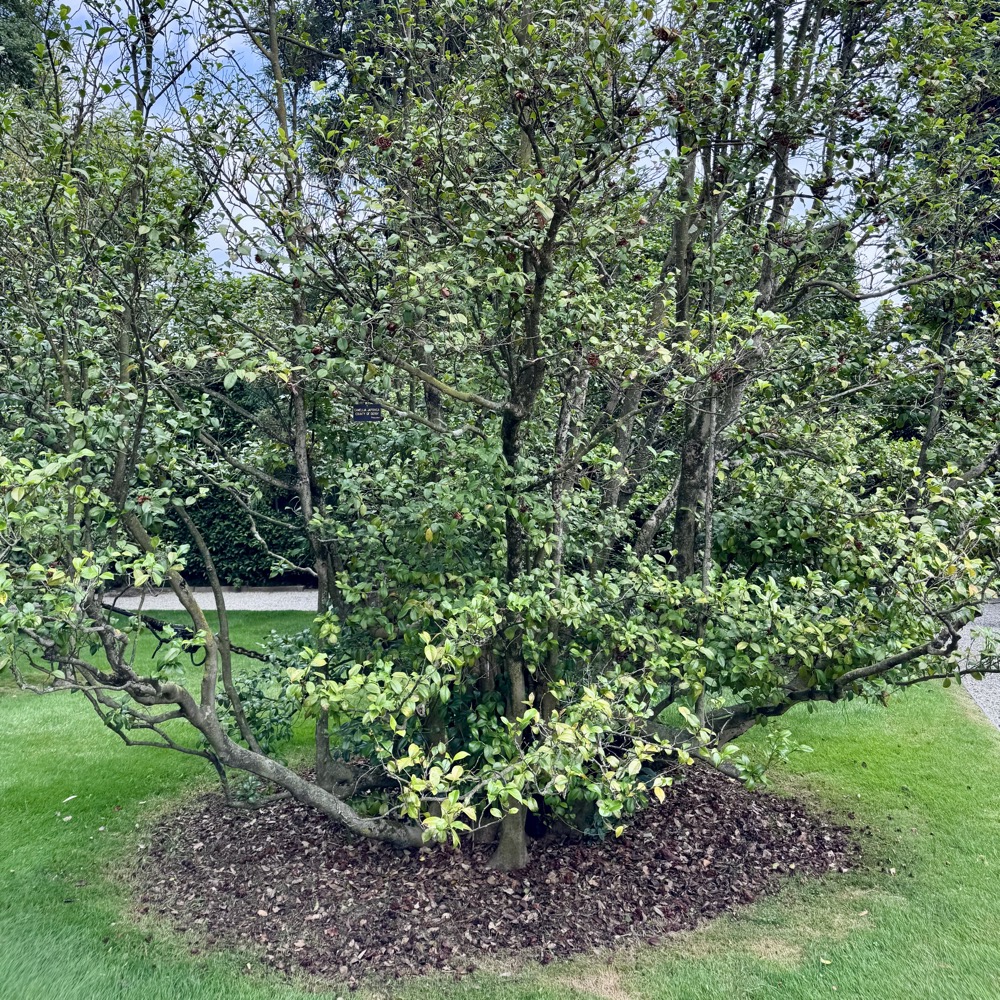
Figure 16. Camellia japonica ‘County of Derby’ struggling with the changing climate
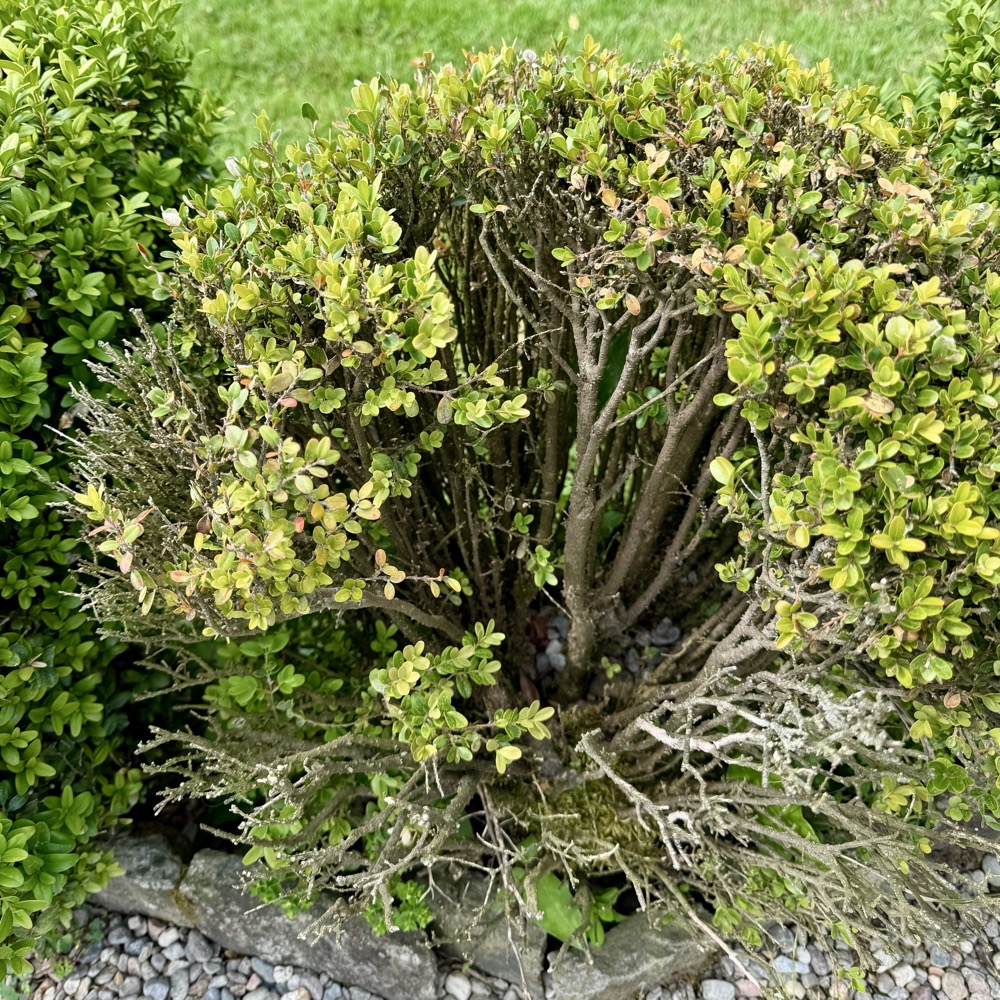
Figure 17. Buxus sempervirens rapidly declining
A significant difference to how we garden in the south-east of England is that most of these gardens are allowed to pump unlimited quantities of water to irrigate. We can only dream of having that kind of access to water!
Isola Madre
Isola Madre is the largest of the Borromean Islands. This botanical garden is laid out over 8 hectares and is blessed with a relatively mild climate. It was originally an agricultural estate of vines, olives, and orchards but it was gradually transformed by the Borromeo family over the centuries into a romantic landscape of rare and exotic plants, with camellias, azaleas, rhododendrons, magnolias, palms, and subtropical species all thriving in the island’s unusually gentle microclimate. The garden offers colour through the seasons, from camellias in March through to hibiscus, bougainvillea, and morning glories in summer.
The garden consists of a series of distinct spaces. These include the Scala dei Glicini, a stairway covered with a pergola with 18 cultivars of Wisteria growing over it (Figure 18), the Piazzale della Cappella (Figure 19) and the Piano delle Camelie, home to one of Italy’s earliest Camellia collections dating to 1830, now comprising around 150 cultivars. A majestic Cupressus cashmeriana, the largest of its kind in Europe, grows outside the front of the palazzo (Figure 20). It was toppled by a tornado in 2006 and saved through an ambitious engineering rescue. There is a terrace of plants from the Proteaceae family, plants from various regions around the world, numerous palm species, tropical blue water lilies, and a lotus pool (Figures 21, 22 and 23).
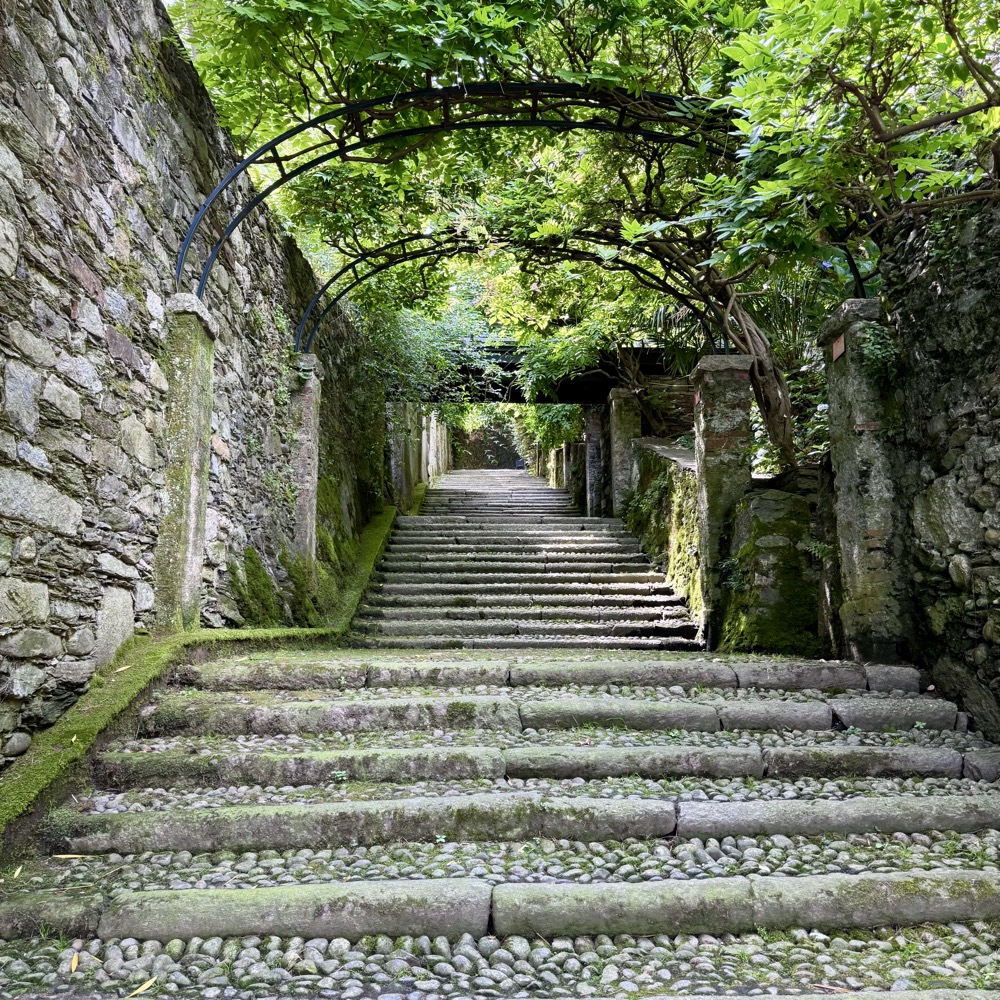
Figure 18
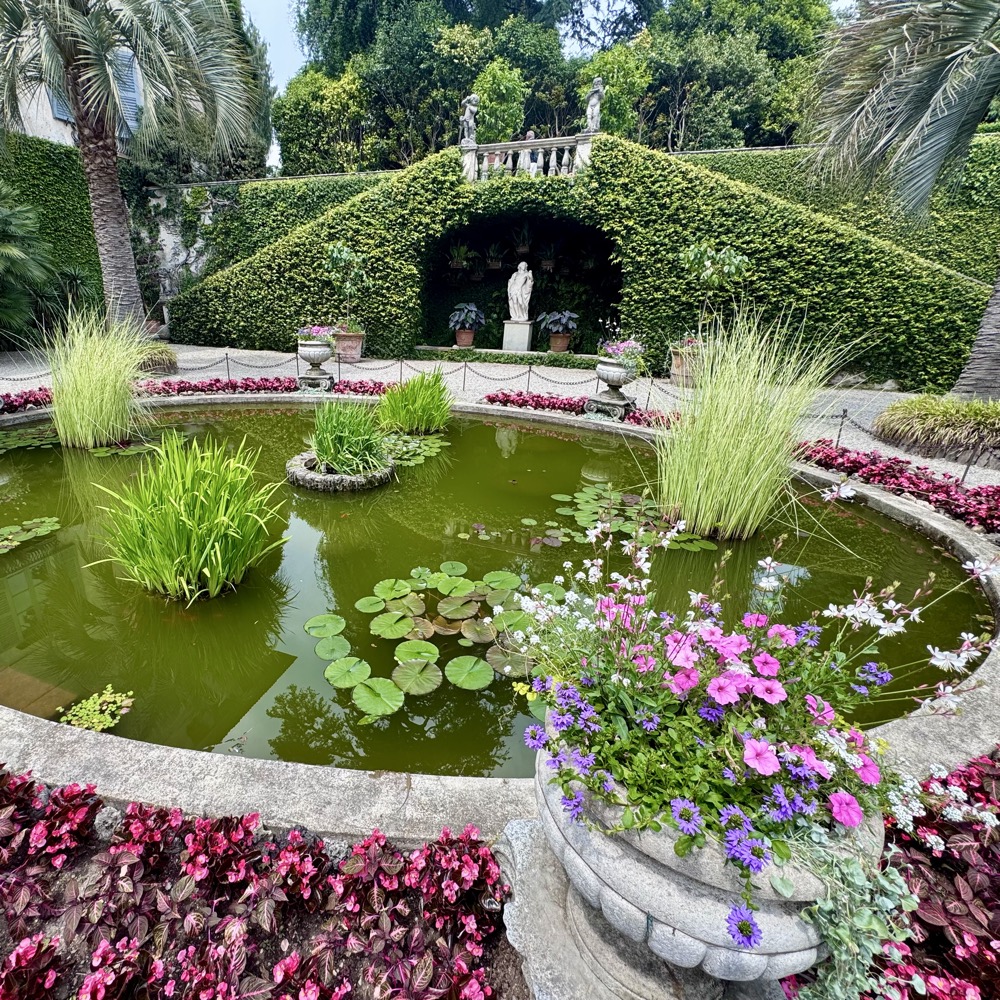
Figure 19
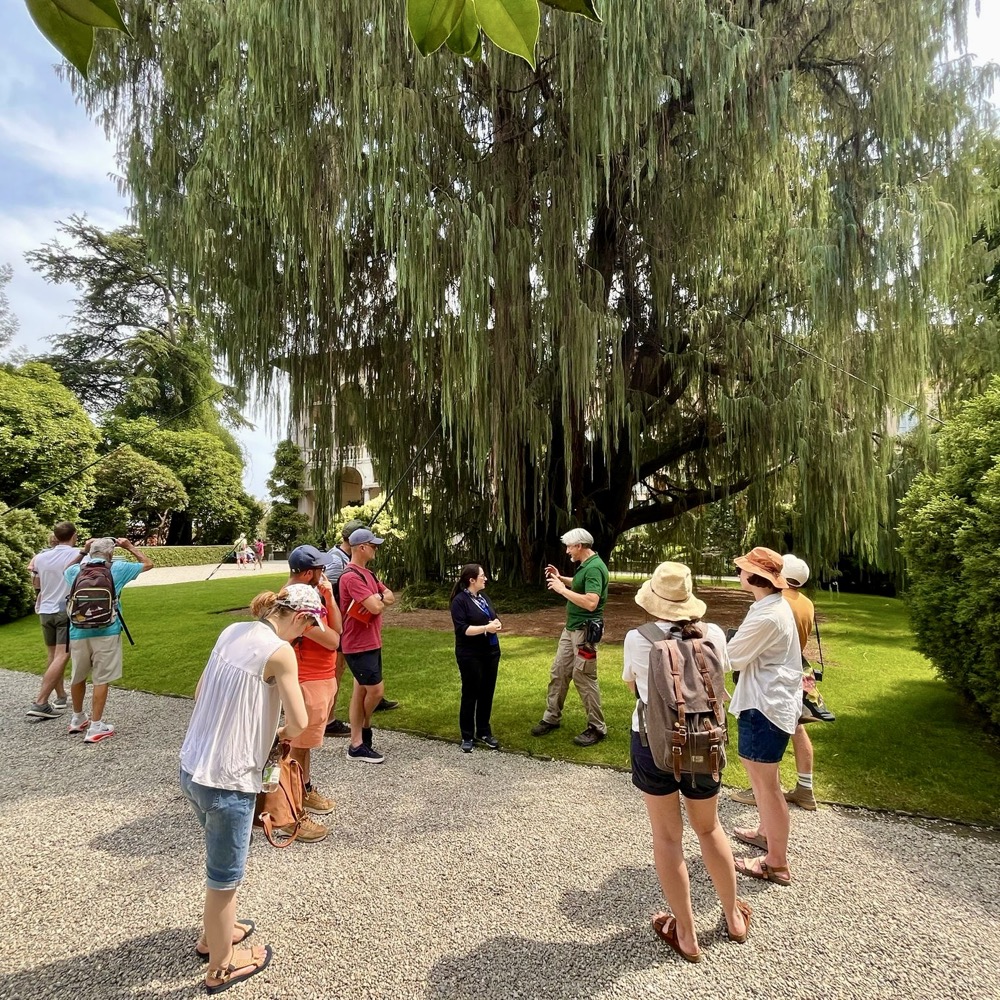
Figure 20
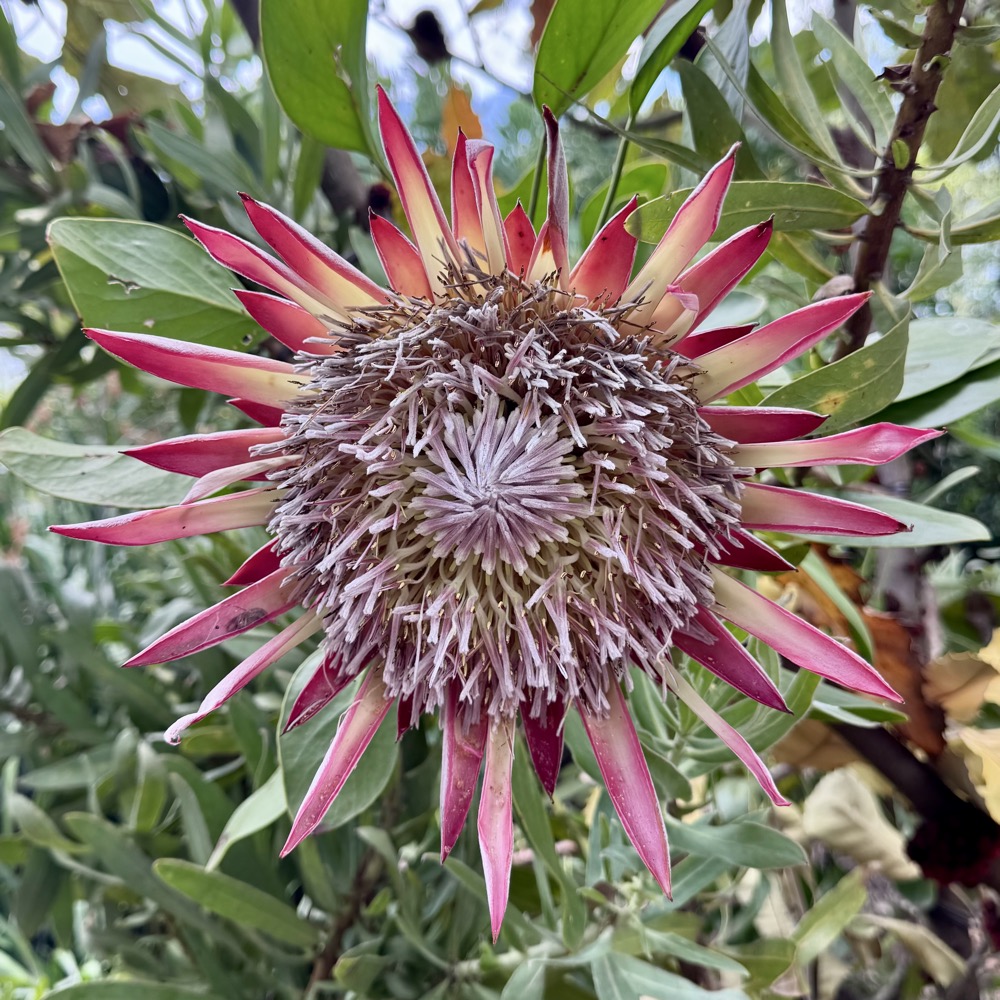
Figure 21
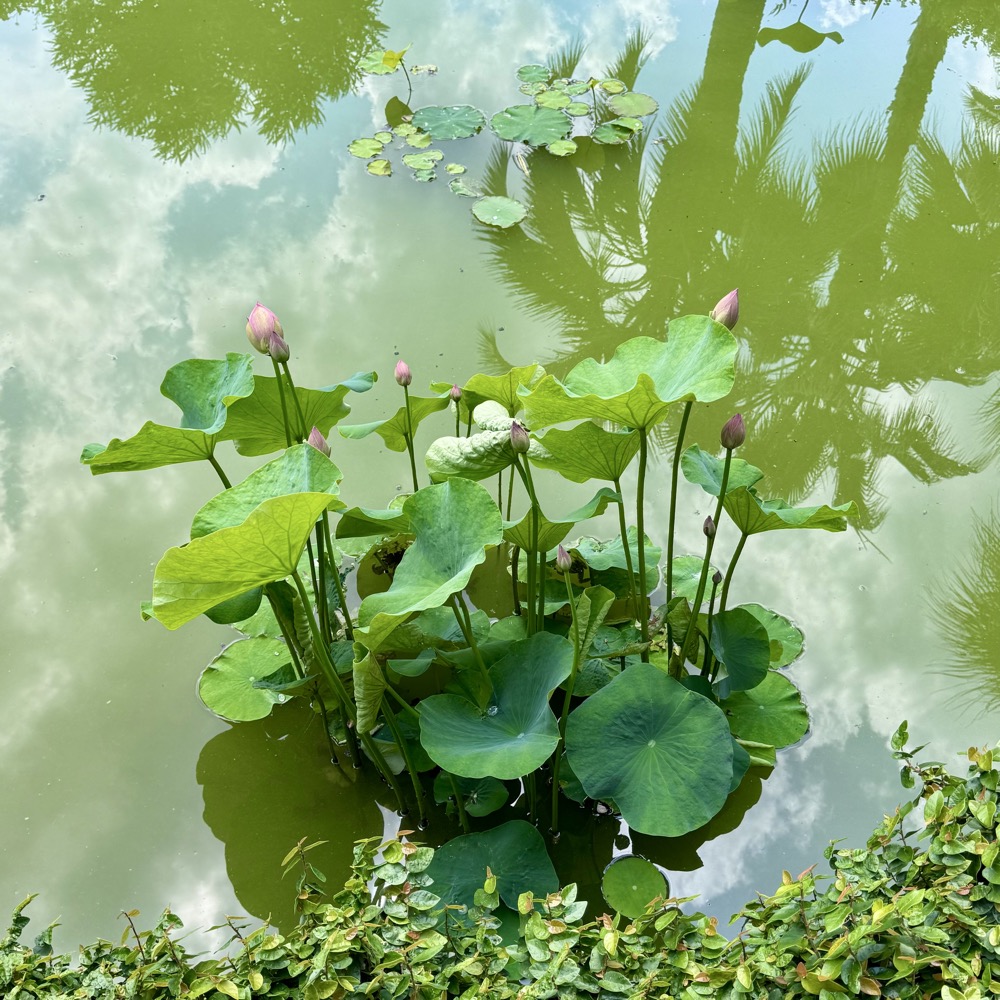
Figure 22
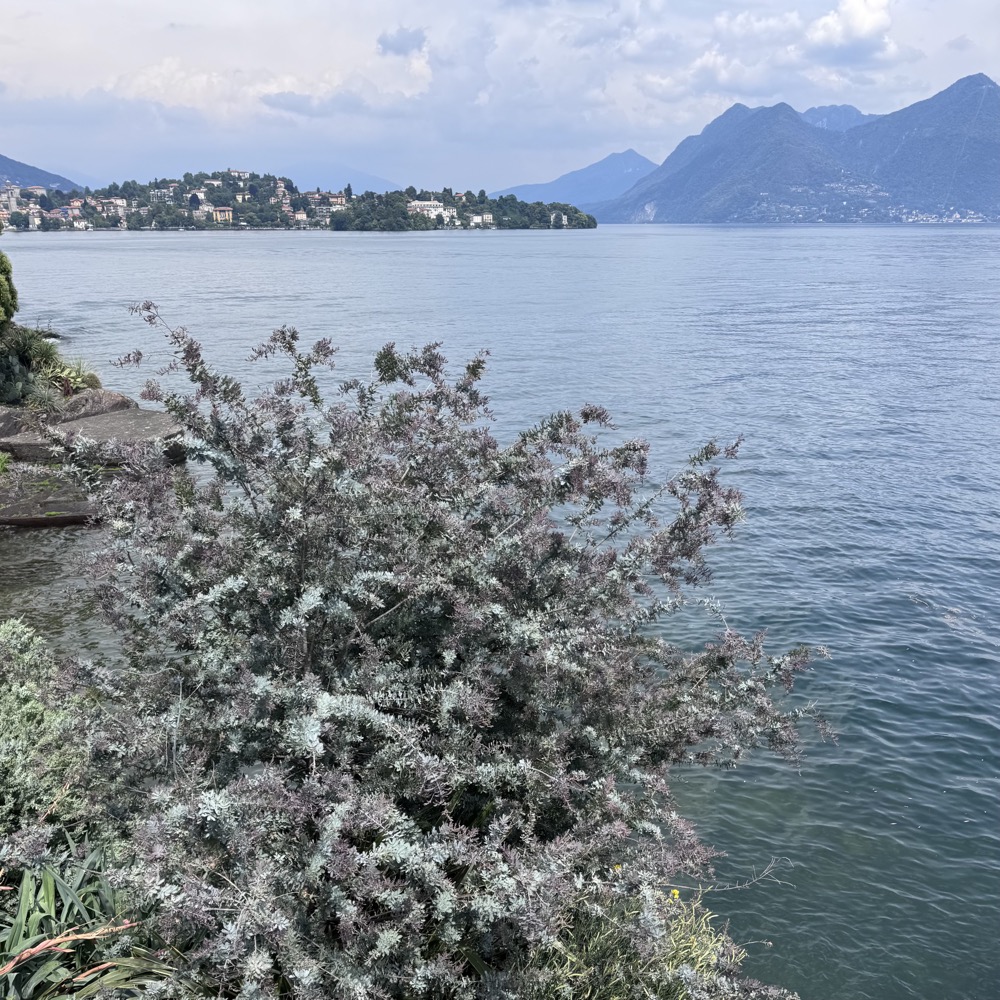
Figure 23
The visit
Head Gardener Luigi Fiorina met us off the ferry and gave us a detailed tour of the garden, including many of the private, working areas of the garden (Figures 24, 25, and 26). The six gardeners here propagate a lot of plants both for Isola Madre and for Isola Bella. The garden holds 64 national collections, including Argyranthemum (Figure 27) and Acacia (Figure 28). The Piazzale della Cappella is one of the first, more formal spaces in the garden to experience when you arrive, and the four mature Butia capitata palms are an imposing presence (Figure 29). Luigi pointed out the Bougainvillea and Solanum trained against the walls of the palazzo (Figure 30) and explained that they wrap the Bougainvillea to protect it in the winter, but that this was probably unnecessary as it was rarely cold enough to cause any damage. We had a detailed look at all the Proteaceae plants growing on the Protea Terrace. These include genera native to South Africa, Australia, and Chile, and include species of Protea, Leucadendron, Leucospermum, Telopea, Banksia, and Embothrium. The Protea Terrace is the third attempt to grow Proteaceae on the island and this time they feel they have chosen the ideal substrate, in the ideal location on the island for it to be successful. We enjoyed the drop in temperature as our walk took us around to the north side of the island where the planting palette changes to ferns, hostas and other cool and damp-loving plants. We finished off the tour in front of the infamous Cupressus cashmeriana. Luigi told us the story of how the tree was saved after it was blown over in a storm and explained how it became a textbook case for how to save specimen fallen trees and nurse them back to health.
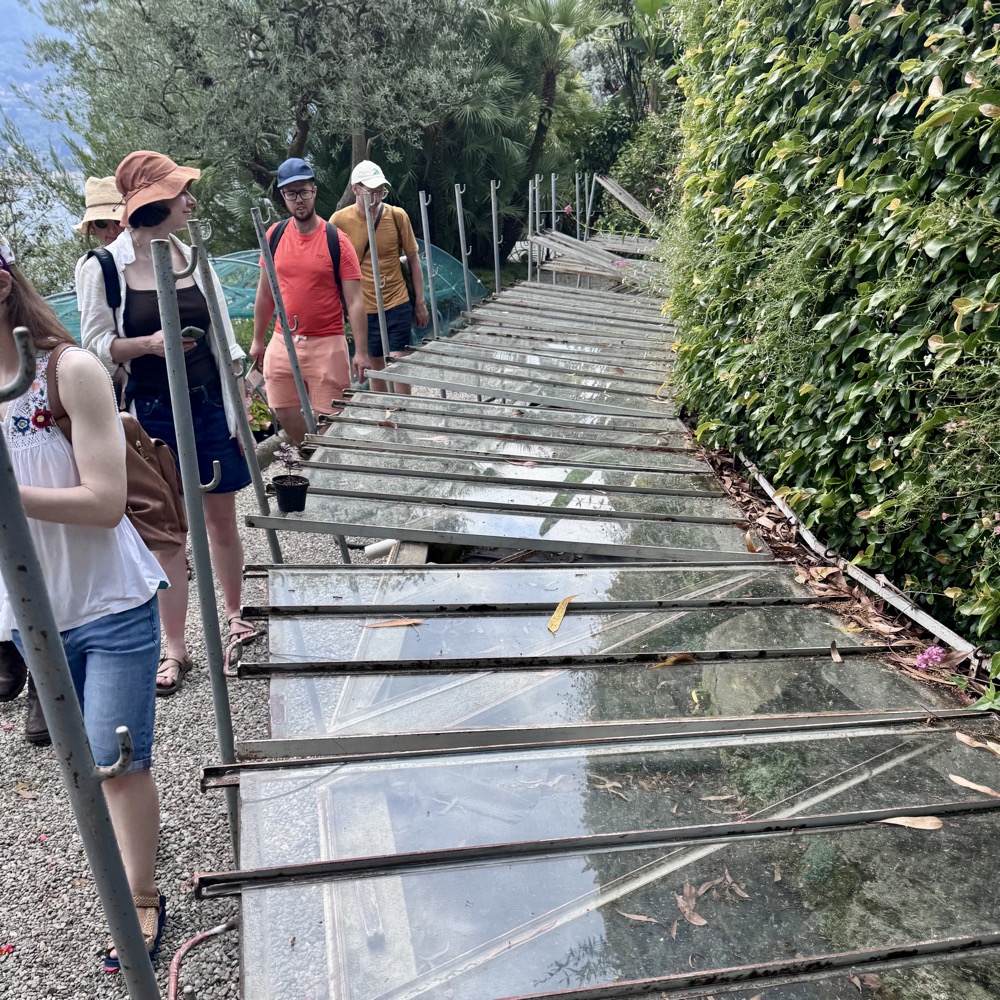
Figure 24. Cold frames on one of the terraces. Like Isola Bella, these are hidden from view but sit in ideal conditions for sunlight, warmth and protection.
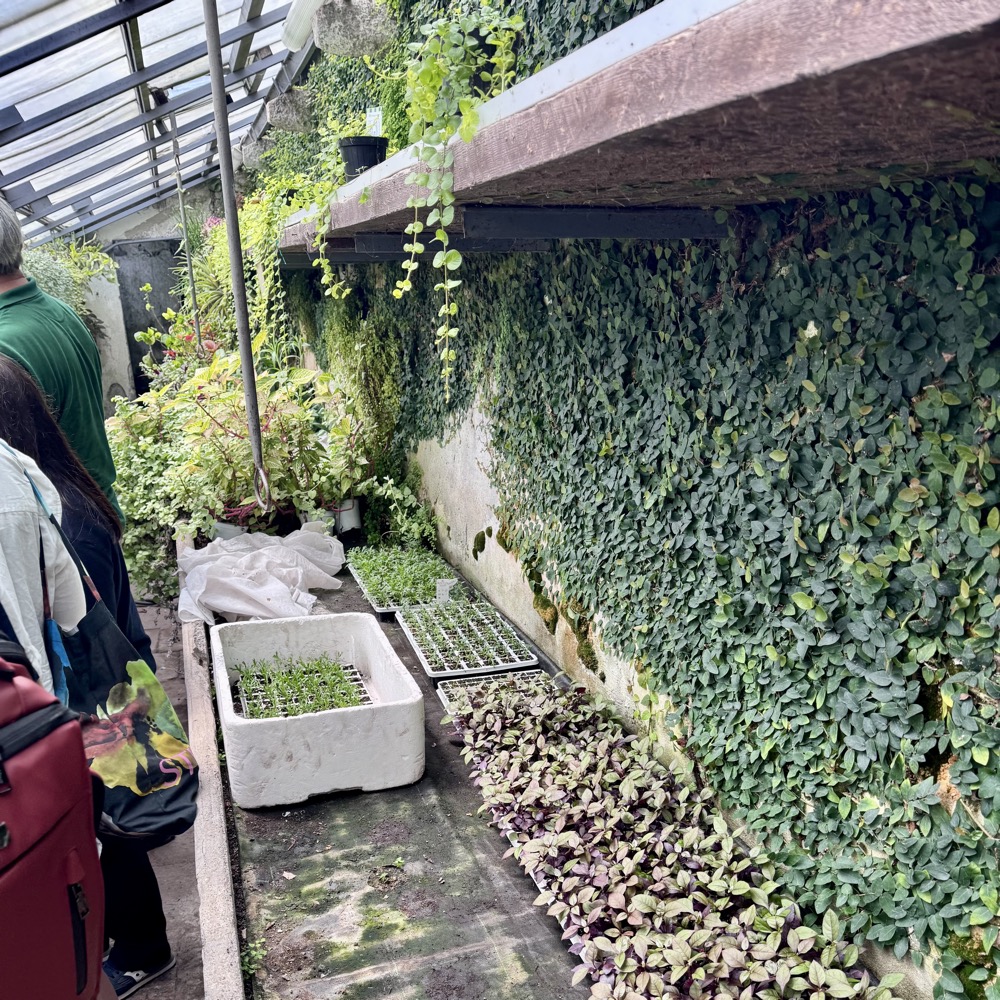
Figure 25
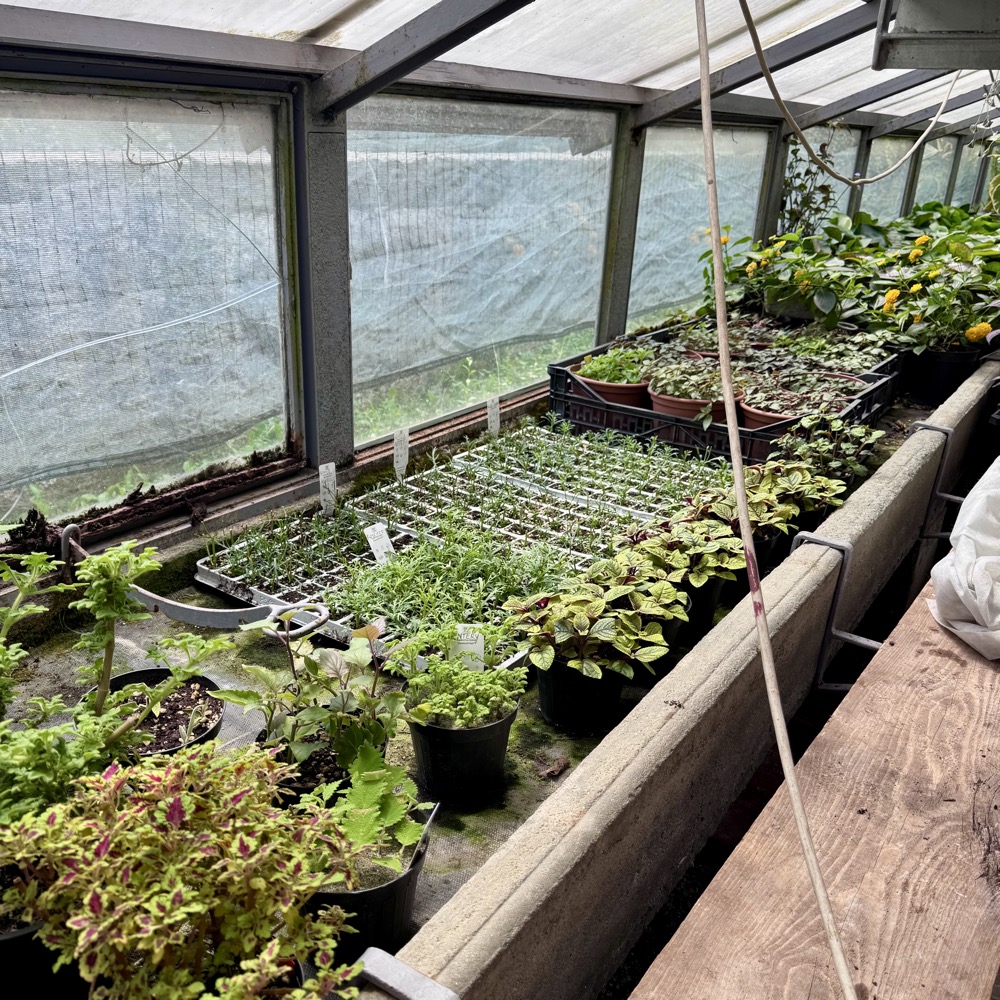
Figure 26. Cylindropuntia bigelovii in Pinto Basin, Joshua Tree
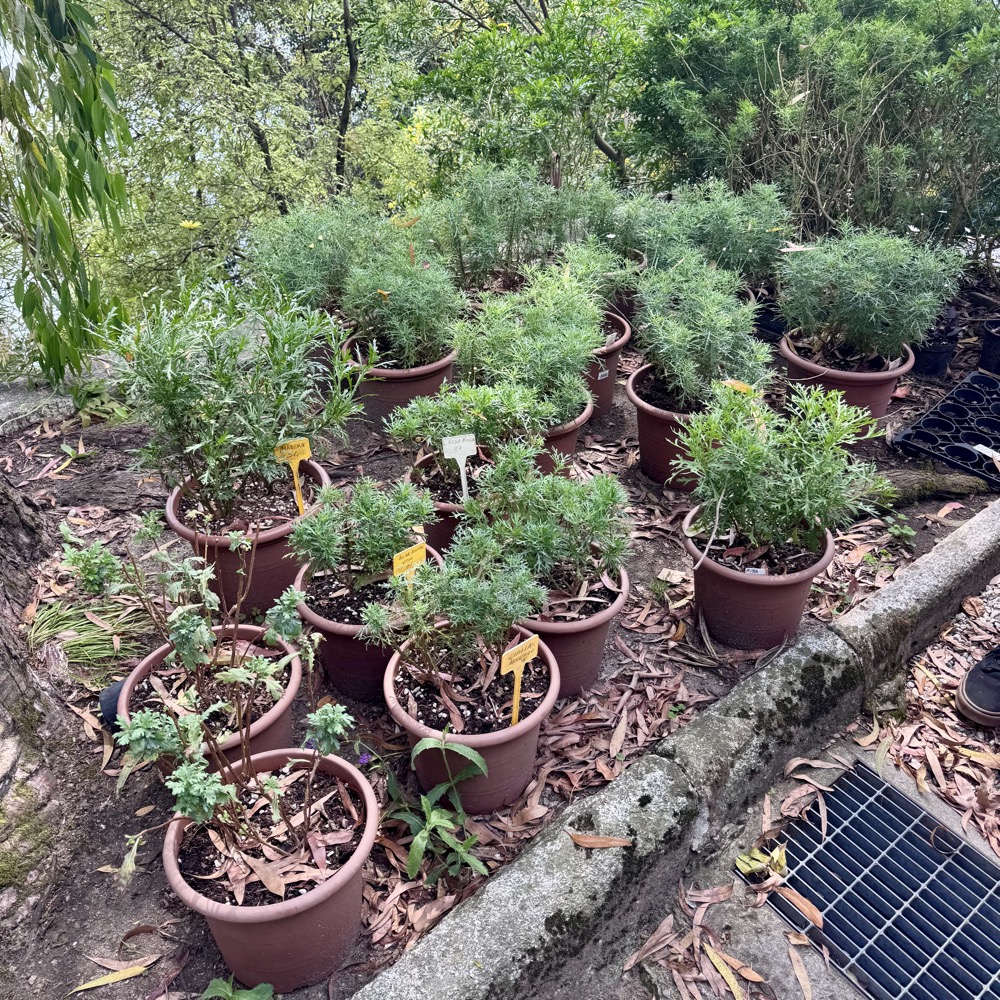
Figure 27
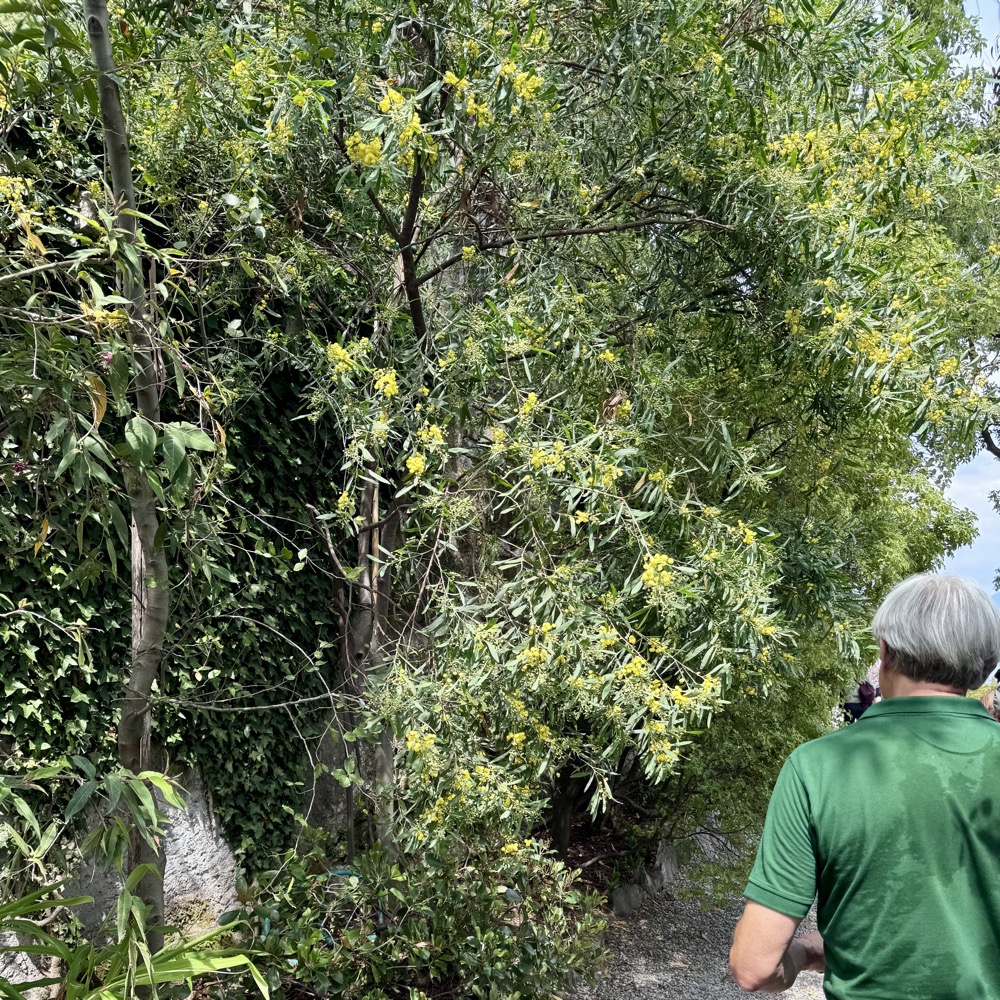
Figure 28. Luigi showing us one of the many Acacia sp. which can flower up to four times a year on the island
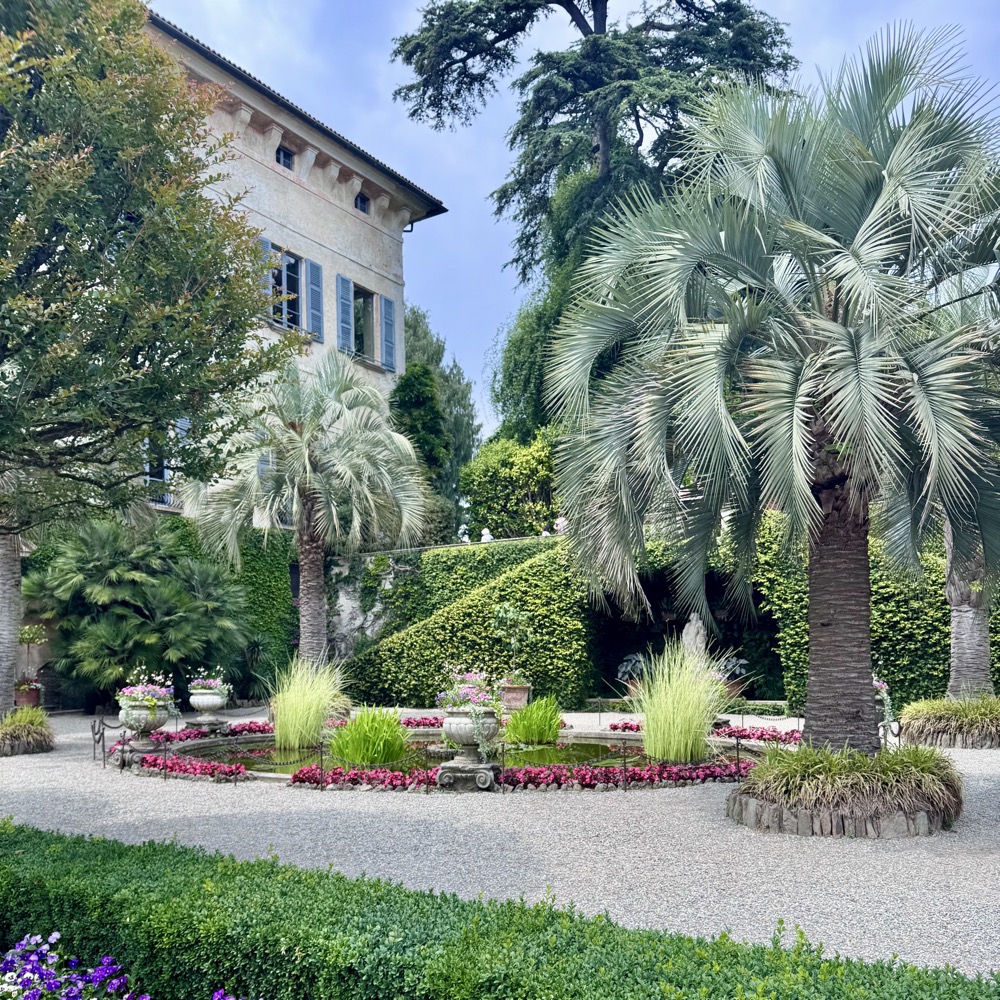
Figure 29. Statuesque Butia capitata in the Piazzale della Cappella
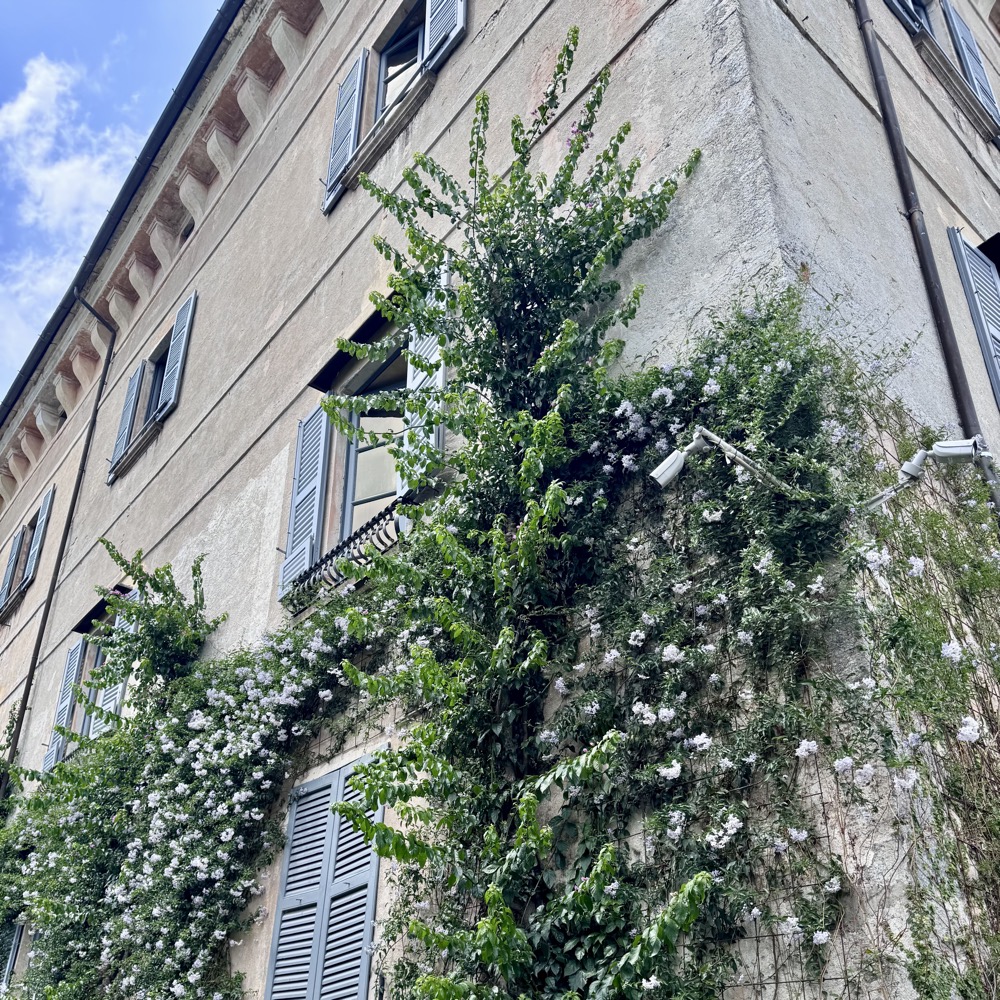
Figure 30. A Bougainvillea sp. and Solanum sp. growing against the walls of the palazzo
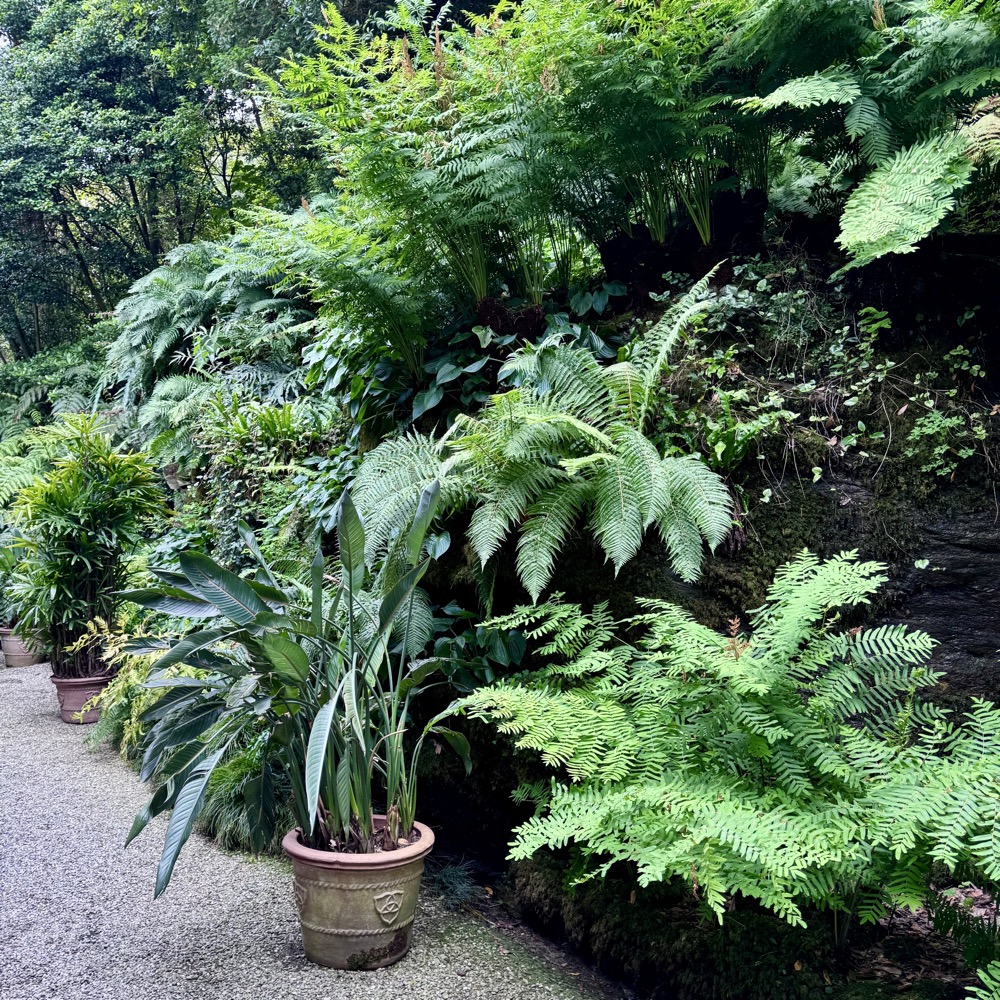
Figure 31. Ferns, such as Osmunda regalis, and various Hosta cultivars are grown on the cooler, north side of the island
Highlights
It was a joy to see gnarled, old specimens of Lagerstroemia. We had a trial of Lagerstroemia at Wisley a few years ago and they performed well in our climate in the south-east of England. This prompted us to introduce more into the garden, but they are all relatively young in comparison.
It was also exciting to see Proteaceae plants growing outside in the ground at this latitude.

Figure 32
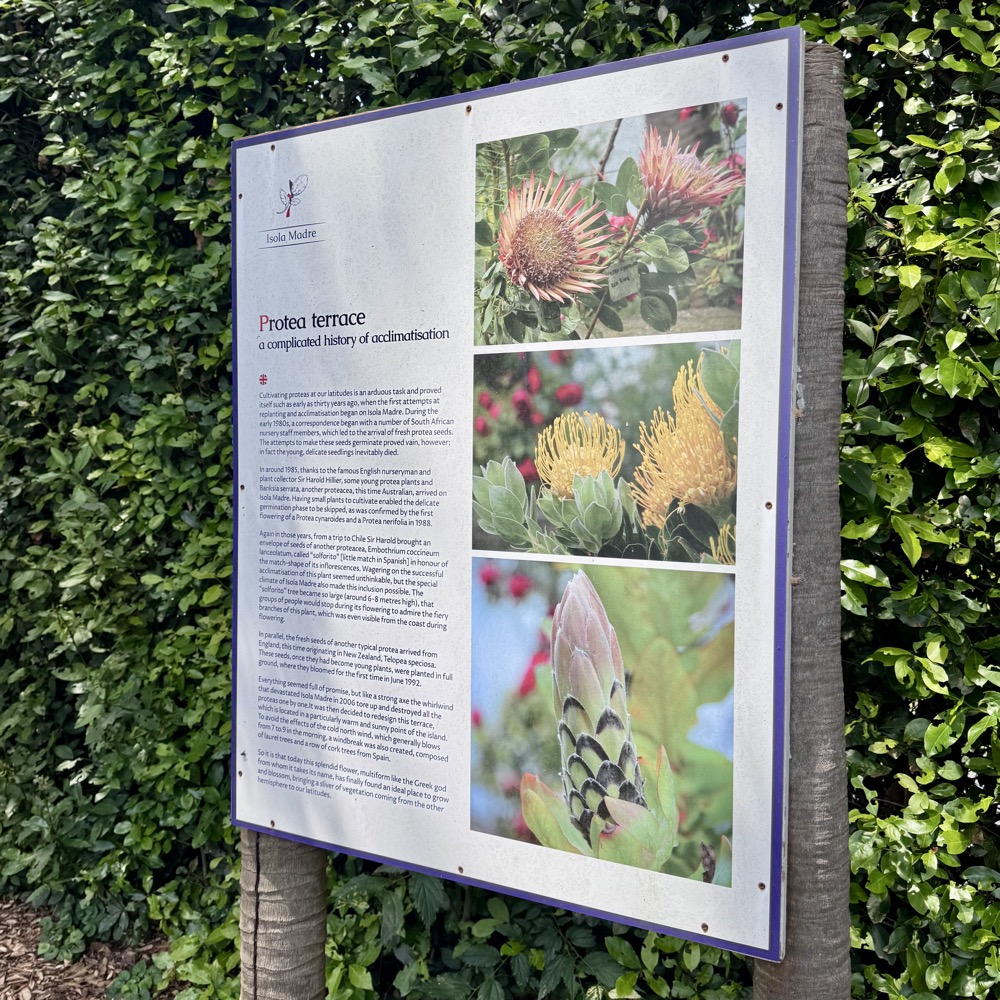
Figure 33
Villa Carlotta
Villa Carlotta is a villa and botanical garden on the shore of Lake Como at Tremezzo, completed in 1745 for the Clerici family and later passing through the hands of several notable owners, most significantly Giovanni Battista Sommariva, who filled it with works by renowned artists. Princess Marianne of Prussia bought it for her daughter Charlotte, who gave the villa its current name. It is now managed by a charitable foundation and operates as a museum.
The eight-hectare garden rises in terraces from a formal Italian garden near the lake (Figures 34 and 35) with clipped hedges, pergolas, and citrus and camellia trees, up through sweeping displays of rhododendrons and azaleas made up of more than 150 different cultivars (Figures 36 and 37). There are areas of tender exotic planting (Figure 38), cacti and succulents (Figure 39), a valley of tree ferns (Figure 40), specimen cedars, palms, redwoods, and plane trees, and a dedicated bamboo garden of over 25 species.

Figure 34
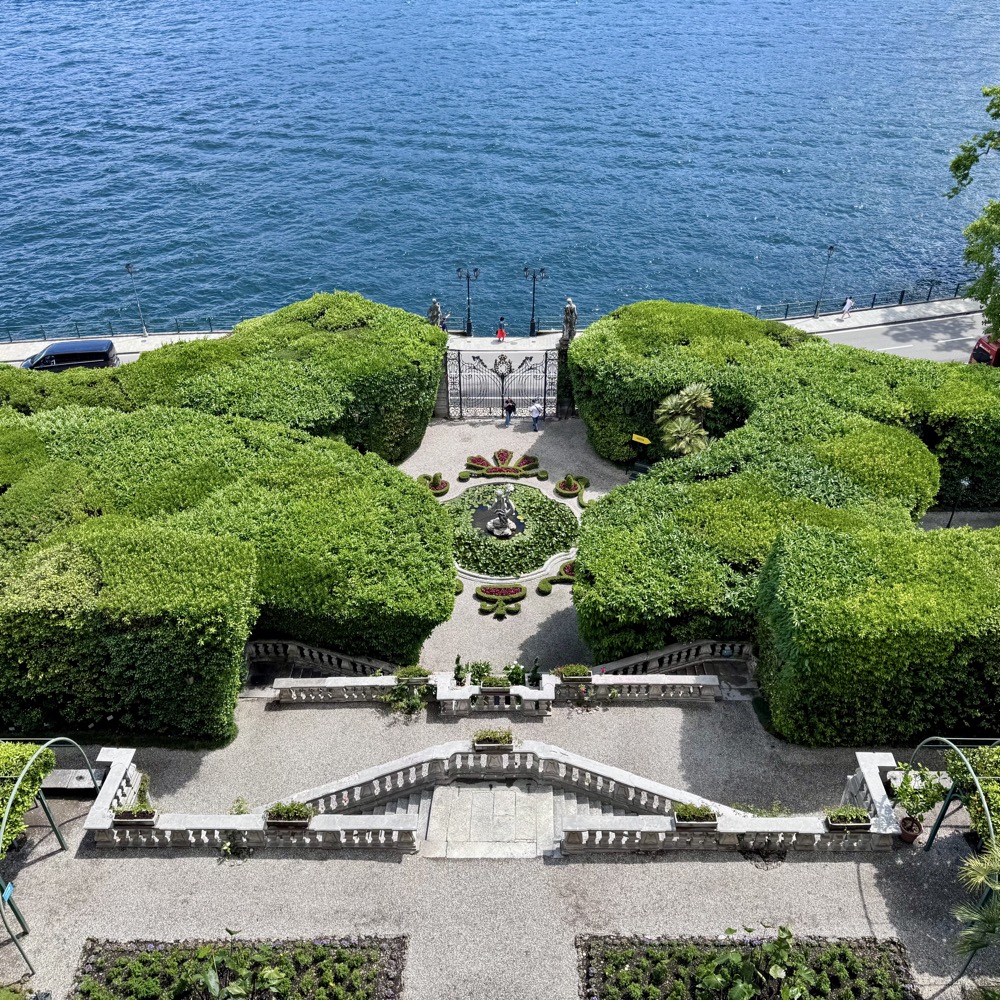
Figure 35

Figure 36

Figure 37
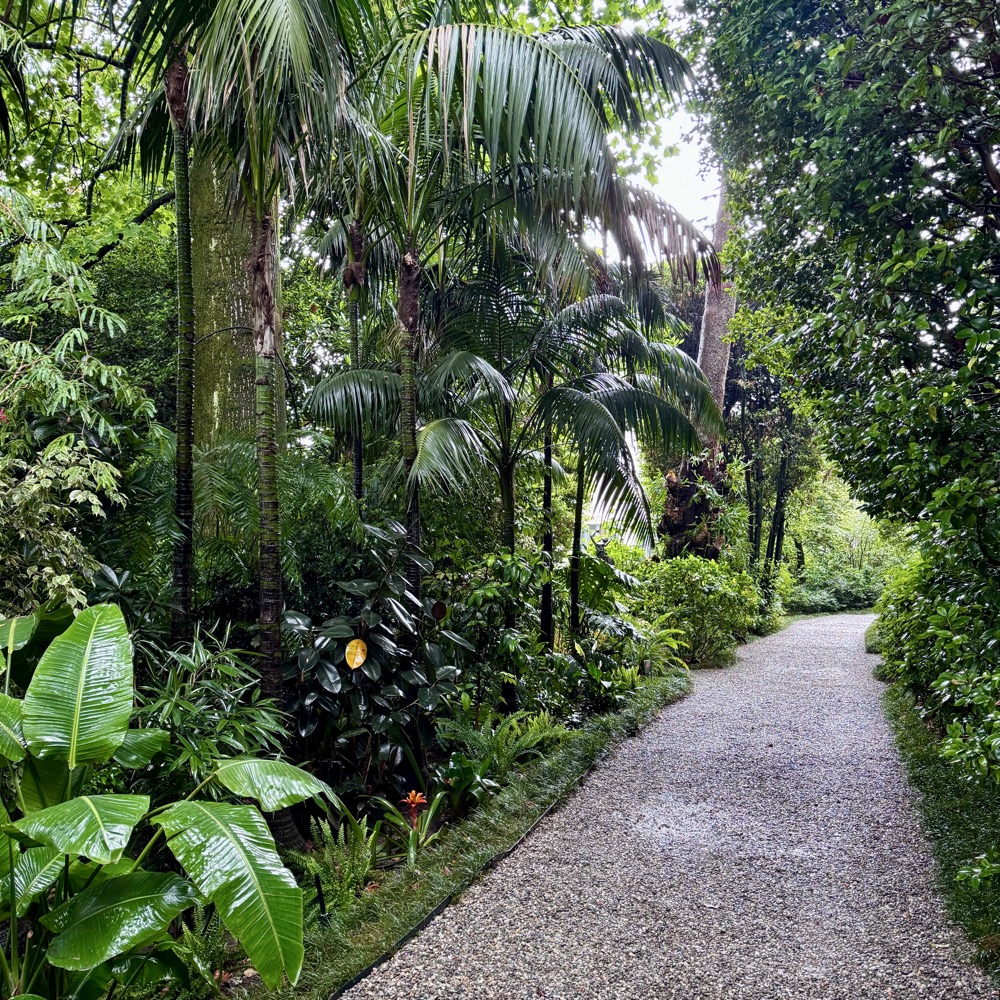
Figure 38
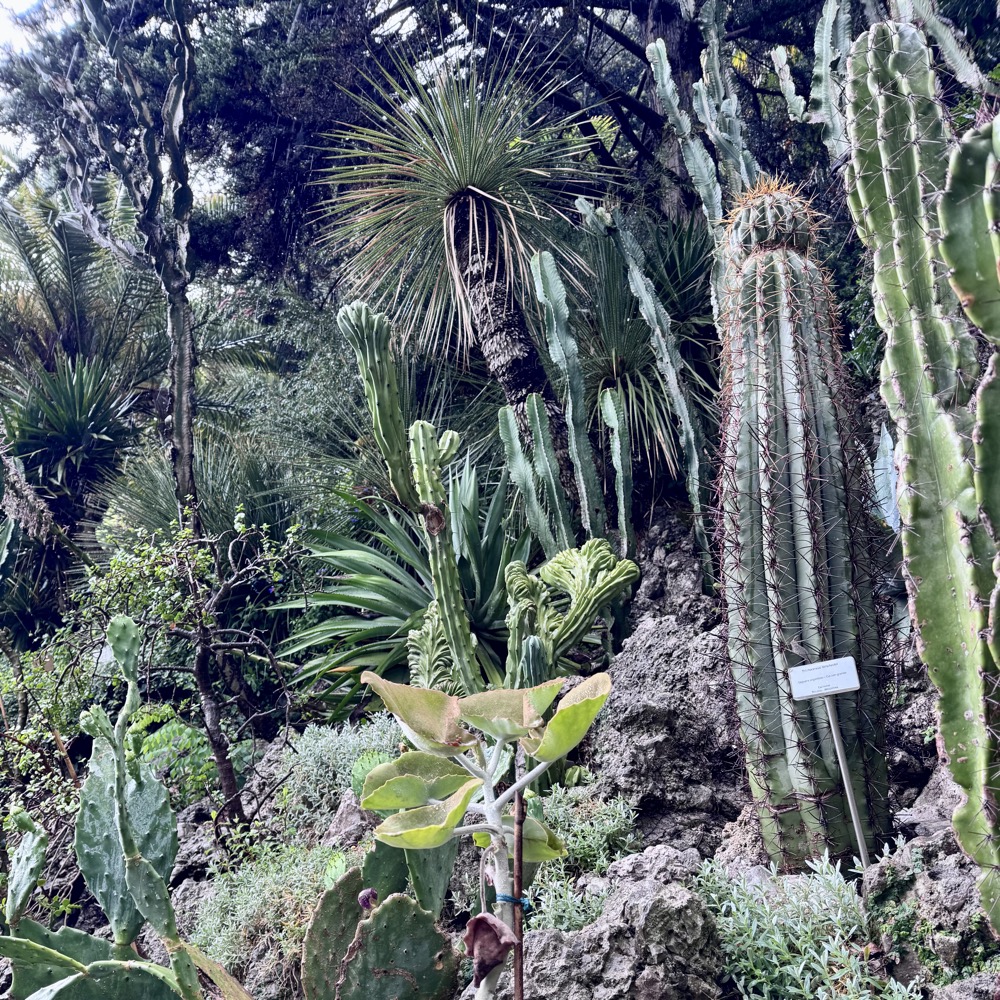
Figure 39
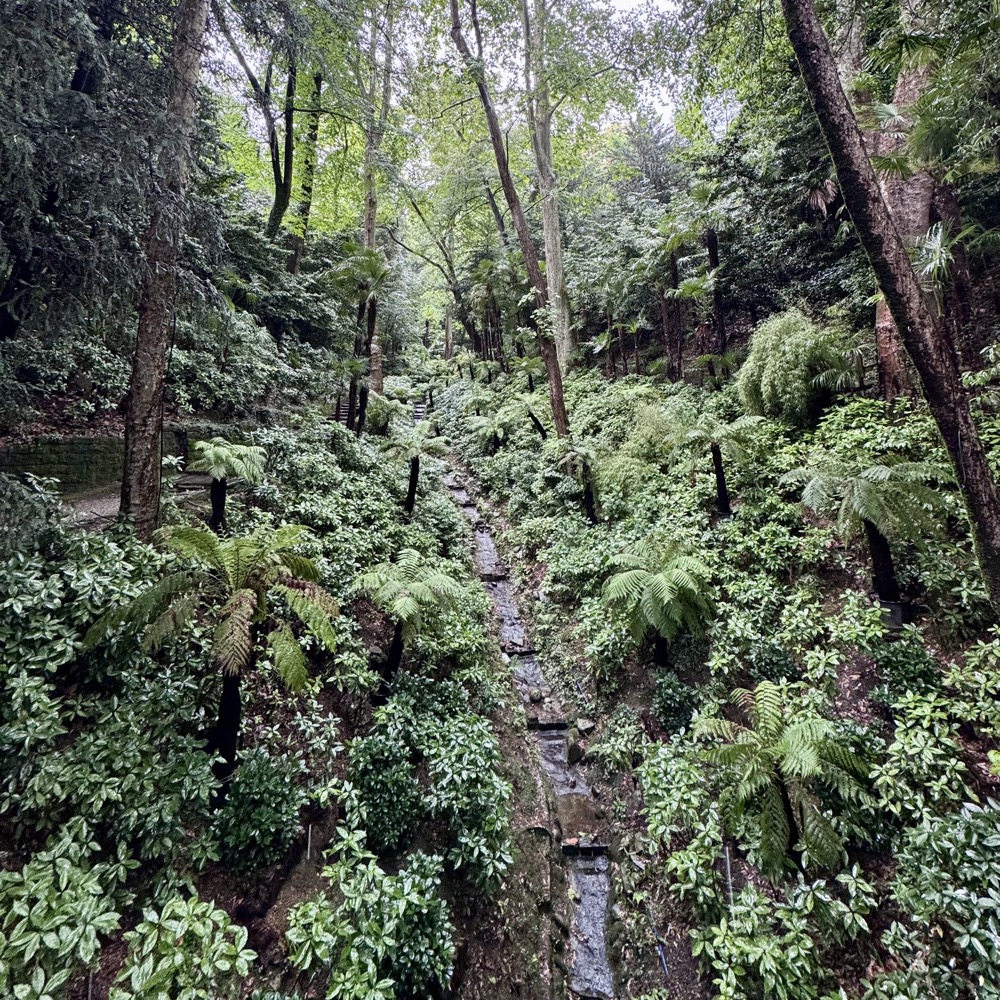
Figure 40
The visit
We drove from Verbania on Lake Maggiore to Lake Como. Simone Boggia, the head gardener, met us in the pouring rain and gave us a damp tour of the garden. As we went on our walk around, one of the most striking aspects of the way that the garden is designed and managed was the sheer volume of plants that are protected in winter, in a series of relatively small greenhouses (Figures 41 and 42), and then moved out for the summer. These include relatively mature palms, forests of tree ferns, enormous cacti, and a diverse collection of tropical plants and succulents. Simone acknowledged that this is a big task and he and his team are experimenting with leaving some plants in-situ, some with extra protection, and some without. We discussed what we can leave outside year-round at Wisley and emphasised that we leave Dicksonia antarctica planted out in similar conditions and environment to where they are set out at Villa Carlotta, only occasionally providing extra protection if extreme cold is predicted. When we came around to the rock garden, Simone expressed his displeasure with how the area was planted up, with annuals and tender perennials, and not with rock garden or alpine plants (Figure 43). It seems it has been planted up as a bedding display for a long time, but it is an area he is keen to change. We talked about possible perennial plants that could be incorporated. The rain eventually cleared and the sun came out for us to see the garden in a different light.
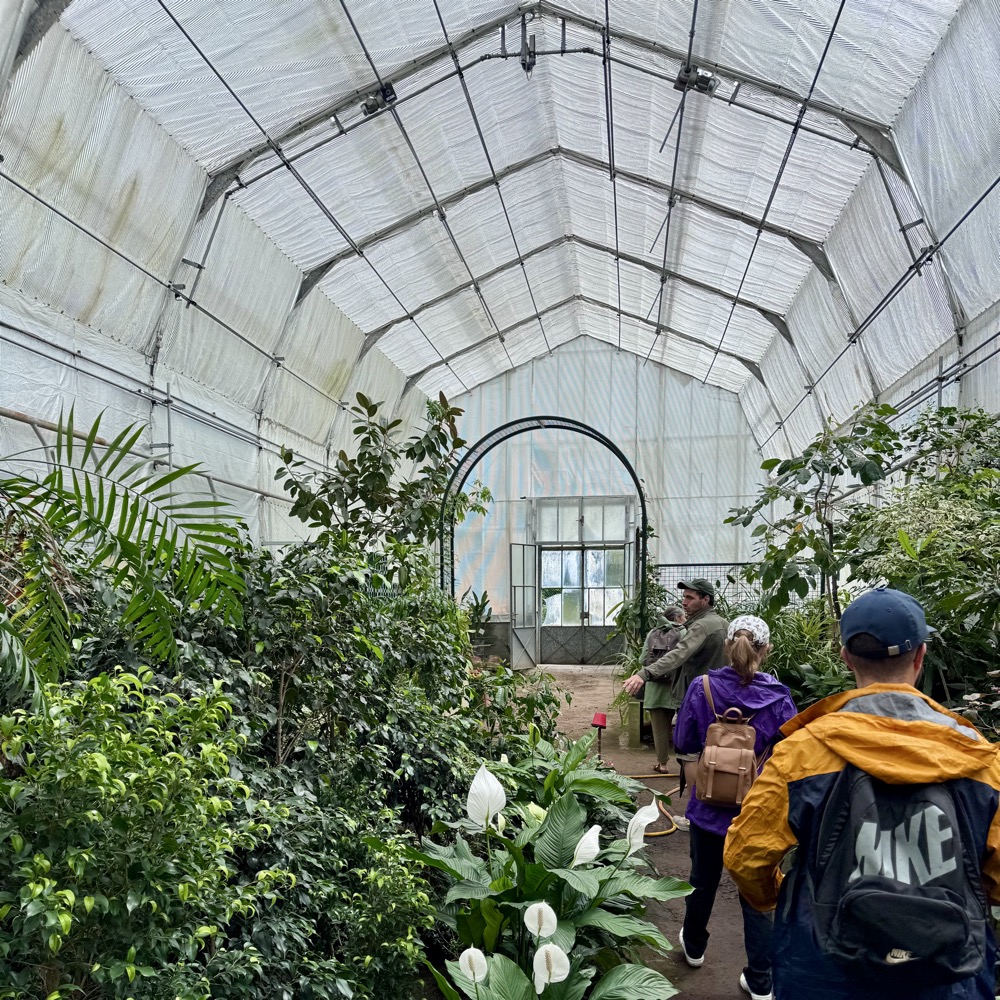
Figure 41
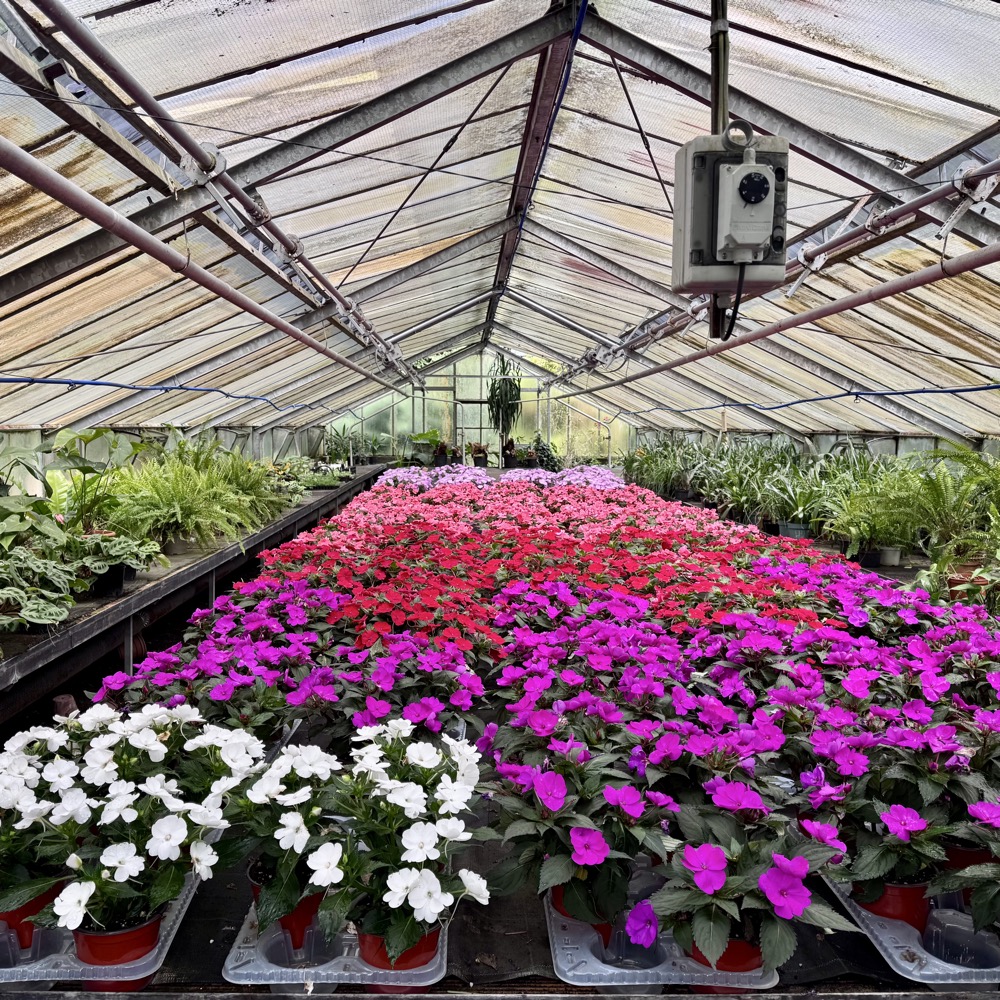
Figure 42
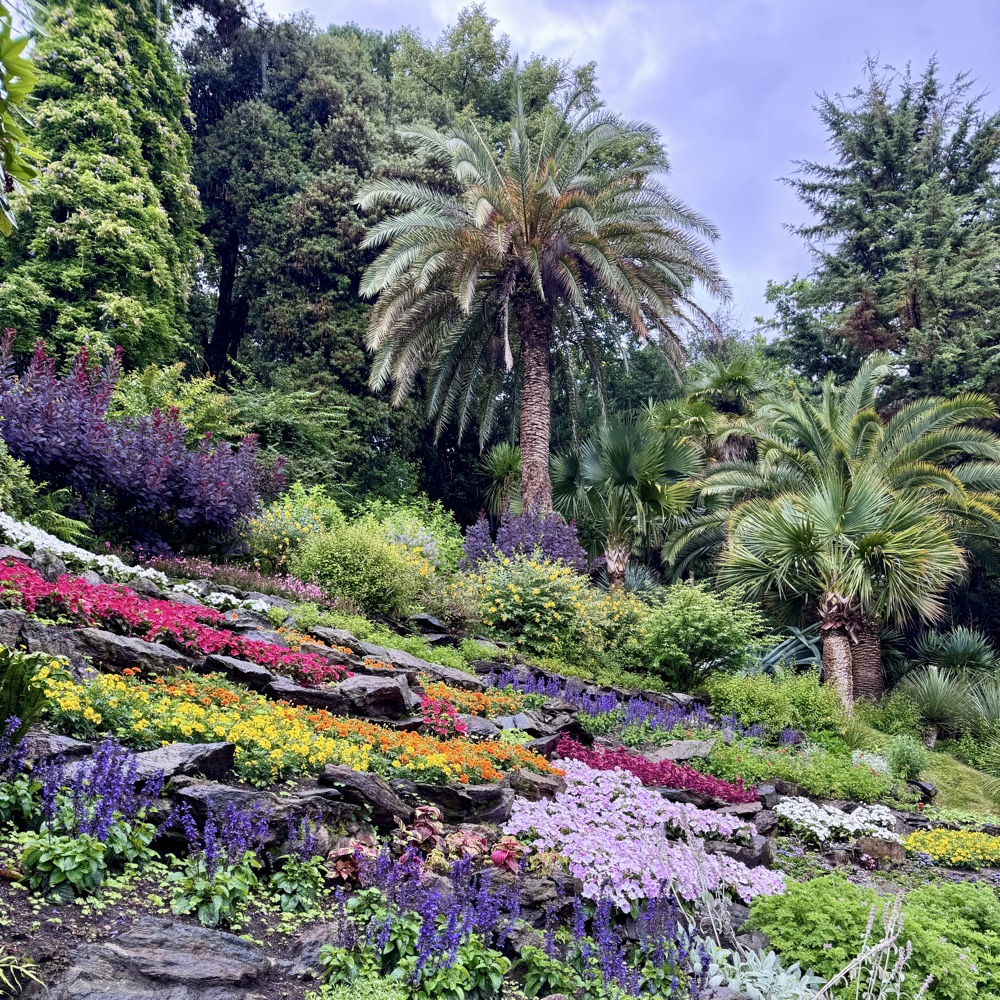
Figure 43
Highlights
The garden sits on a steep slope right next to the lake and the views are spectacular, especially when framed by mature trees. The way the garden is laid out in terraces and meandering pathways up the hill takes full advantage of the borrowed landscape. The views from inside the villa are equally breathtaking (Figures 44 to 47).
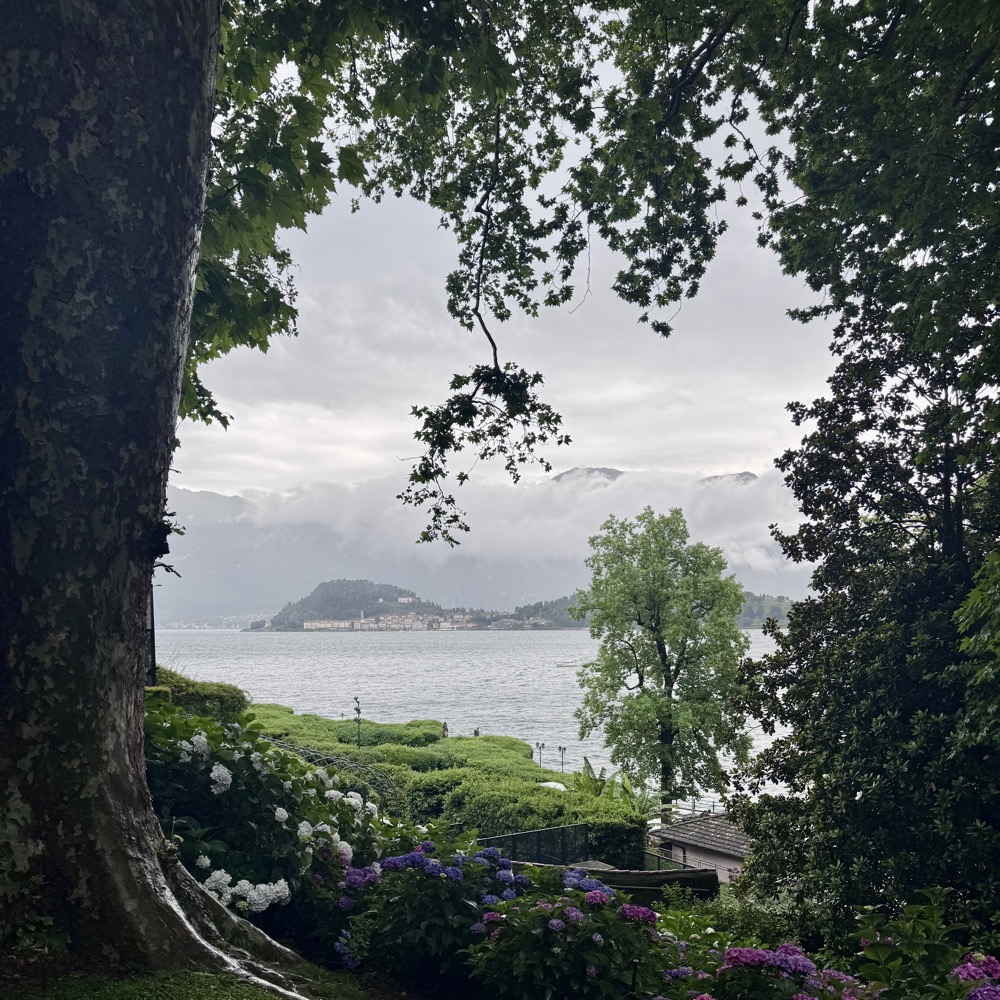
Figure 44
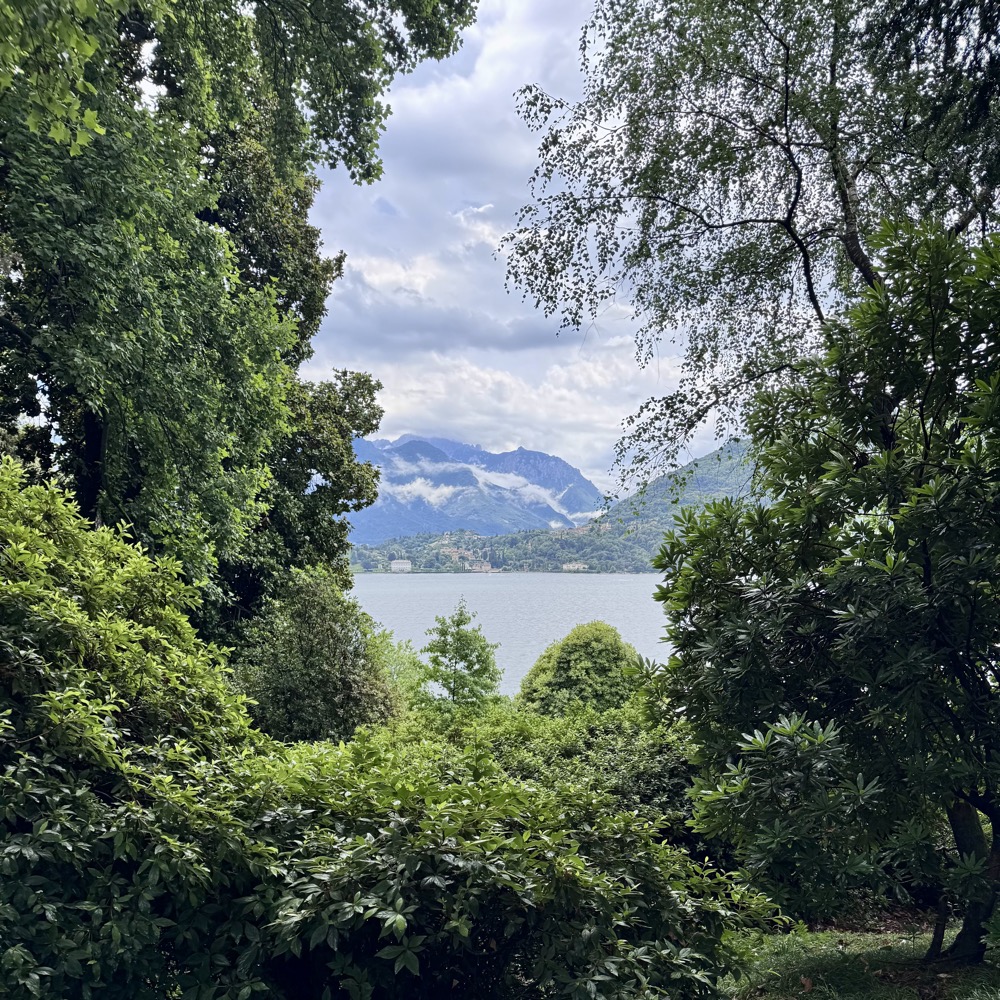
Figure 45
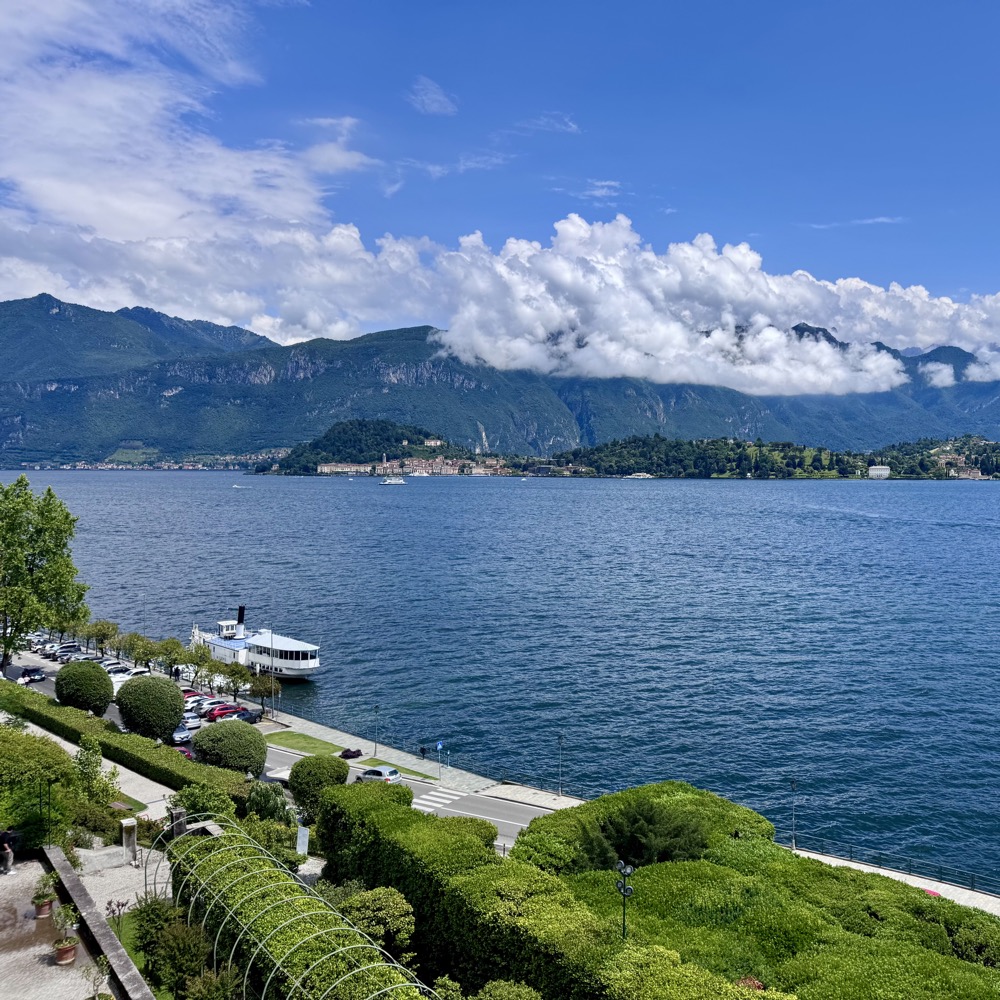
Figure 46
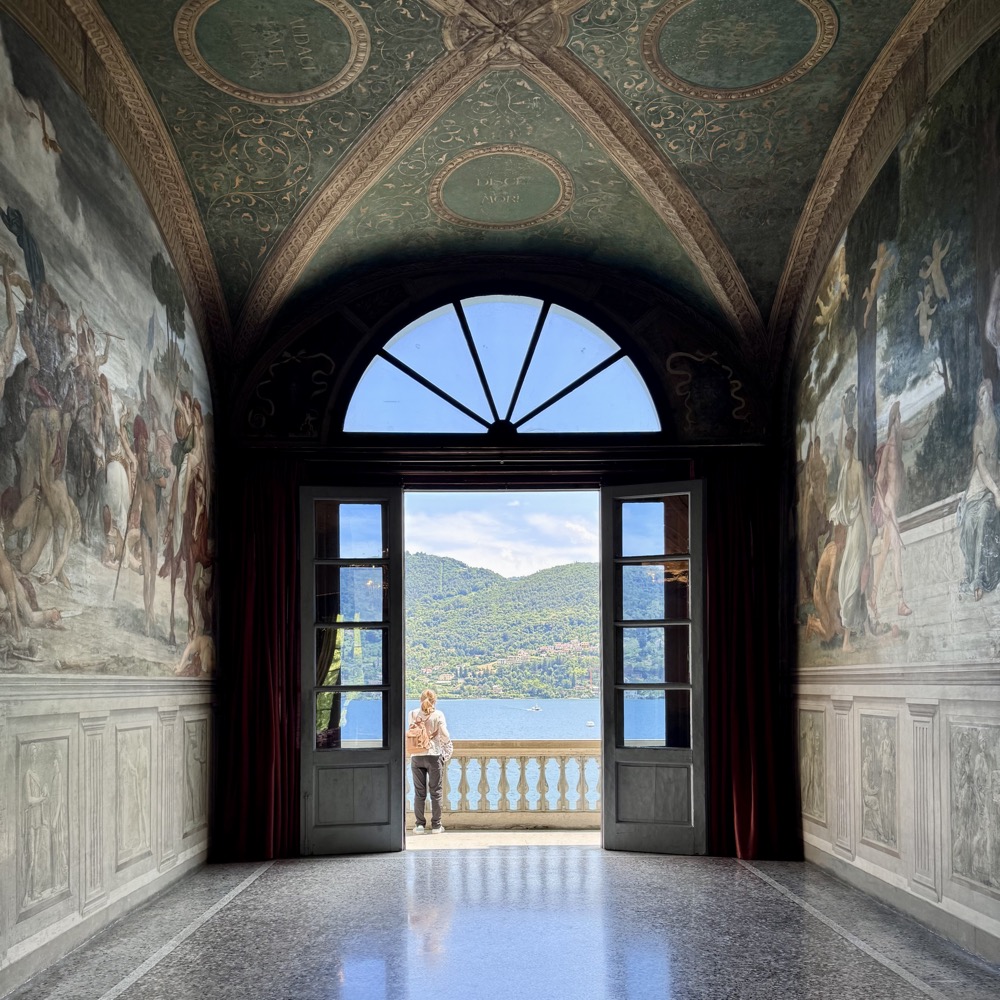
Figure 47
Learnings
The garden has a growing population of a non-native pest, Xylosandrus crassiusculus (granulate ambrosia beetle). This is a tiny bark beetle that is a threat to woody plants. It was first detected in Europe, in Italy, in 2003. It is now widely spread and concerning. The female beetle excavates tunnels into the stems of woody plants and larvae further enlarge the tunnels which results in wilting, die-back and potentially death to host plants. Simone showed us dieback on Magnolia and Rhododendron caused by ambrosia beetle. He is concerned that it could become a big problem if some form of treatment isn’t found soon. It has not made its way to the UK, and hopefully it won’t anytime soon!
Isole di Brissago
This botanic garden, on the largest of the Brissago Islands in Lake Maggiore, traces its origin to Baroness Antonietta St. Leger, who owned the islands from 1885 to 1927, and who had a passion for tropical plants. After passing through the hands of the Emden family, the islands were purchased in 1949 by the Canton of Ticino together with several local municipalities, and the garden has been open to the public since 1950. The island’s insubric (referring to the mild, sheltered climate of the southern Alpine foothills) climate, moderated by the lake, creates an almost subtropical microclimate in which over 2,000 plant species are cultivated across 2.5 hectares. The collections focus primarily on plants from the world’s five Mediterranean climate zones; the Mediterranean basin, South Africa’s Cape region, coastal California, southeastern Australia, and central Chile. Tropical areas such as Central America and Asia are also represented, and a potential reorientation towards humid subtropical species is being considered in response to climate change.
The visit
We drove across the border into Switzerland and Curator Alessio Maccagni and Head Gardener Camilla Cippà picked us up in their boat (Figure 48). We were given a detailed tour of the island and shown the collections that form what Alessio referred to as the three ‘themes’ of the garden: the thematic/ethnobotanic collection (e.g. edible, toxic, and medicinal plants), the systematic collection (e.g. aquatic and xerophytic plants), and the geobotanical collection (e.g. plants from the Mediterranean, South Africa and Australia). He emphasised that many plants in the garden fall into more than one category, but they use this system as a loose way of arranging the planting. The diversity of the plant collection across the island is impressive, and everything stays in the ground through the winter as they are blessed with an even milder climate than some of the other islands, rarely dropping below freezing. The other secret to their success in growing Mediterranean, South African and Australian plants in Northern Italy is the free draining substrate that everything grows in, mostly made up of broken-down gneiss. The garden is beautifully maintained and thoughtfully designed, and we could have spent all day exploring it if we were free of other commitments.
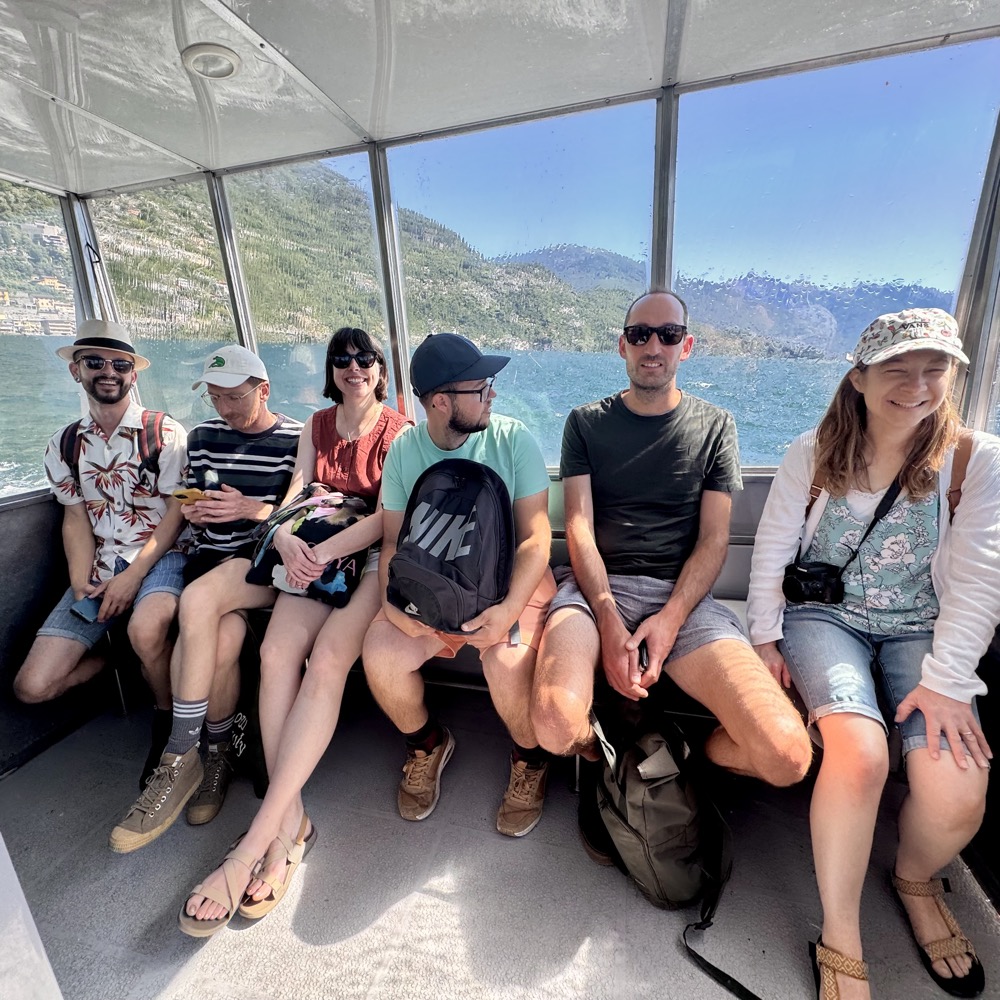
Figure 48
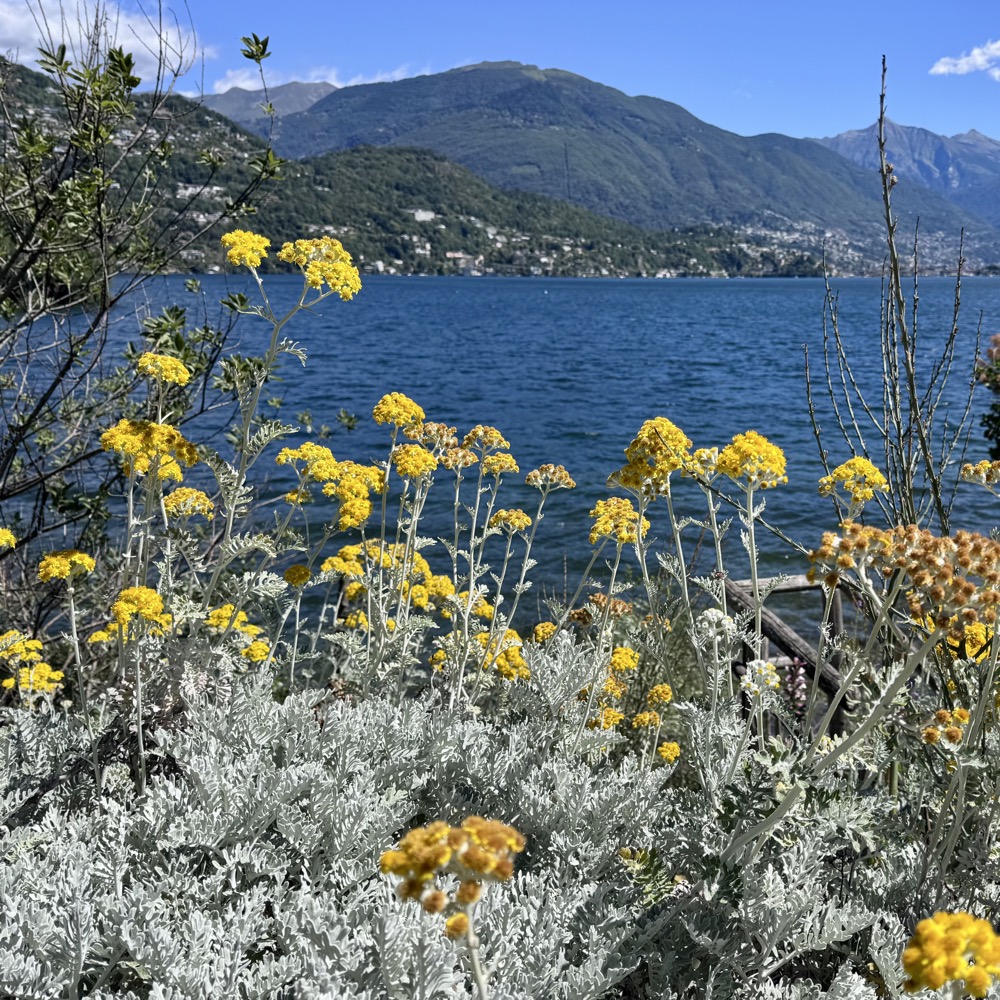
Figure 49. Senecio cineraria in flower
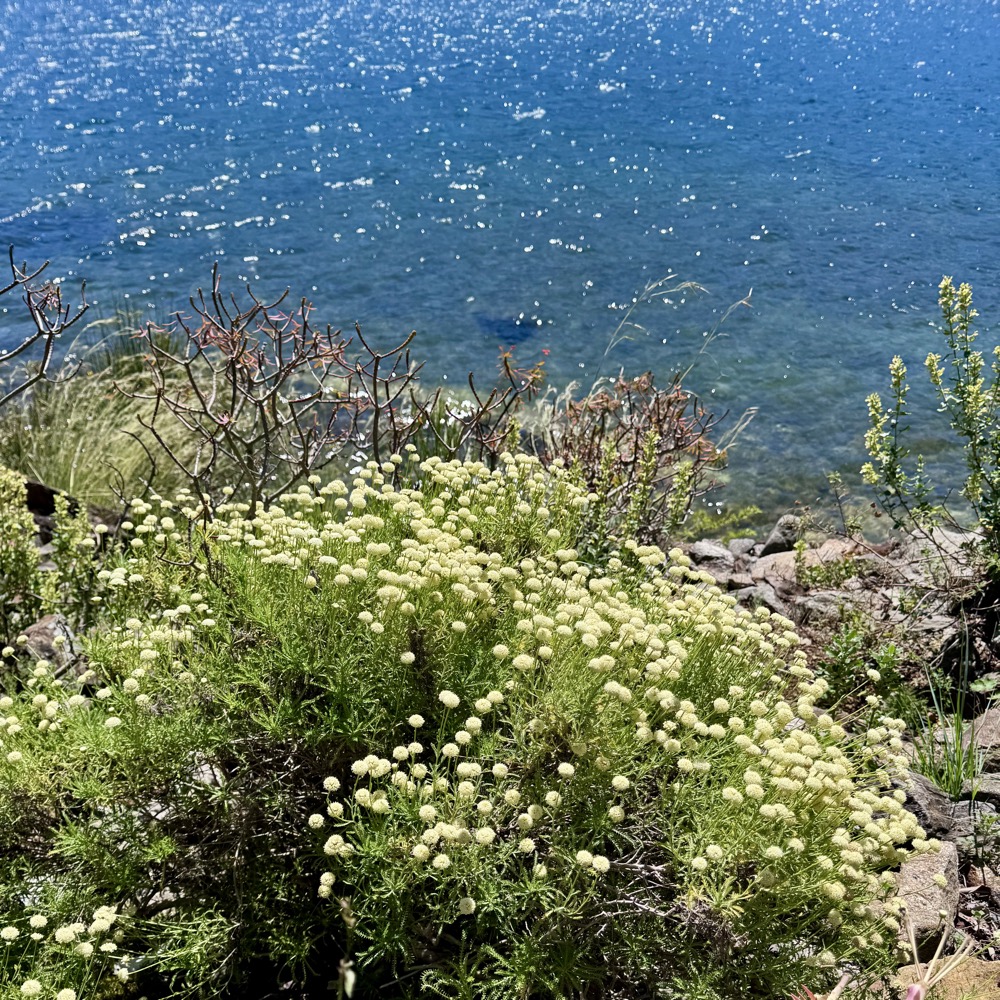
Figure 50. A Santolina sp. growing on rocky soil near the water
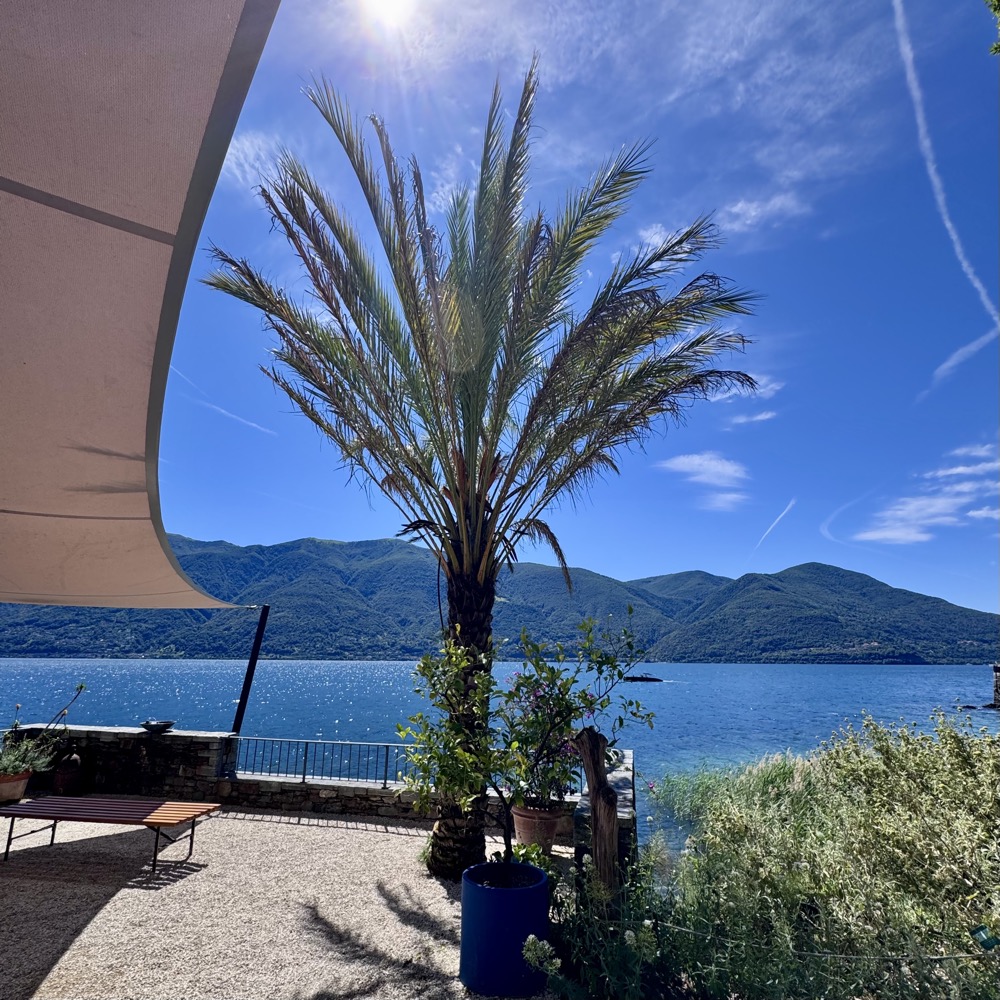
Figure 51. A Phoenix dactylifera (date palm) growing in the ground on a sunny terrace. They have two of them, a male and a female but haven’t managed to grow any mature fruit.
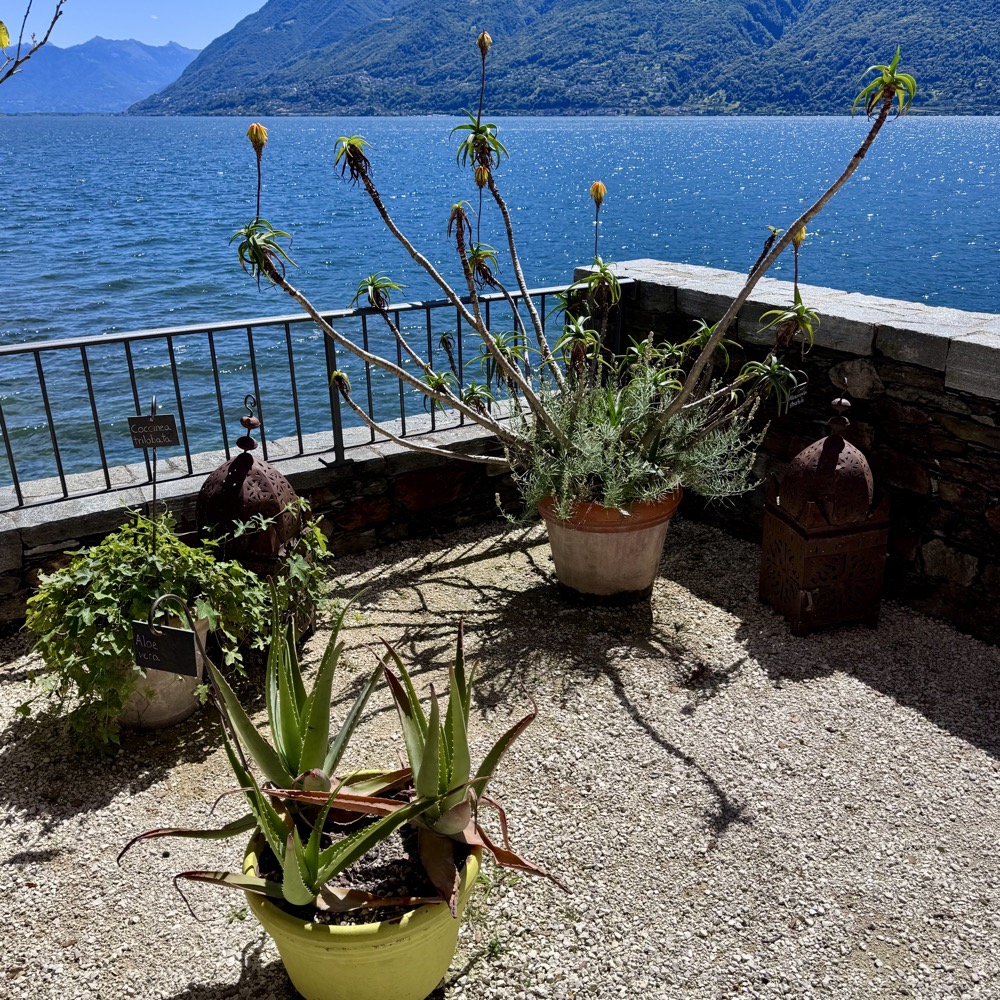
Figure 52. Coccinea trilobata (a climbing caudex geophyte from Central Africa), Aloiampelos striatula (a hardy aloe species from South Africa) and Aloe vera (native to the Arabian Peninsula)
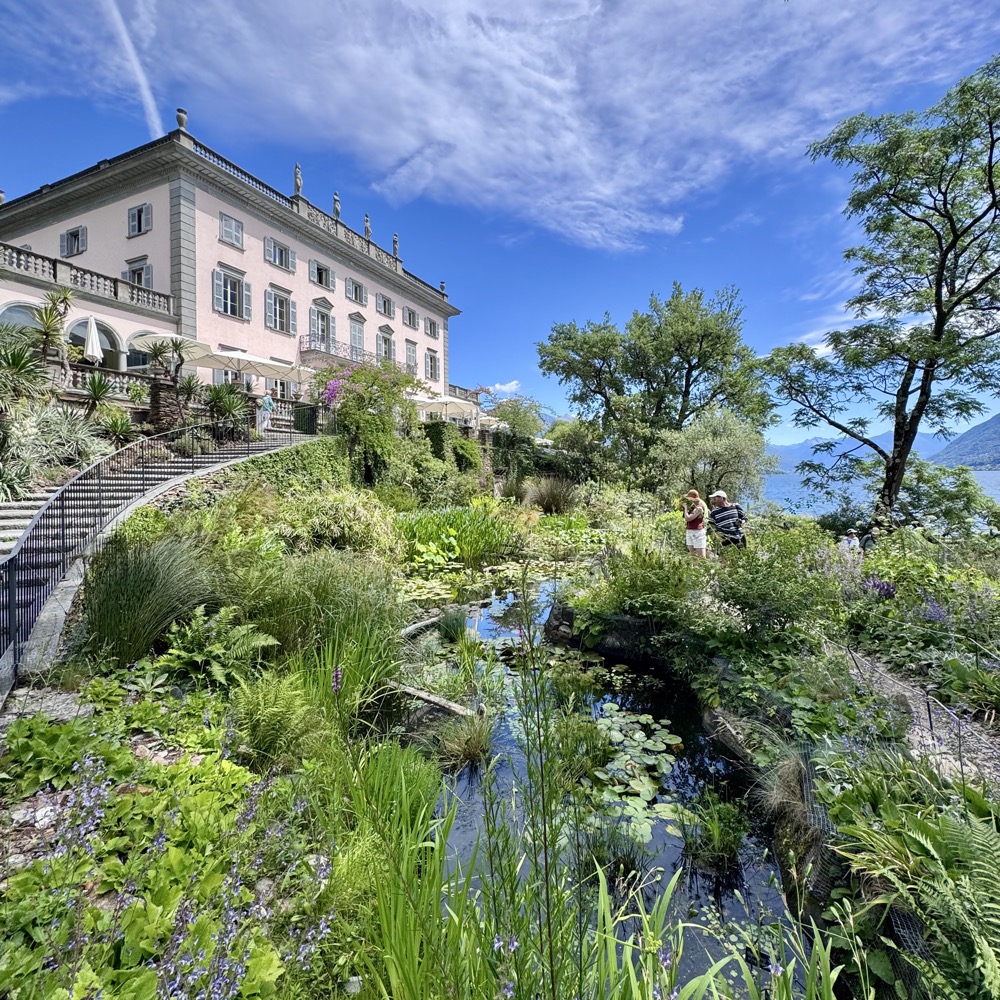
Figure 53. Villa Emden with a pond and areas of ornamental planting in front of it
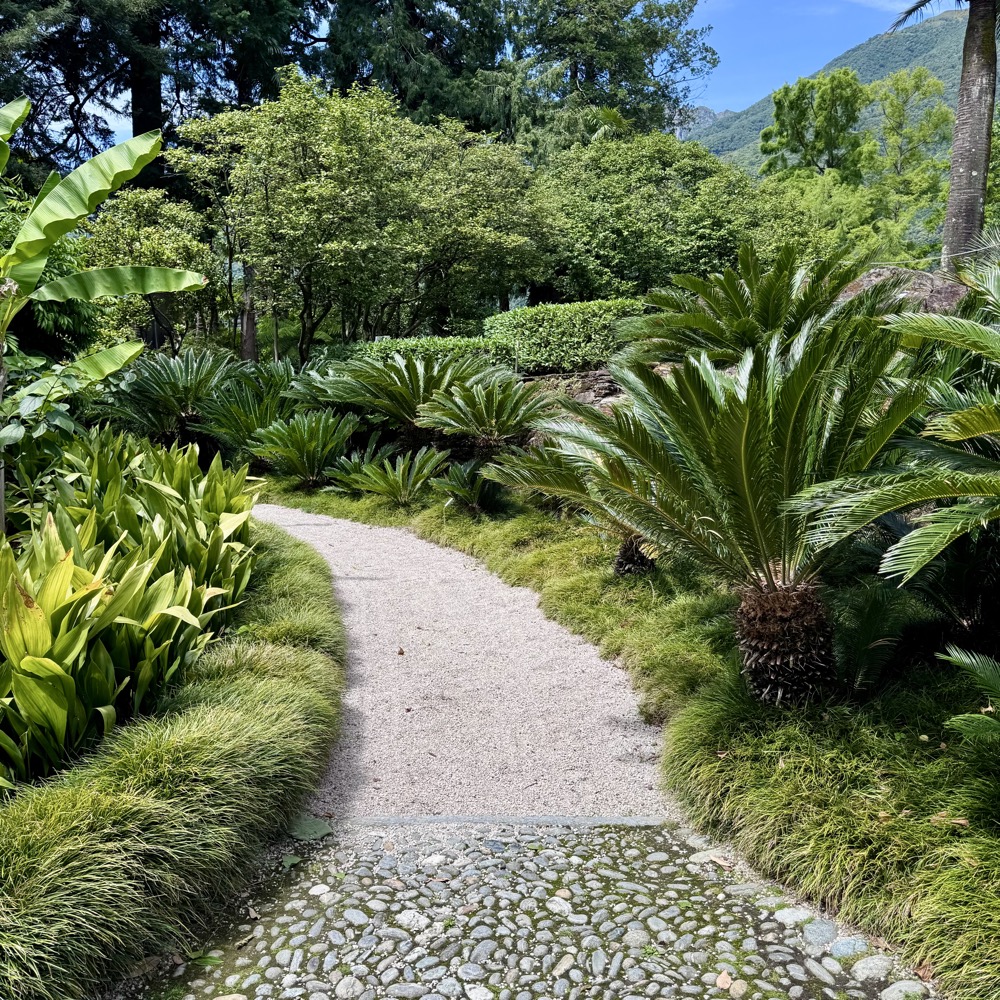
Figure 54. The cycad collection consists of plants seized by the state from the illegal plant trade

Figure 55. The pool in the centre of what is now the medicinal and useful plants collection
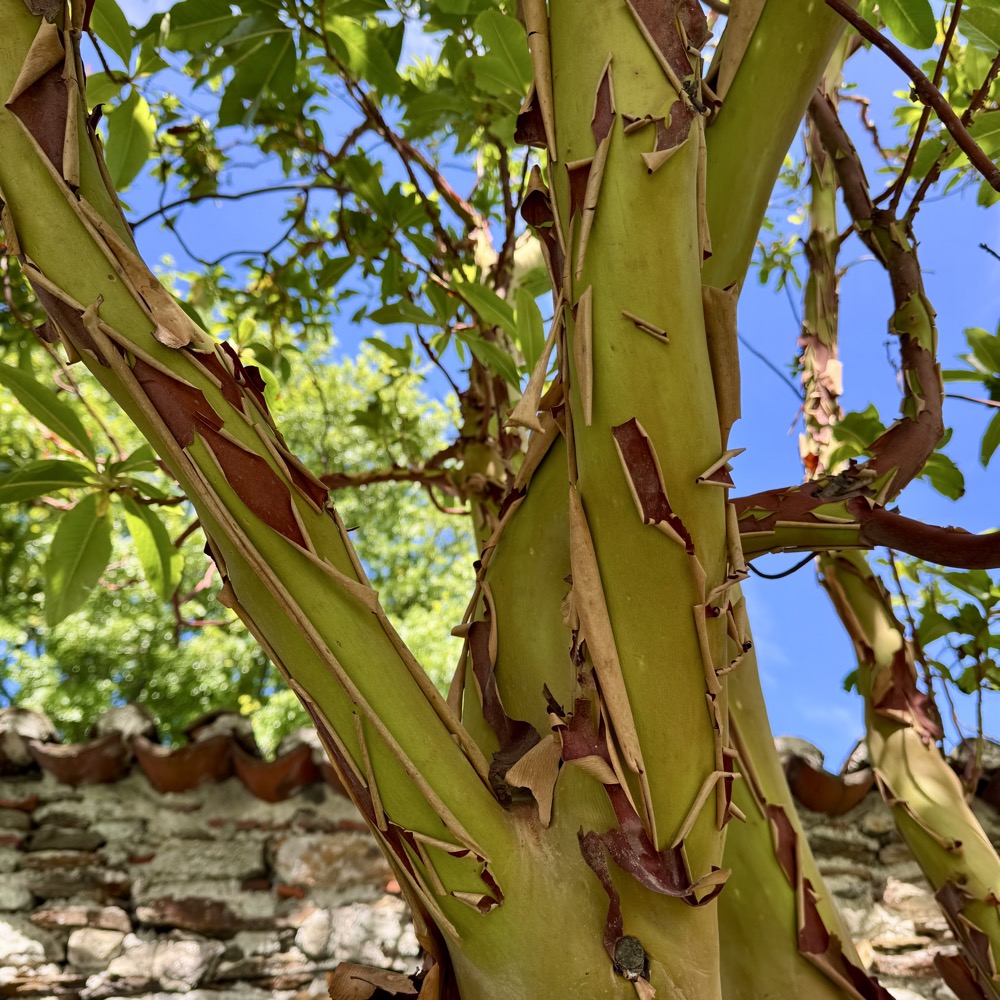
Figure 56. The attractive peeling bark of Arbutus canariensis
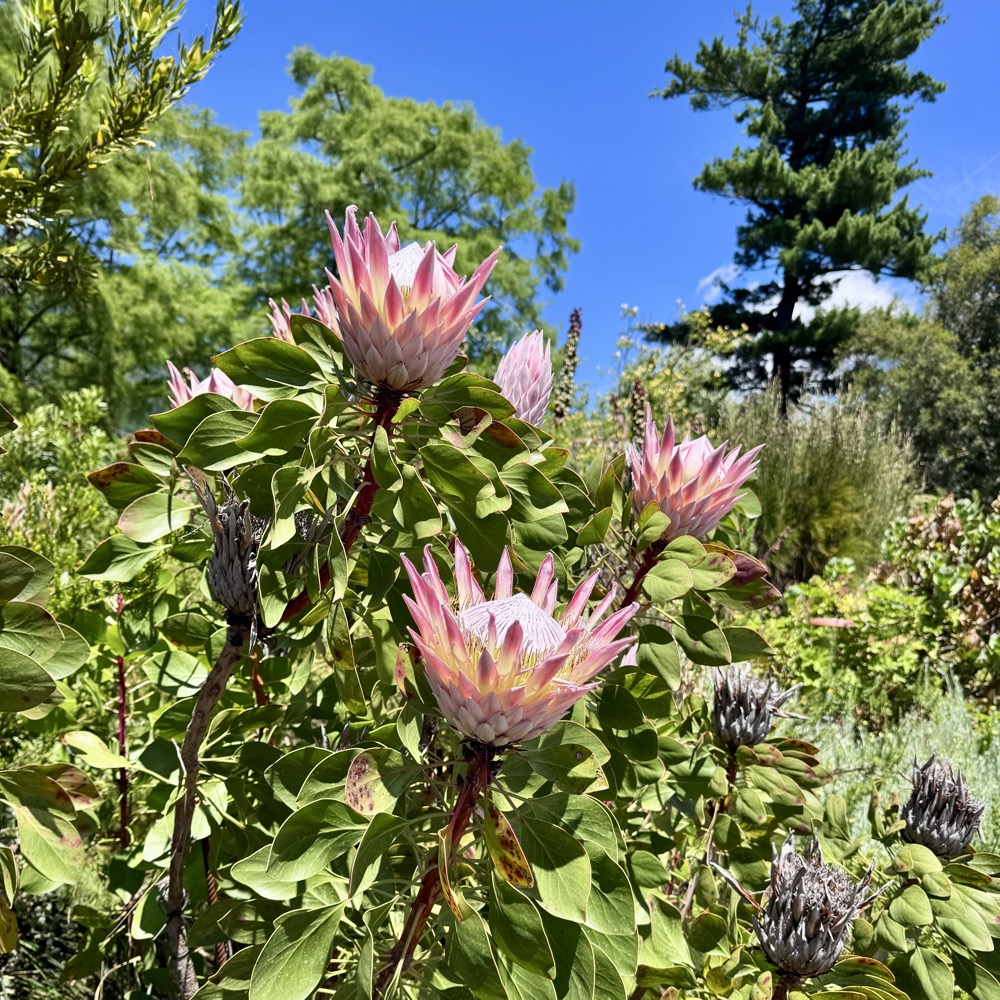
Figure 57. Protea cynaroides (king protea) growing in the South African collection
Highlights
Having grown up in South Africa, the absolute highlight for me was seeing so many South African plants growing so healthily on an island in the middle of a lake in northern Italy (Figures 58 to 61). From certain angles, with the mountains in the background, you could almost believe you were in the Cape.

Figure 58
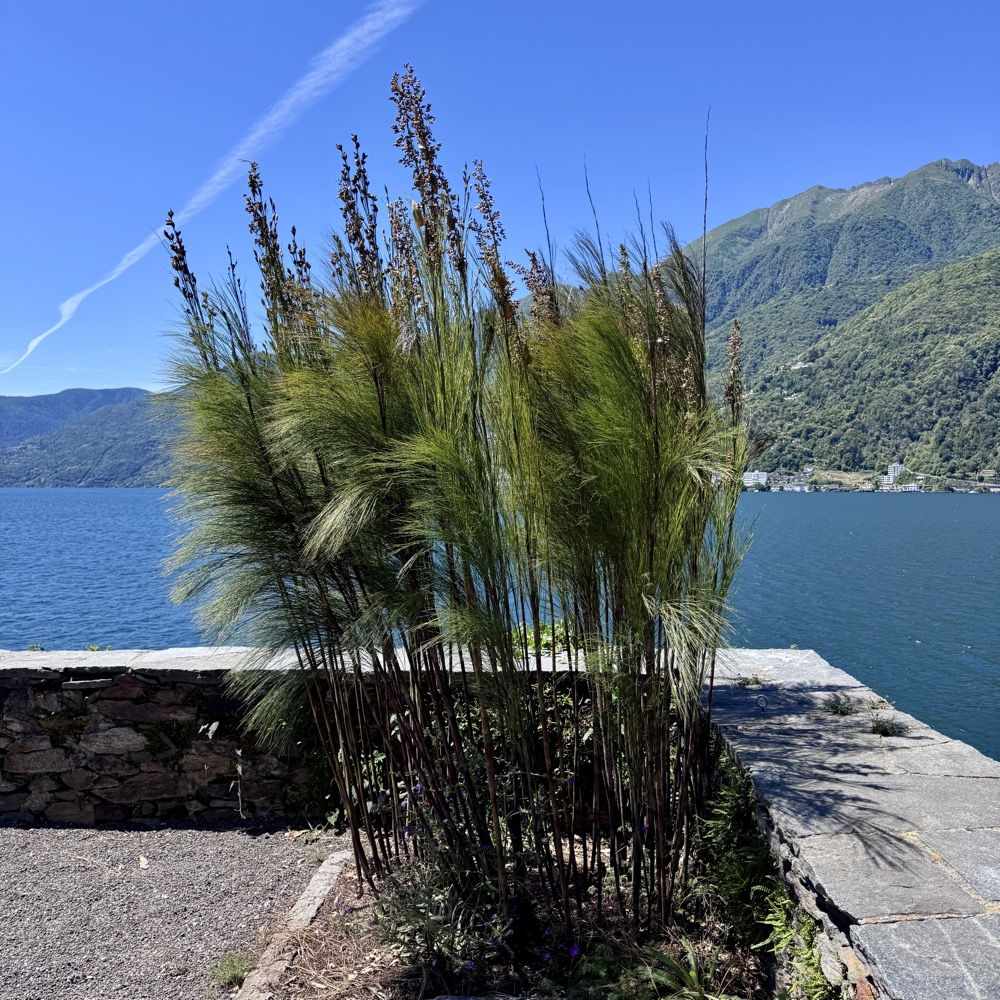
Figure 59
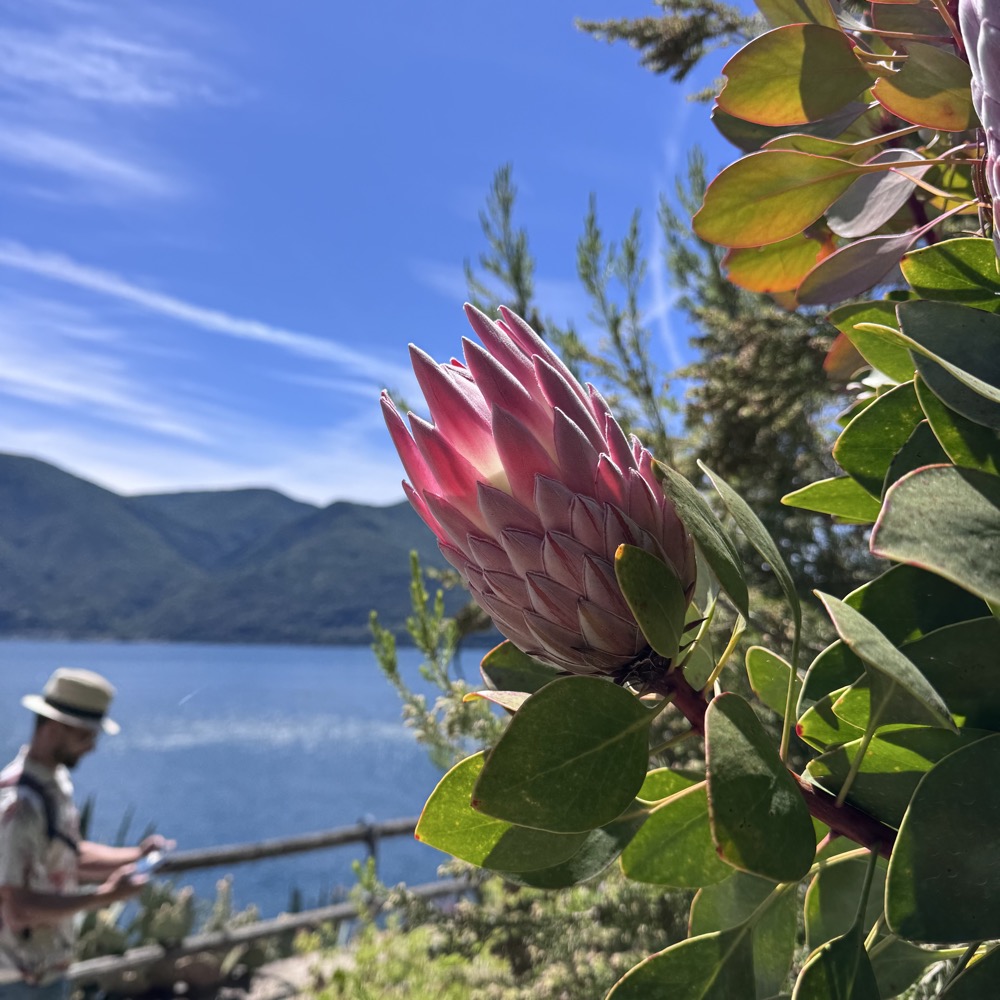
Figure 60
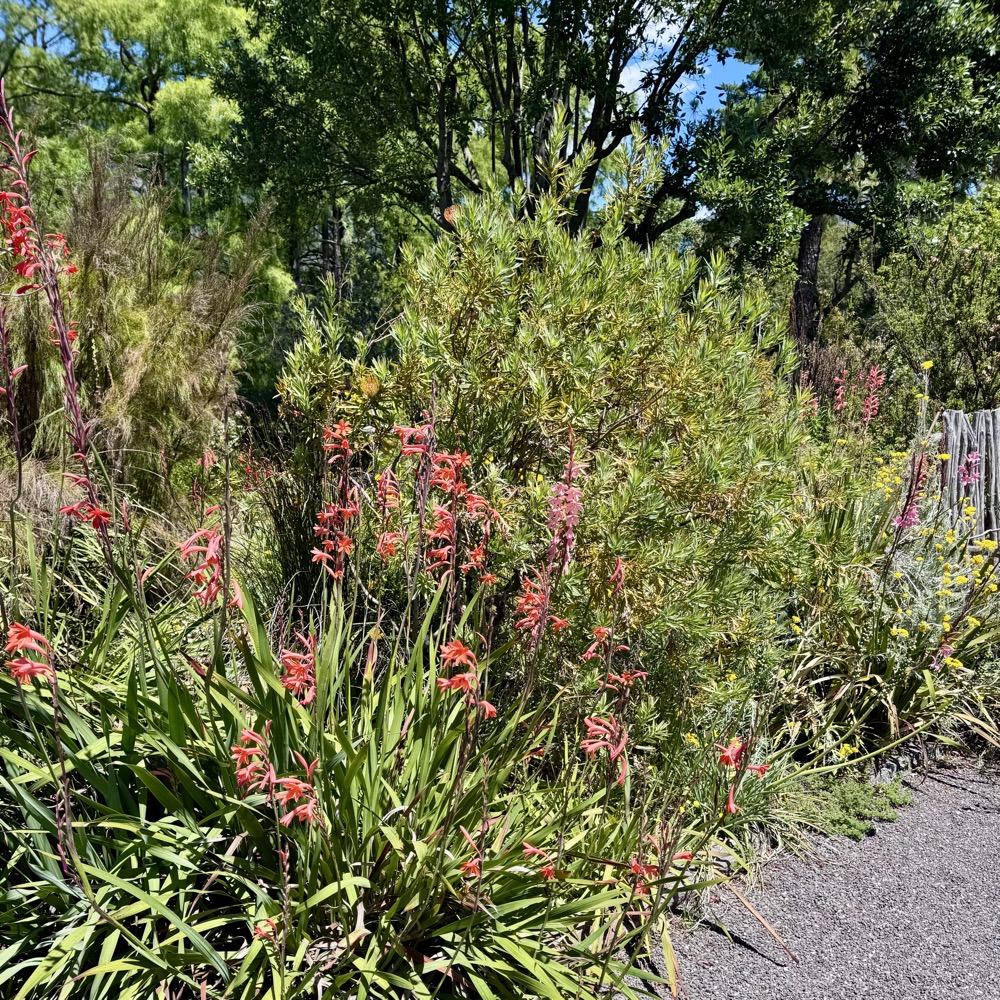
Figure 61
Learnings
Aside from the recognisable pests and diseases present in the UK, the garden also has populations of two non-native insects that are of concern. Popillia japonica (Japanese beetle) was first detected in Europe, in Italy, near Milan in 2014. The adult beetle defoliates plants, causing significant damage and potential death to its hosts, which include over 300 different plants in 79 plant families. There are traps placed around the garden to both trap and monitor numbers (Figure 62). Unfortunately, there is no effective treatment that doesn’t harm other insects too.
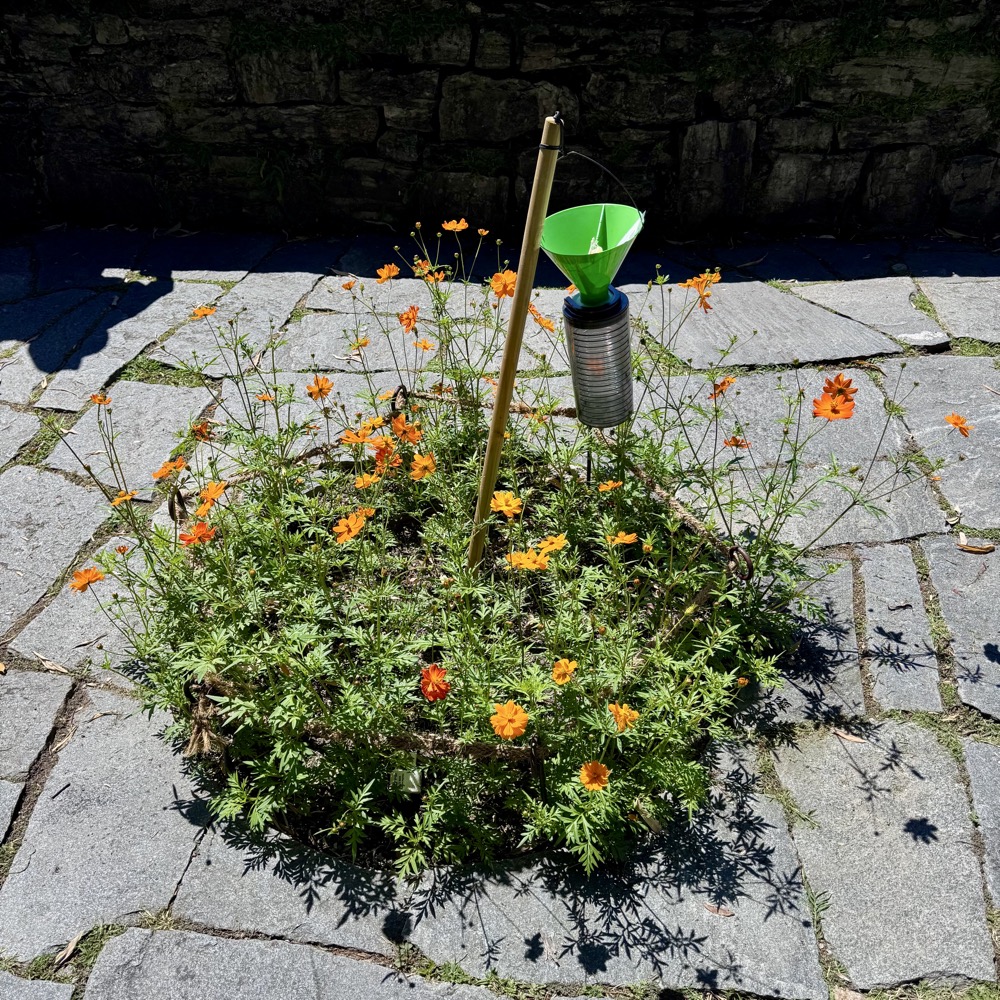
Figure 62
Xylosandrus crassiusculus (granulate ambrosia beetle), which we also saw in the garden at Villa Carlotta, is present on the island. Alessio and Camilla showed us several plants that show signs of infestation, and Alessio pointed out the tiny entry holes in the trunk of a tree where the female beetles had burrowed into the wood. There isn’t really an effective control to deal with the problem. It would be especially difficult to treat as the beetles, and their larvae are safely buried inside the stems of the plants.
The Phoenix dactylifera (date palm) are also infested with palm borer (Paysandisia archon), a pest that has unfortunately made its way to the UK, and something to keep an eye out for.
Villa Anelli
Villa Anelli sits on a hillside above Lake Maggiore at Oggebbio. It was built in 1872 by a Milanese notary, Carlo Berzio, who shaped its romantic garden across terraces and a valley, threading winding paths through exotic plantings and decorating the grounds with fountains, arches, and ceramic details. After passing to the Anelli family, the garden became a centre of camellia scholarship in the 1950s when engineer Antonio Sevesi, companion of owner Alessandra Anelli, led a group of enthusiasts in importing camellia species from around the world, ultimately founding the Italian Camellia Society in 1965. Aside from the camellias, the garden is richly planted with notable mature trees including one of Italy’s oldest Metasequoia glyptostroboides, a weeping beech, a camphor tree, a Kashmir cypress, cryptomerias, cedars, and palms, alongside bamboo groves, flowering cherries, rhododendrons, and osmanthus.
The visit
Andrea Corneo, owner of the garden and president of the Italian Camellia Society, met us at the gate and we descended into this cool, lush garden that is fed by a natural mountain spring. We sat in the shade in front of the villa while Andrea told us the history of the garden, how he looks after it, his interest in the genus Camellia in particular, and the future of the garden. He originally studied agriculture, and then landscape and garden design, and he still works professionally in this field. The garden at Villa Anelli is his personal project. His collection of camellias started with about 20 plants that were already in the garden. It has grown into an extensive collection of 500 plants, 318 of which are spring-blooming, 40 winter-flowering, and there are 30 botanical species. Many of the camellias were bought from Hilliers in the UK and each time he ordered them he bought two plants of each cultivar to plant in different parts of the garden as an insurance policy in case one of them died.
We had a slow meander through the garden with Andrea pointing out interesting plants and features of the garden. Of particular interest were the unusual species of Camellia, including summer-flowering hybrids from China which flower in September in Italy, and some species from Vietnam, including Camellia amplexicaulis which is considered extinct in the wild but is part of an ex-situ conservation effort. These are housed in a dedicated greenhouse in a sheltered part of the garden (Figure 63).
He has very little help in the garden and said he does ‘lots of mulching, little weeding, and no watering’. He mulches with whatever he has to hand in the garden and finds the leaves of Trachycarpus, which grows like a weed here, a particularly effective weed suppressant (Figure 64). He mentioned that he had had to remove two mature trees recently and explained that because access is so restricted, the arborists used a helicopter to remove the trees, or parts of the trees, from the site.
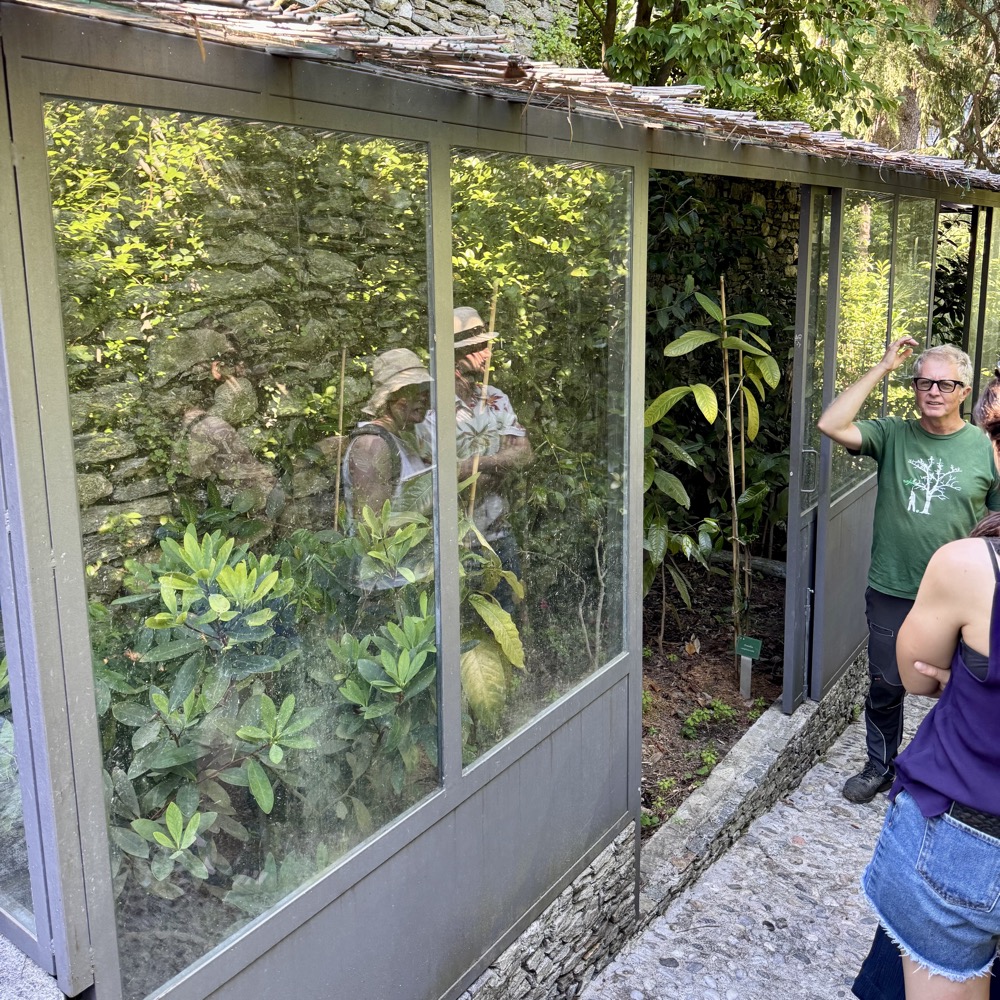
Figure 63
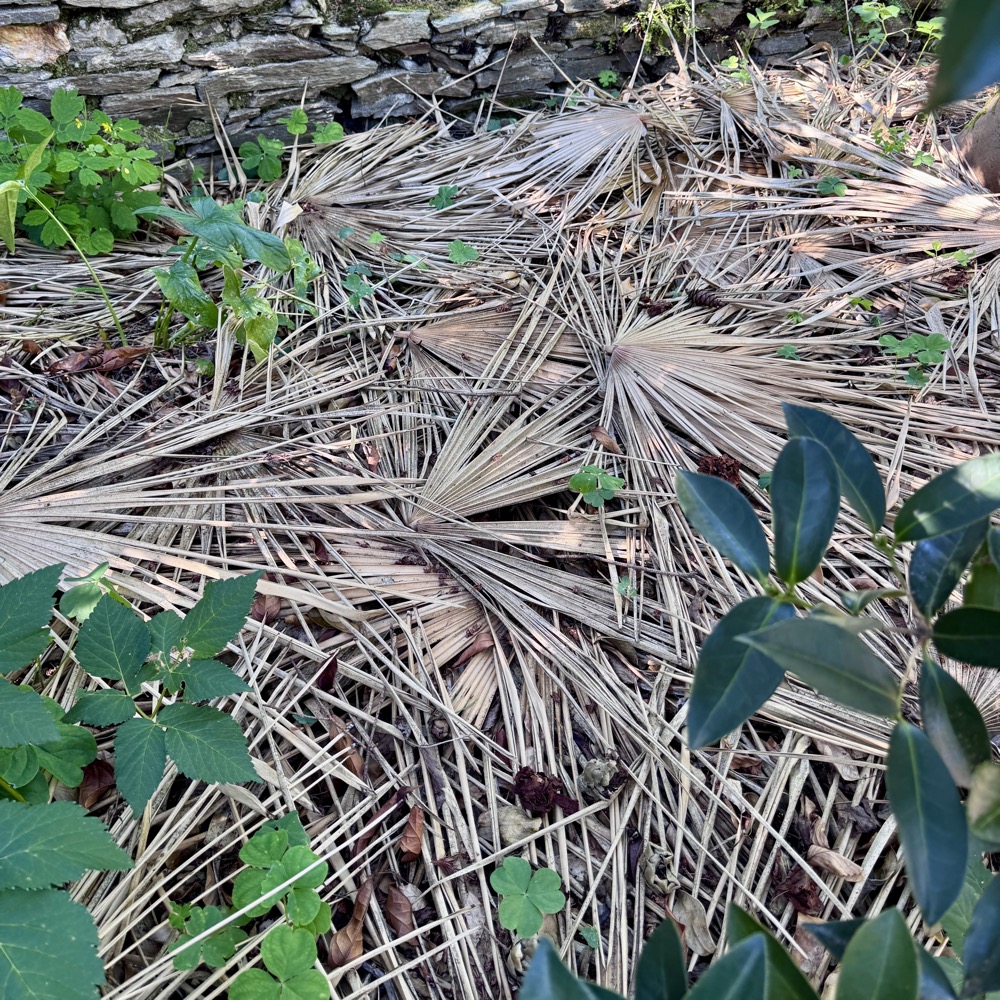
Figure 64
Highlights
The natural topography of the garden, on the side of a hill, with a valley running through it made this an enchanting garden. All the sensitively done hard landscaping only added to the magic (Figures 65 to 70).
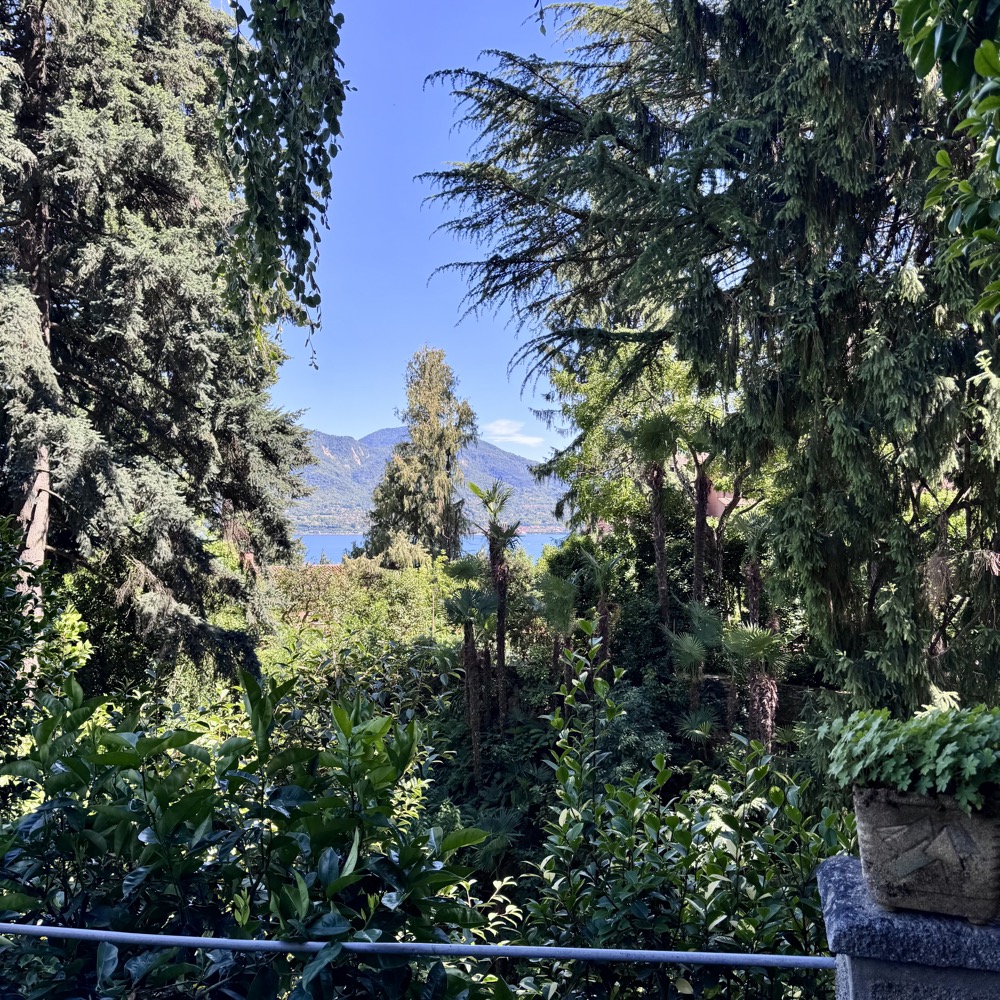
Figure 65
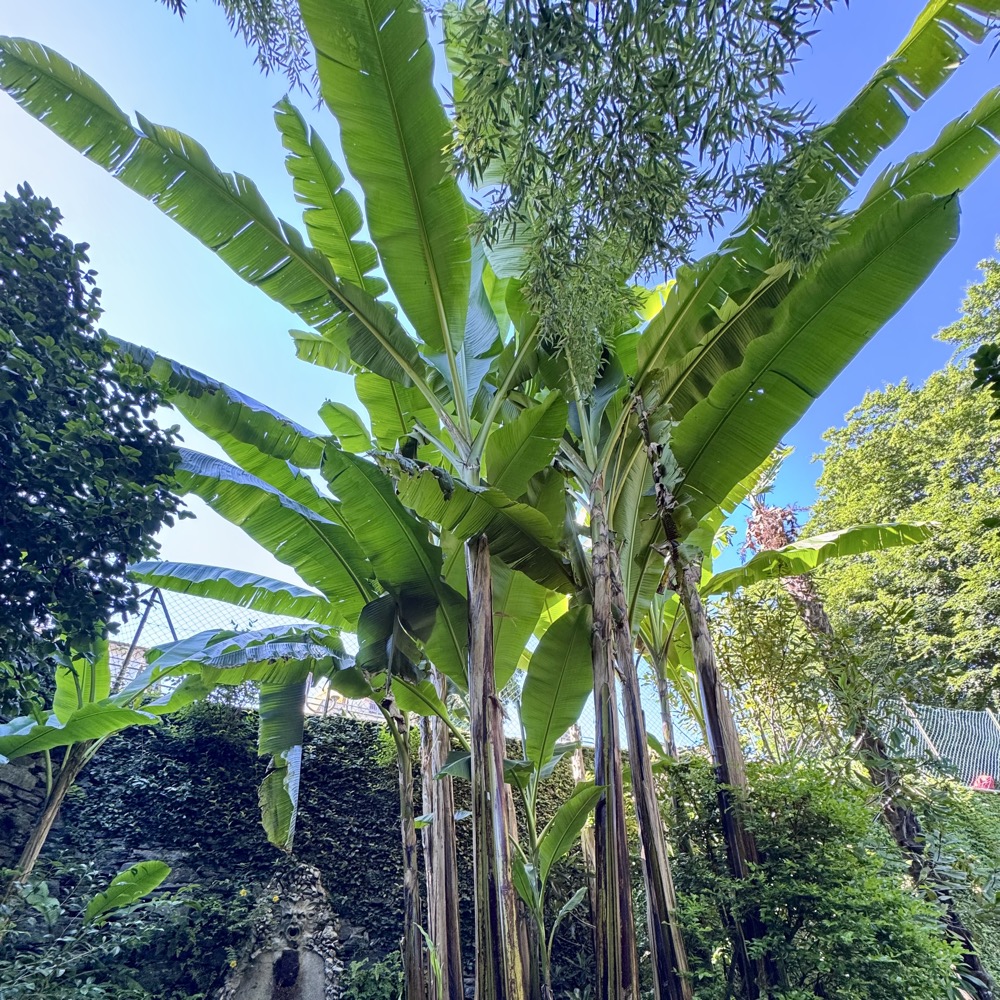
Figure 66
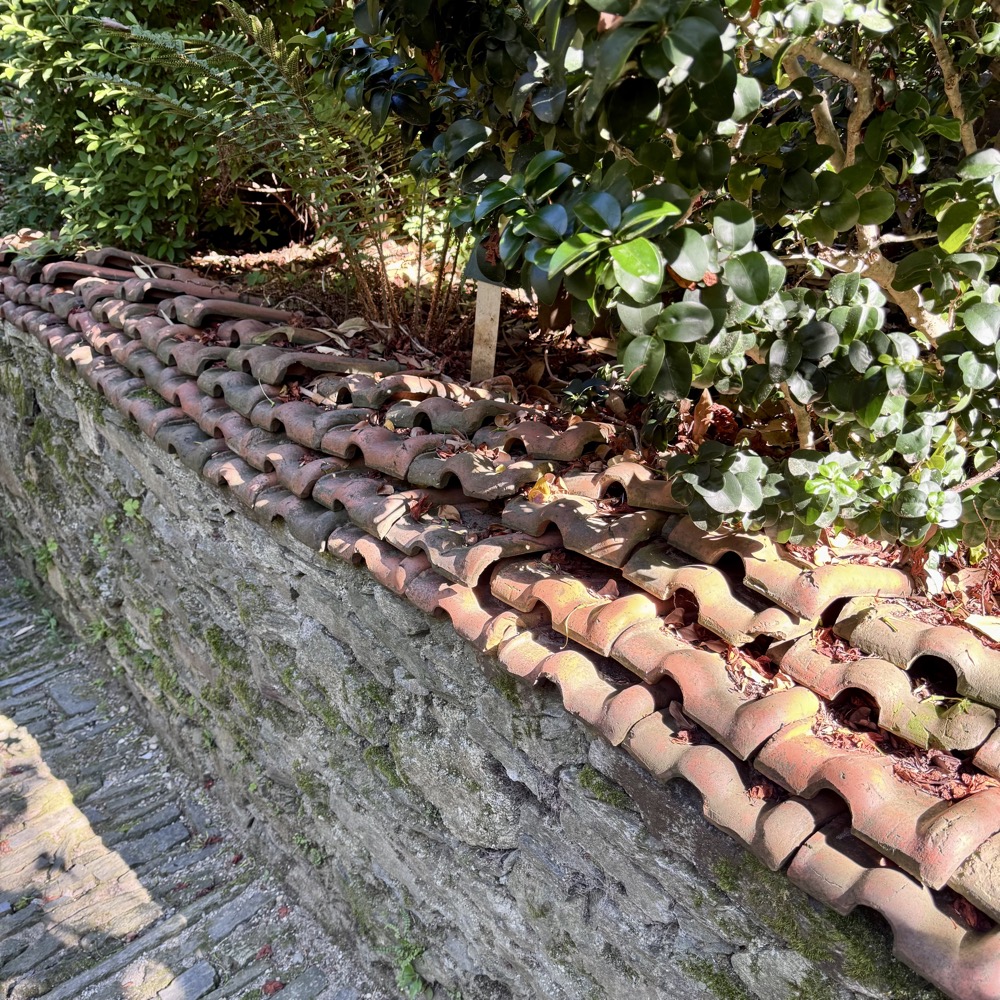
Figure 67

Figure 68
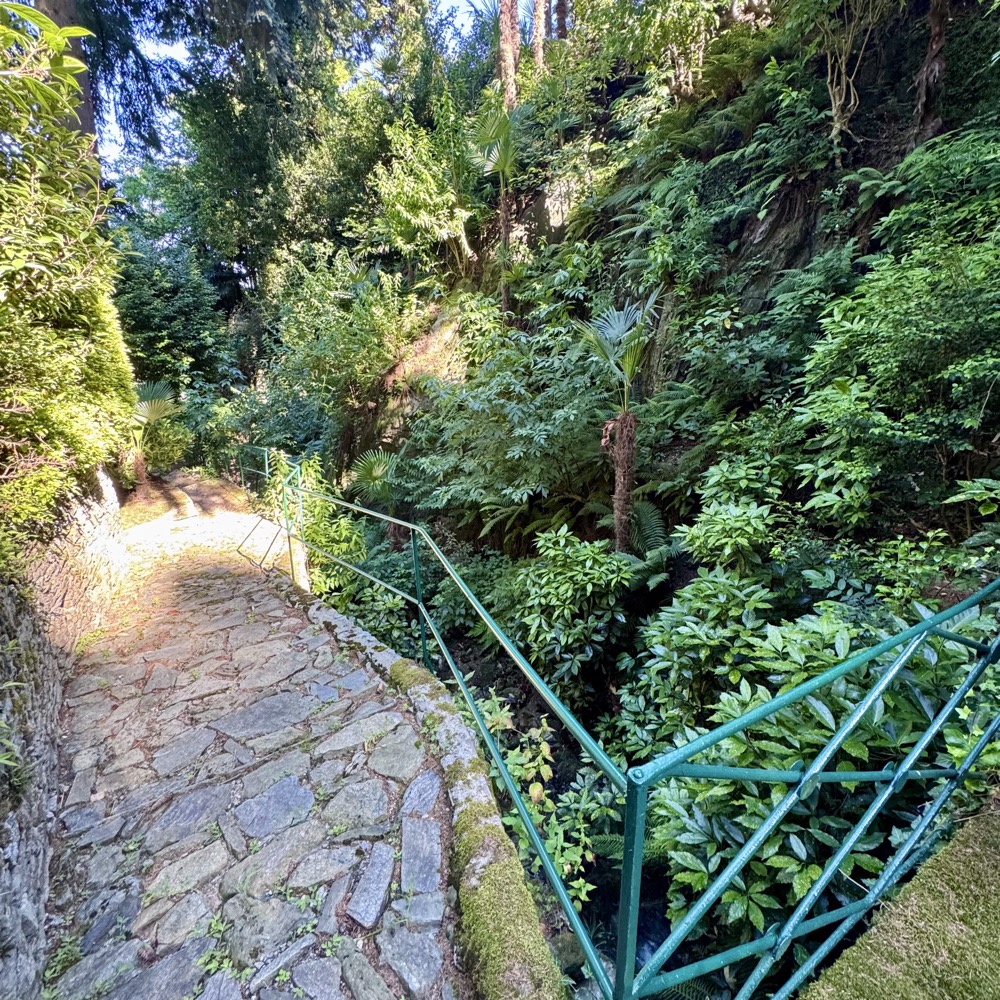
Figure 69

Figure 70
Private garden of Francesco Blardoni
The family home and garden of Francesco Blardoni is built on the land of what was once a plant nursery in Pallanza. Some of the old infrastructure remains, including the old plant sales office, now converted into a comfy looking sunroom/library. Francesco has been gardening here since he was a child, and it was the inspiration for him to go on and study tropical botany at the University of Turin. The garden has become a laboratory for him to experiment in, and to grow unusual plants.
The visit
We arrived in the late afternoon, and Francesco gave us a detailed tour of the garden until it was almost dark. With his background in tropical botany, he is particularly interested in growing relatively unusual tropical and subtropical trees to see how they perform in the climate around Lake Maggiore. A plant that I immediately recognised was Melia azedarach, originally from Asia, it has been grown around the world as an ornamental tree. We had one in our garden in Johannesburg when I was growing up, and it was commonly referred to as a syringa even though it is not related to the genus Syringa. It has become an invasive species in South Africa where its seeds are widely dispersed by birds, and it forms dense clumps that outcompete native species. I mentioned this to Francesco and we discussed the challenges of introducing genera that might thrive as the climate changes. They could be useful to replace native species that decline with changing conditions, but they need to not be too successful so that they become invasive.
He is also successfully growing several different species of Persea (avocado). Persea americana var. drymifolia is the Mexican avocado that is hardy down to -6°C and his specimen has been growing well for several years but is yet to fruit.
Highlights
It is always a joy to visit the private garden of someone who is passionate about plants. We were joined by some of Francesco’s friends, and a couple of members from a local gardens club. After the tour we ate pizza and had a few drinks in the garden (Figure 71).
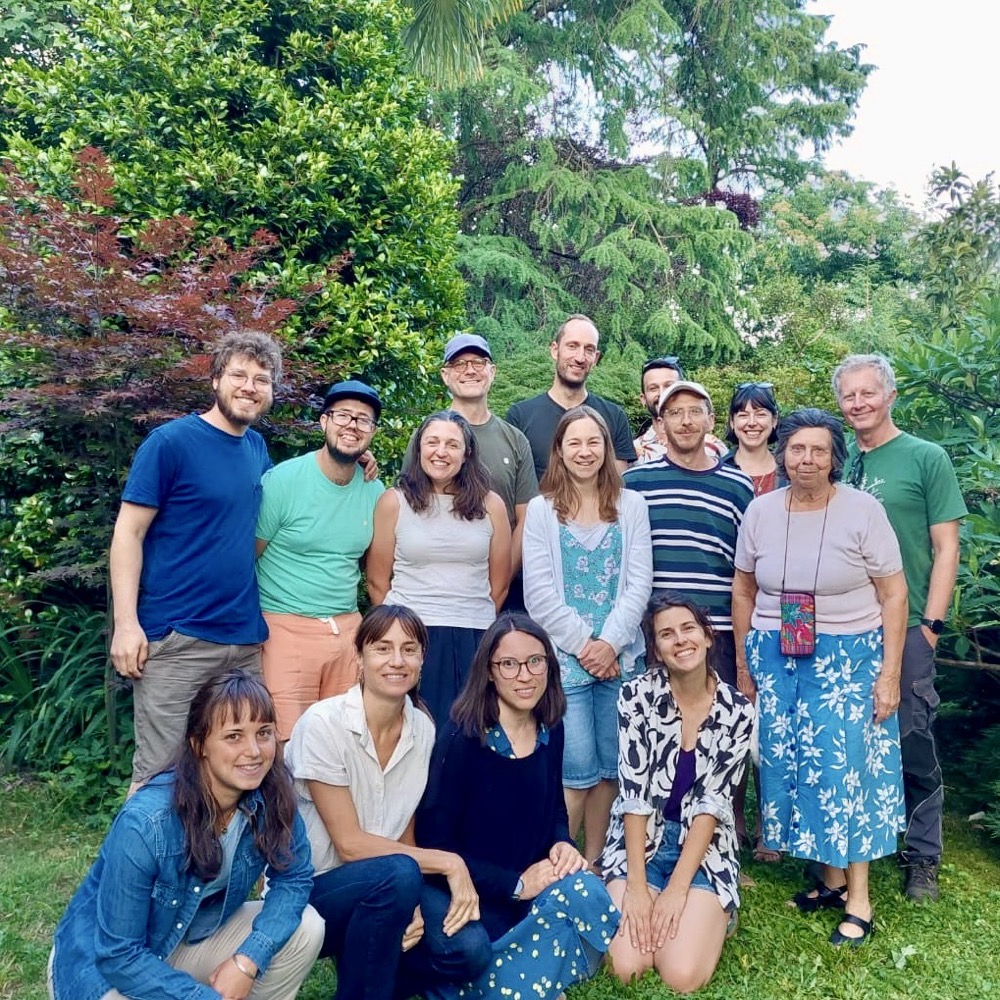
Figure 71
Learnings
Francesco has struggled with Armillaria spp. (honey fungus) killing woody plants in certain areas of the garden. He has experimented with leaving large stumps of the trunks of trees and shrubs that have succumbed to the fungus and has observed that by doing this, other fungi appear on the dead wood and outcompete the Armillaria spp. (Figure 72).
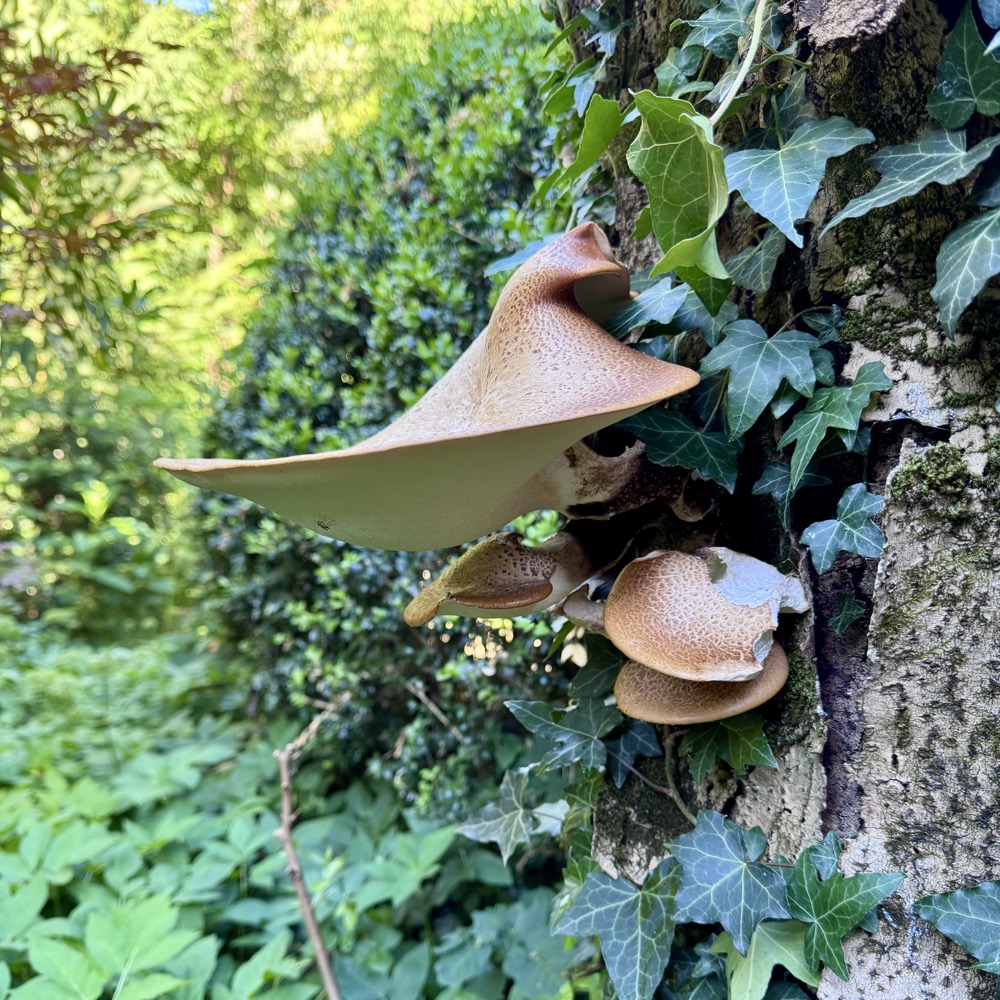
Figure 72
Jay Blue House
This garden was a grassy birch woodland when Mattia Godio and Marco Grosso bought it five years ago (Figures 73 and 74). In a short space of time, they have created a beautiful woodland garden (Figure 75) alongside a sun-drenched mixed planting area laid out in curvaceous beds that run down the steep slope away from their house (Figure 76). They are plant collectors and have a large collection of 35 different cultivars of Hamamelis (Figure 77). They are blessed in having a mountain spring that emerges in the garden, the water from which collects in several ponds (Figure 78).
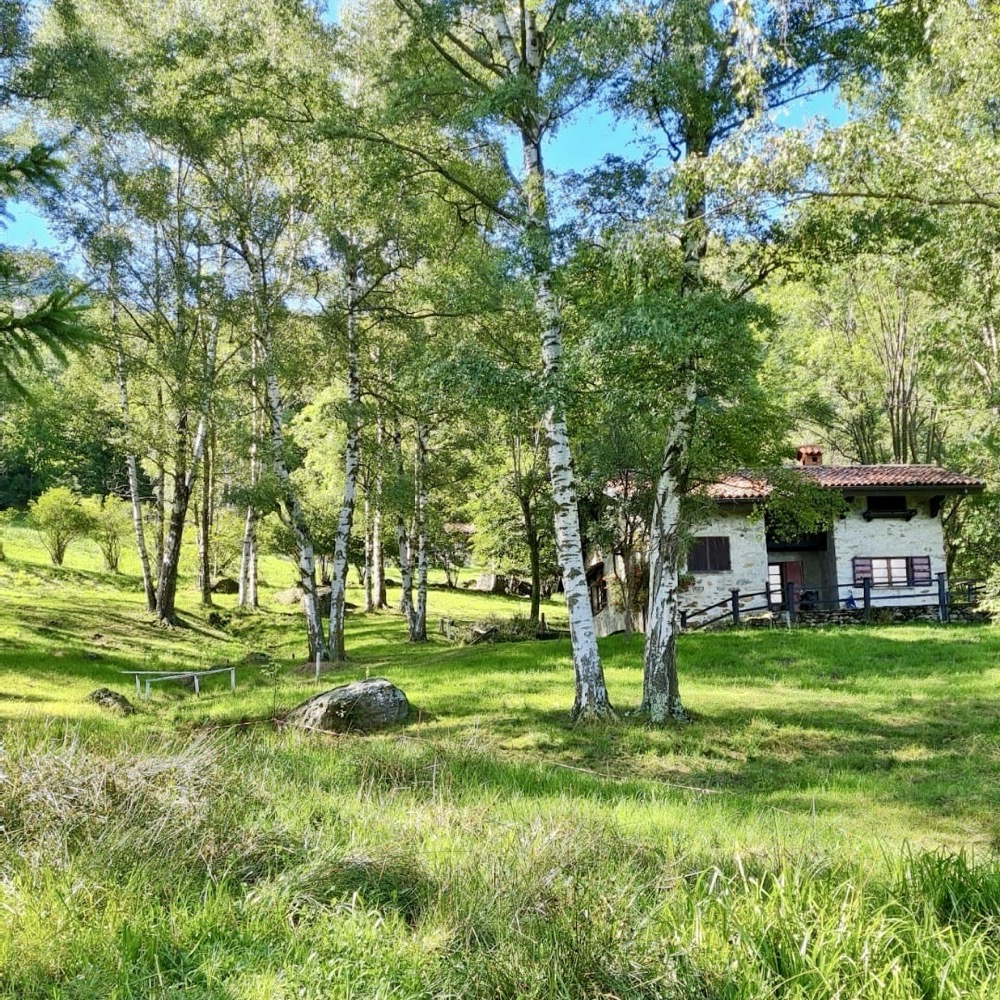
Figure 73

Figure 74
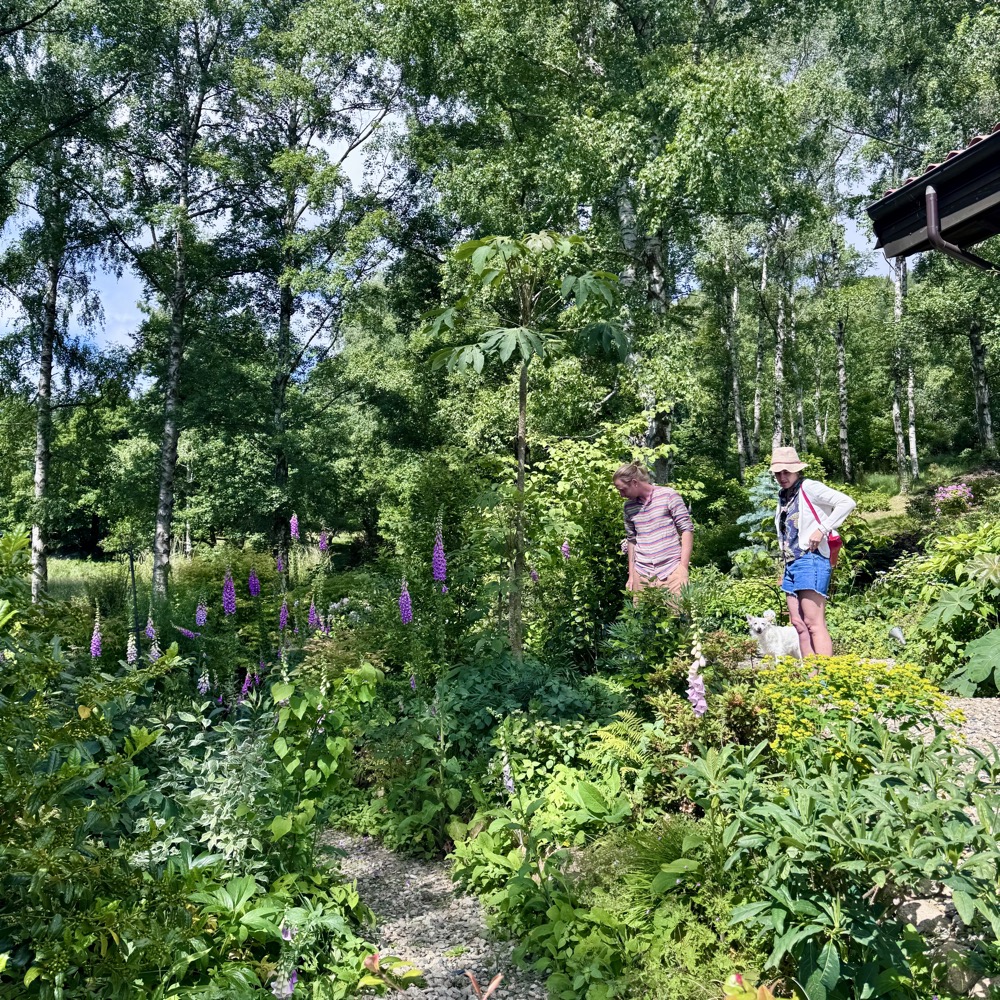
Figure 75
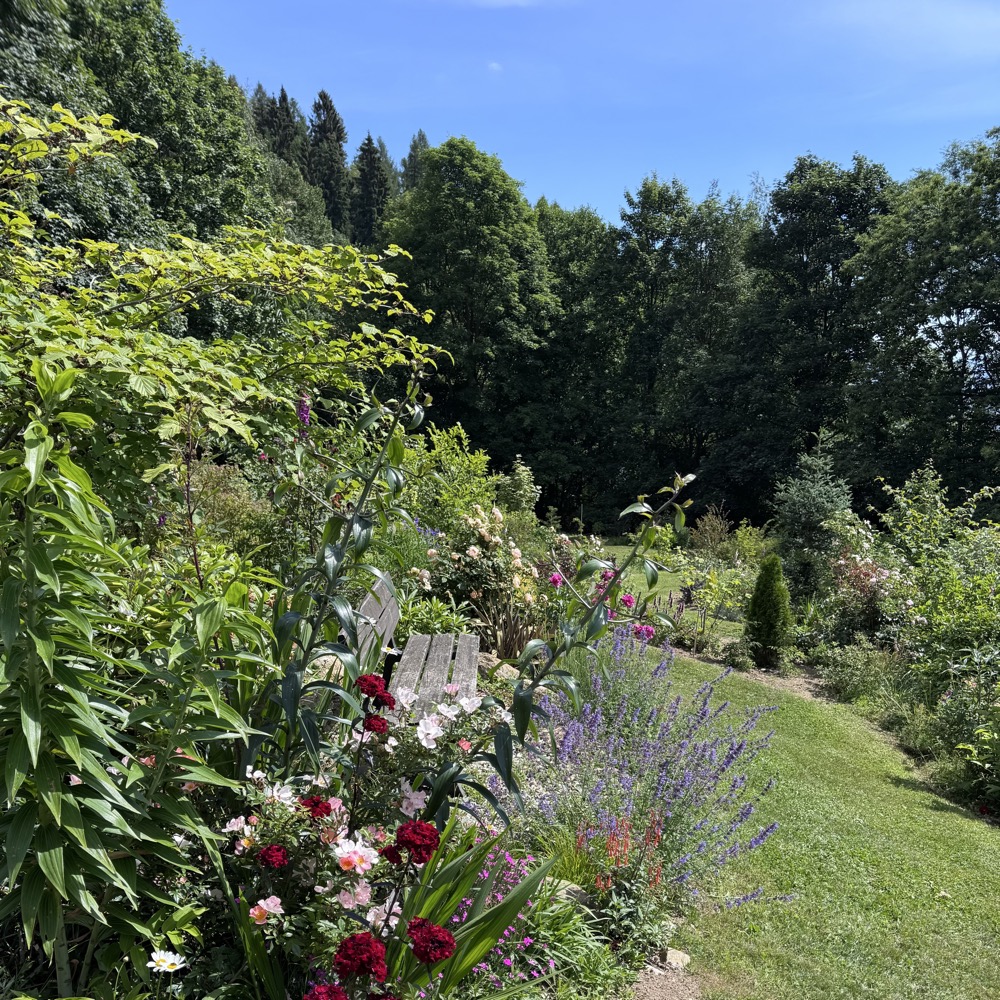
Figure 76
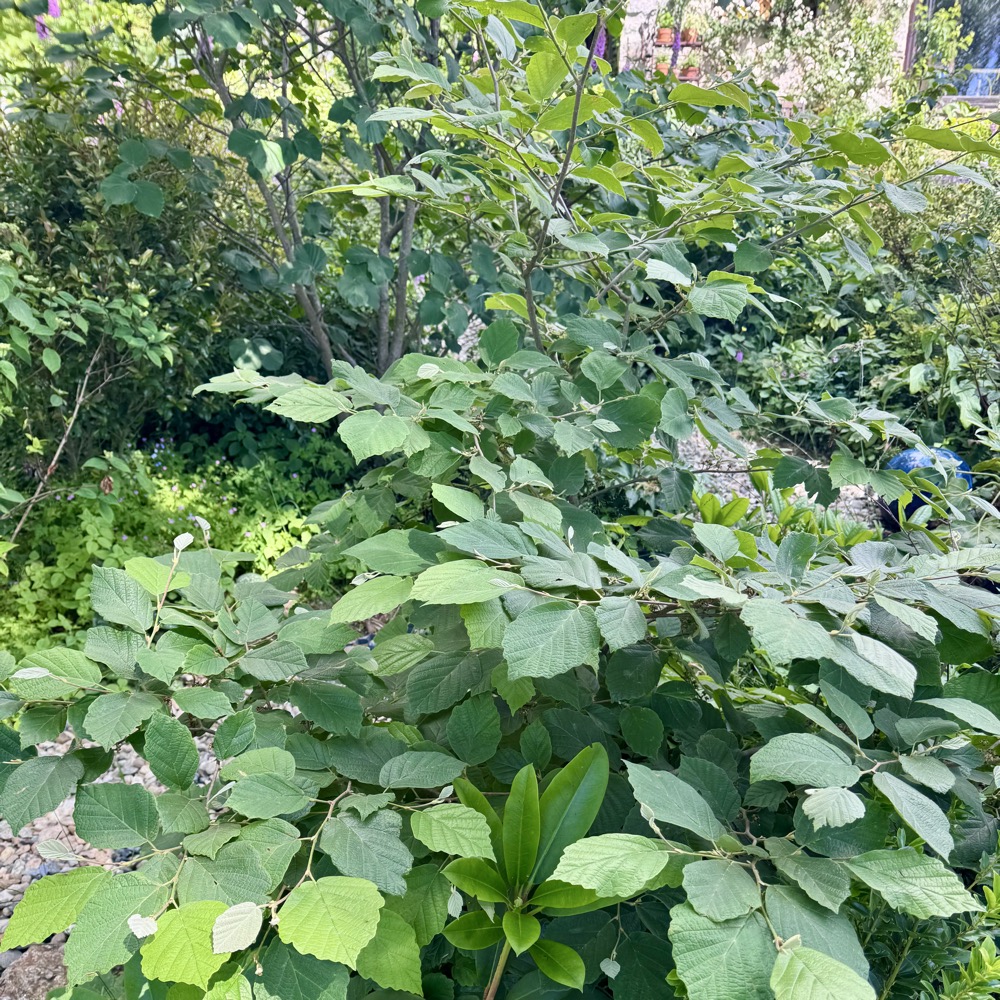
Figure 77. Hamamelis virginiana var. mexicana
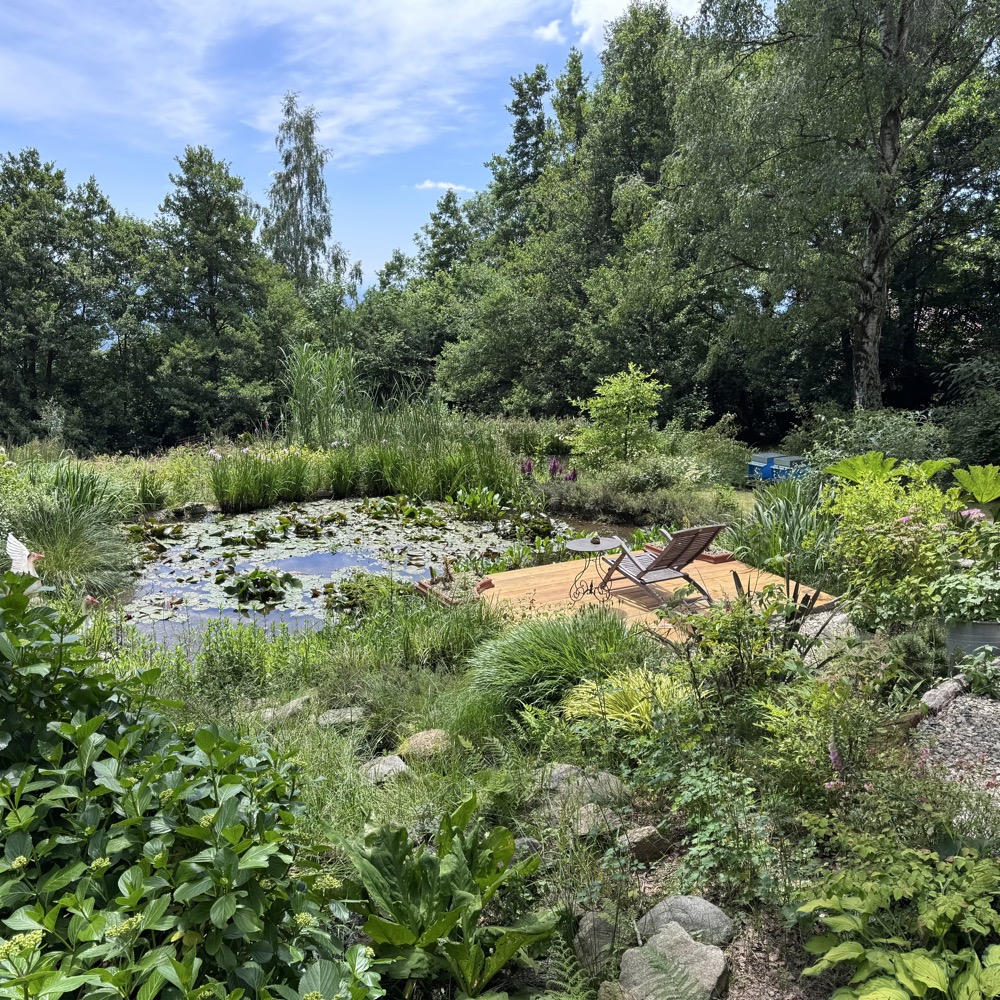
Figure 78
The visit
We drove from Verbania on Lake Maggiore, which is at 200 metres above sea level, up into the mountains to see a garden that sits at 1000 metres and has spectacular views across the Pianura Padana; the extensive flat plain that the city of Milan sits on (Figure 79). Mattia doesn’t speak much English and so our colleague Alessandra translated as we walked slowly around the garden talking plants. Mattia and Marco have a garden design business but spend all their spare time developing their own garden and taking care of it. They struggle to source all the plants they are looking for in Italy and end up buying many of their plants from suppliers in France and the Netherlands.
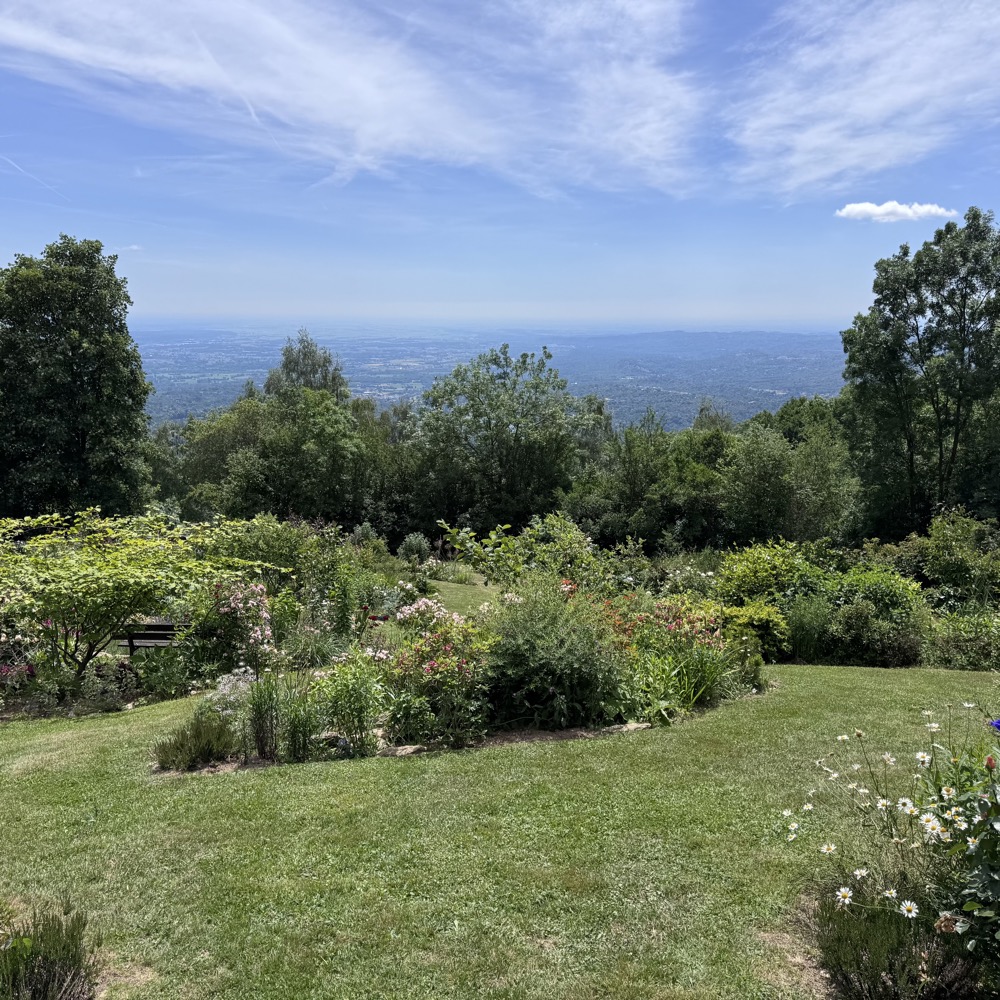
Figure 79
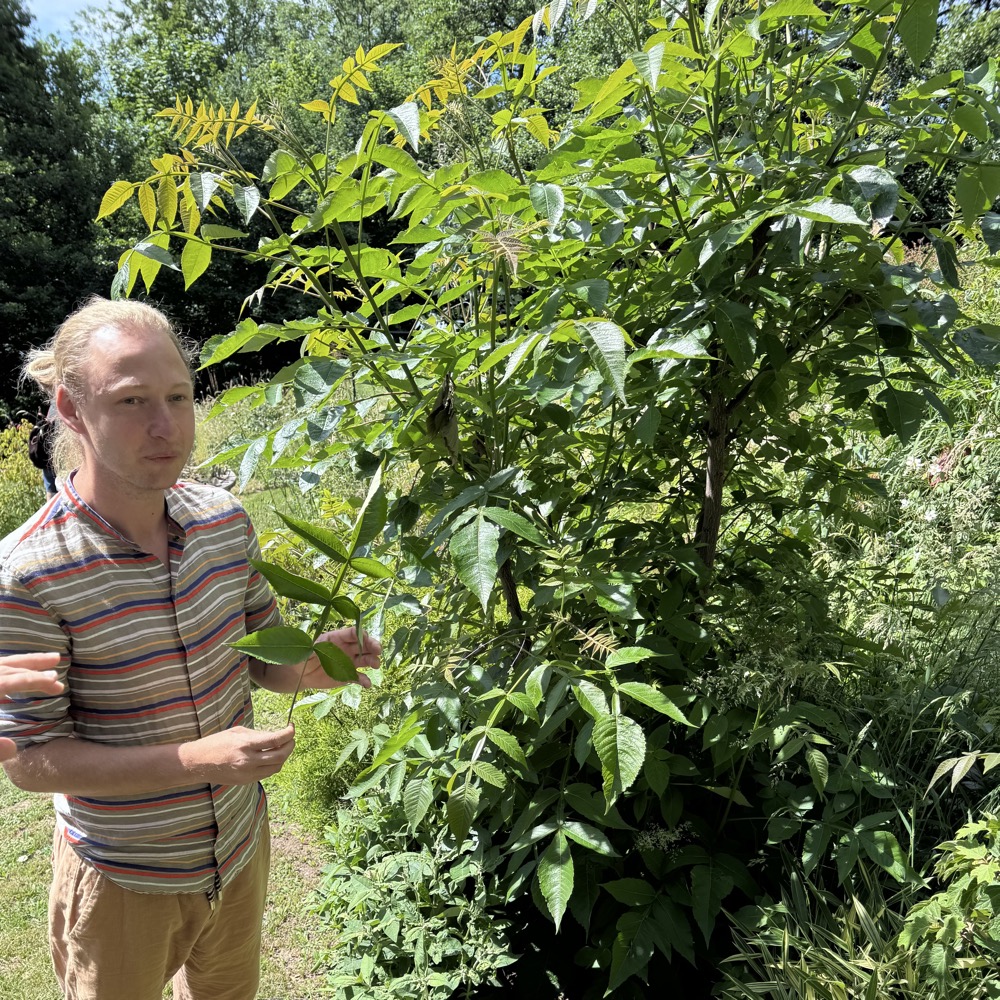
Figure 80. Mattia showing us a specimen of Rhus chinensis
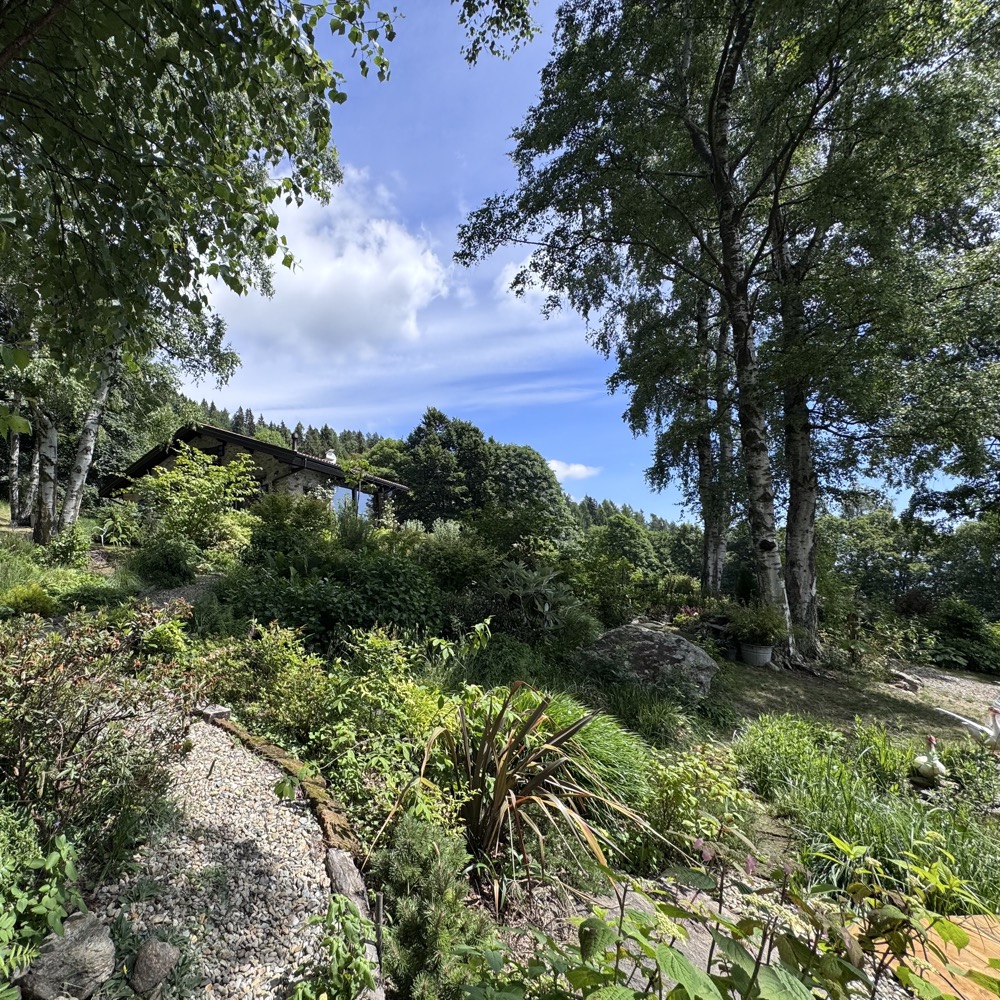
Figure 81. Looking up through the woodland toward the house
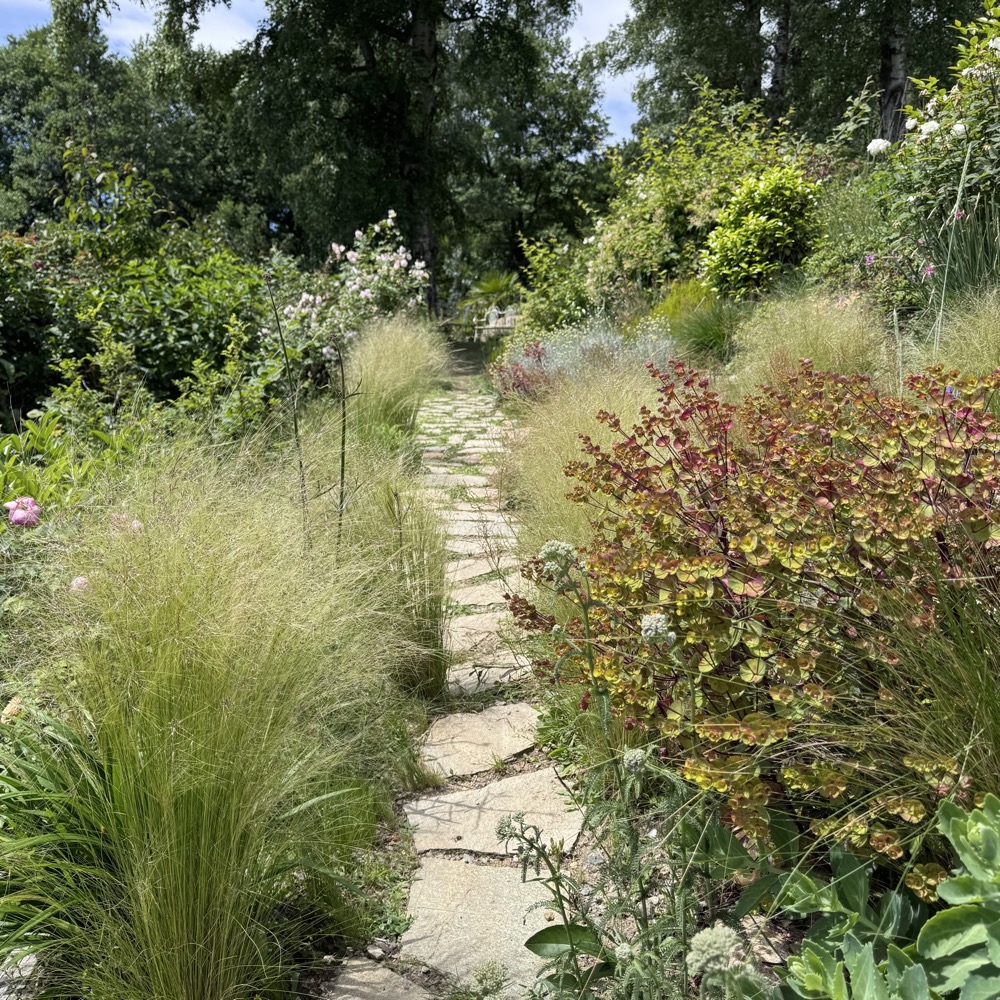
Figure 82

Figure 83

Figure 84
Highlights
Alongside the beautiful plants, the situation and the view, the garden is full of surprising and attractive details that add an extra dimension of enchantment to it; a large bowl of an old fountain planted with grasses, succulents and cacti (Figure 85), and fallen birch twigs and branches arranged into ‘ground nests’ (Figure 86). There are inviting places to sit everywhere, to stop and enjoy the garden (Figures 87 and 88).
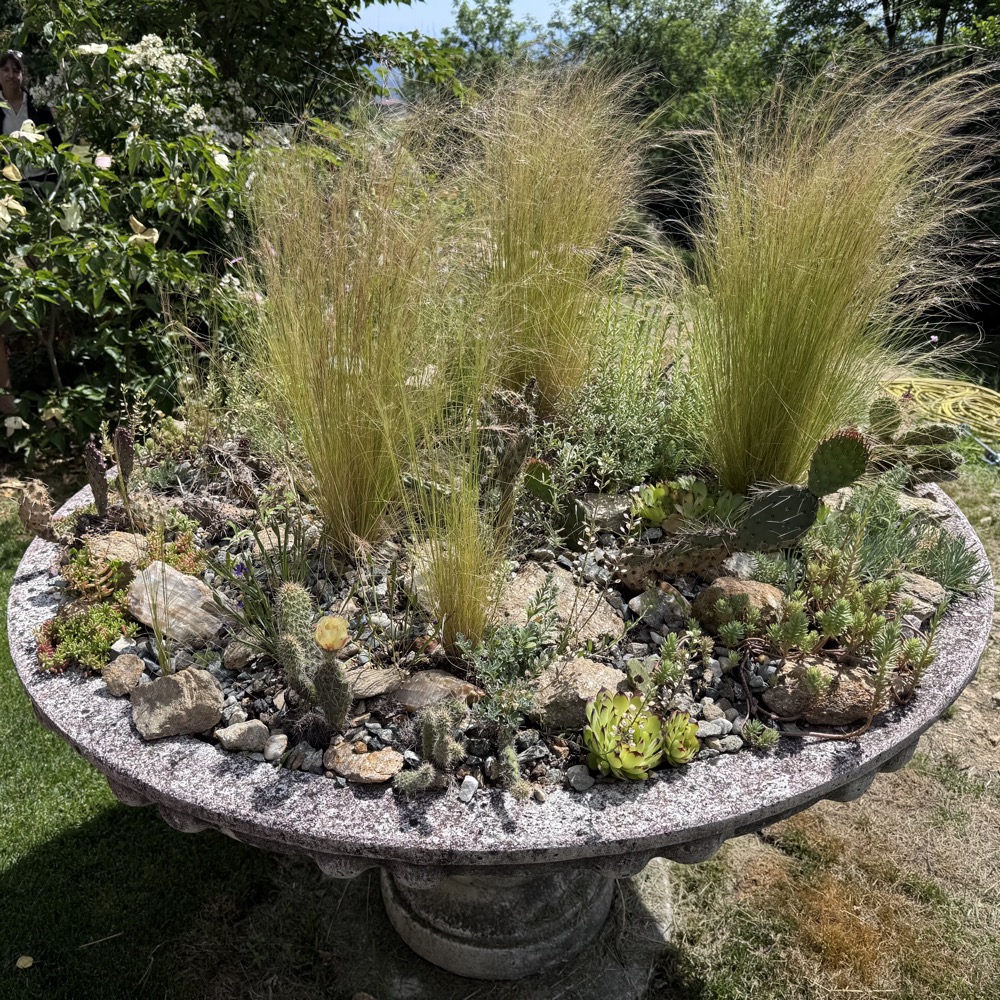
Figure 85
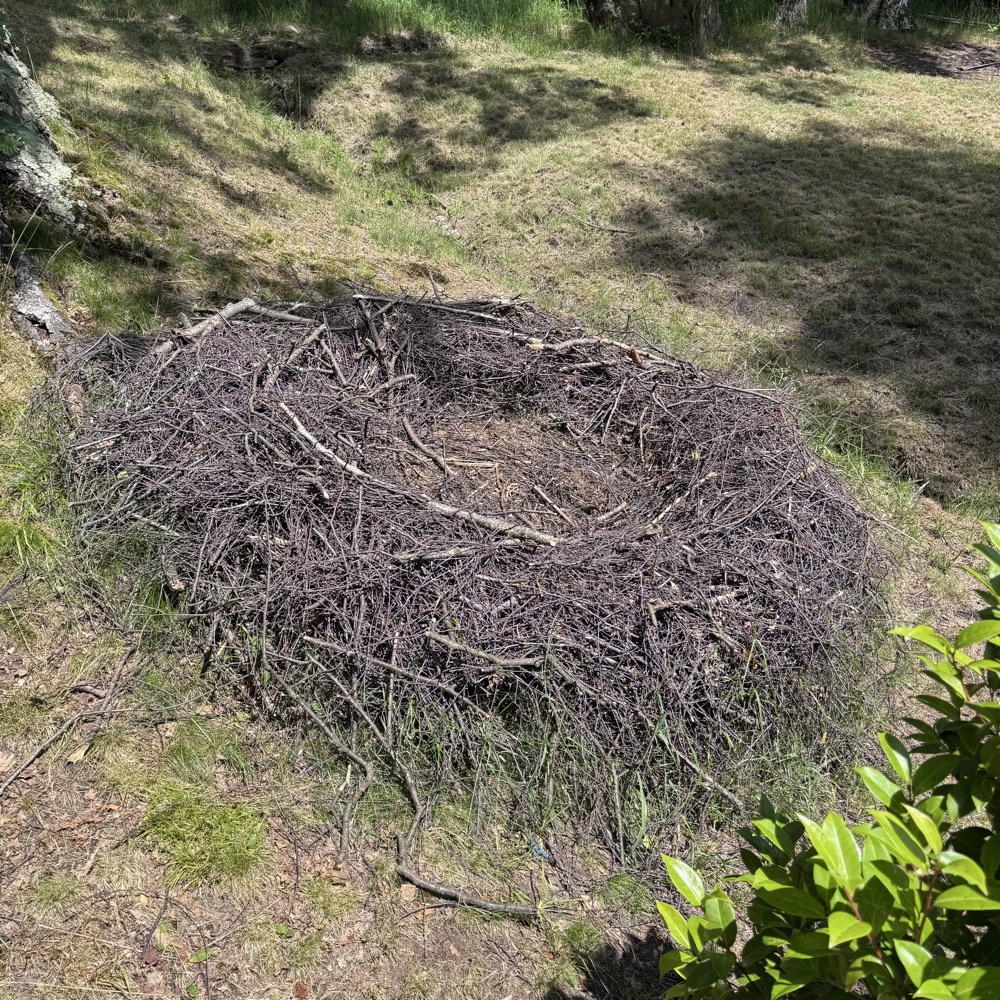
Figure 86
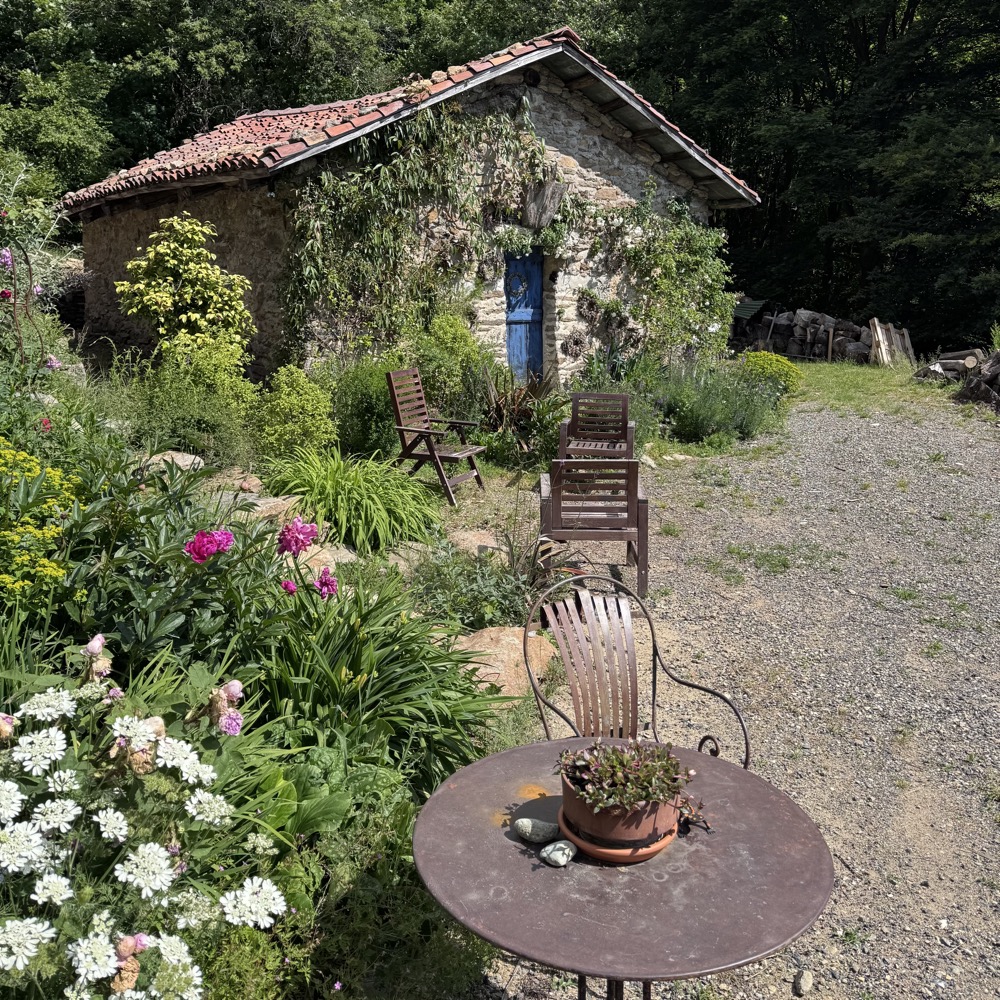
Figure 87
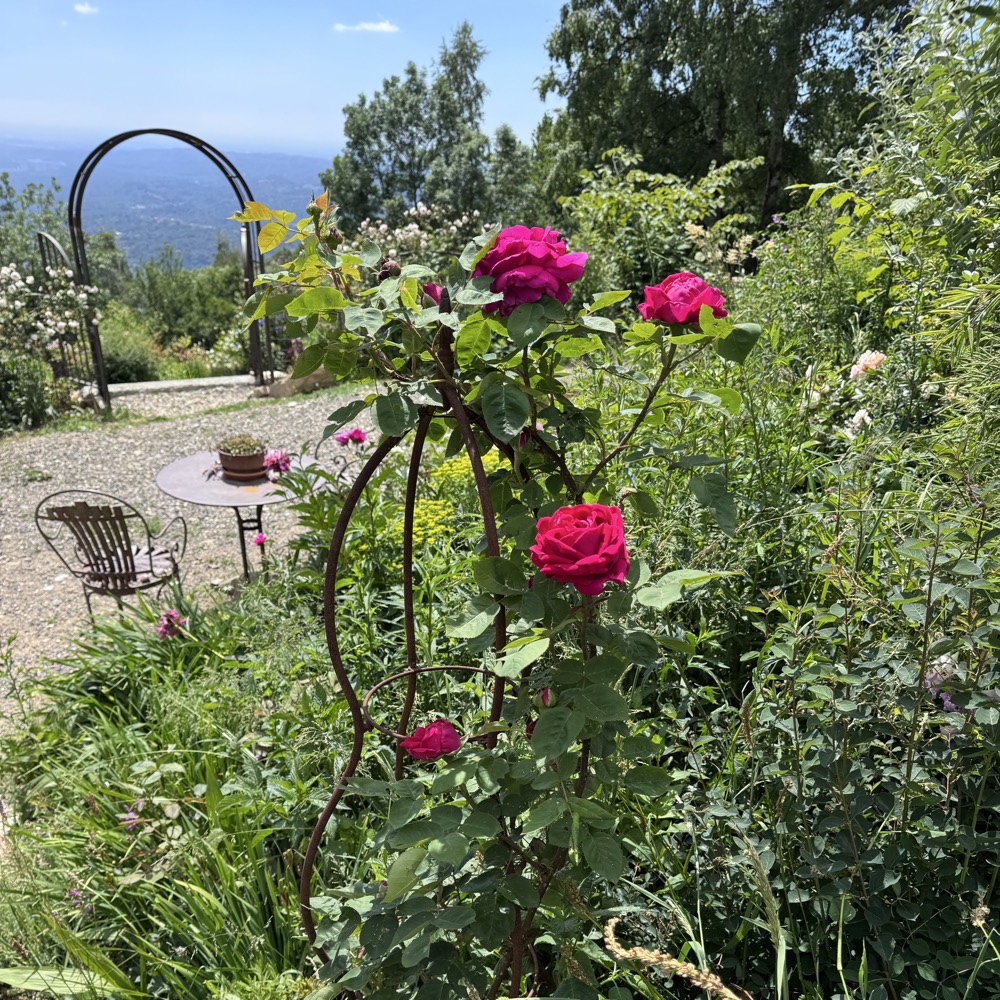
Figure 88
Learnings
Throughout our trip up until this point, we had been told that the reason many of the gardens that we had visited did not grow as many herbaceous plants was because of the acidity of the soil. We had been a little surprised by this considering we grow a wide range of plants on our sandy acid soil at Wisley. This plants in this garden are all grown on acid soil and featured a wide diversity of herbaceous plants. Mattia wondered if it was more a combination of doing things the way they had always been done and not wanting to change, but also possibly lack of availability of plants and diversity of cultivars in the region.
Private garden of the Piacenza family
The Piacenza family, who made their money in woollen textiles, have lived in their villa in Pollone since the first half of the 19th century. Guido Piacenza, now in his 80s, worked in the family business for a while but followed his passion for plants and set up a plant nursery which sold rare and unusual plants. He imported plants from England, especially from Hilliers, and he maintained a friendship with Sir Harold Hillier for many years. His wife, Ursula Salghetti Drioli, was a customer of his nursery which is how they met. Ursula now looks after the garden at Villa Bocanegra, in Ventimiglia on the Italian Coast near the border with France which the family also own. Previously owned by heiress and renowned horticulturist Ellen Willmott, Ursula has spent many years restoring the garden there.

Figure 89. The garden-side of the Villa
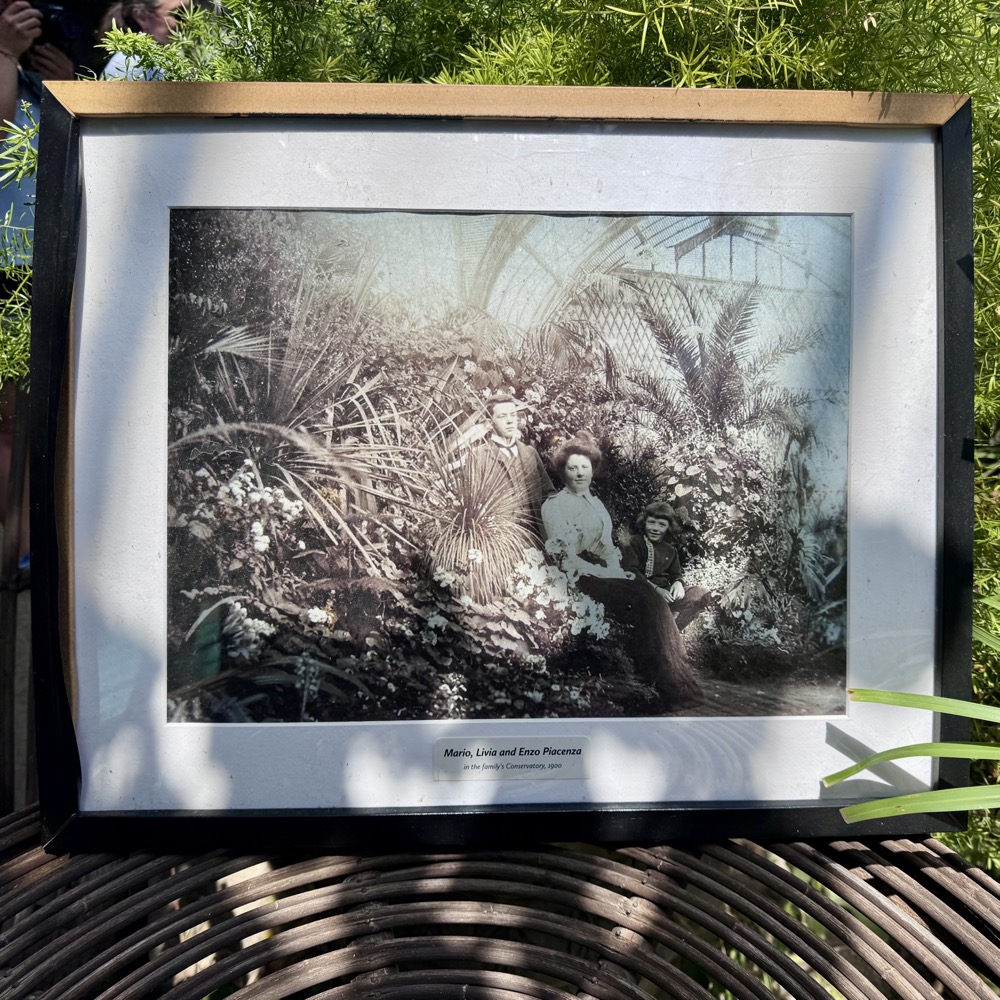
Figure 90. Family portrait of Guido’s Grandparents, and his Father as a child, taken in the conservatory
The Visit
Guido and Ursula invited us in through an unassuming door straight off the street and walked us through a courtyard and part or the villa to emerge into a magical early-twentieth-century conservatory (Figures 91 to 94). We then went for a ramble around the garden with Guido pointing out various plants and trees, explaining where they came from and how old they were. The garden is mainly a collection of woody plants, some of which are magnificent specimens. Guido and Ursula were both knowledgeable and entertaining, often animatedly disagreeing with each other over various details.
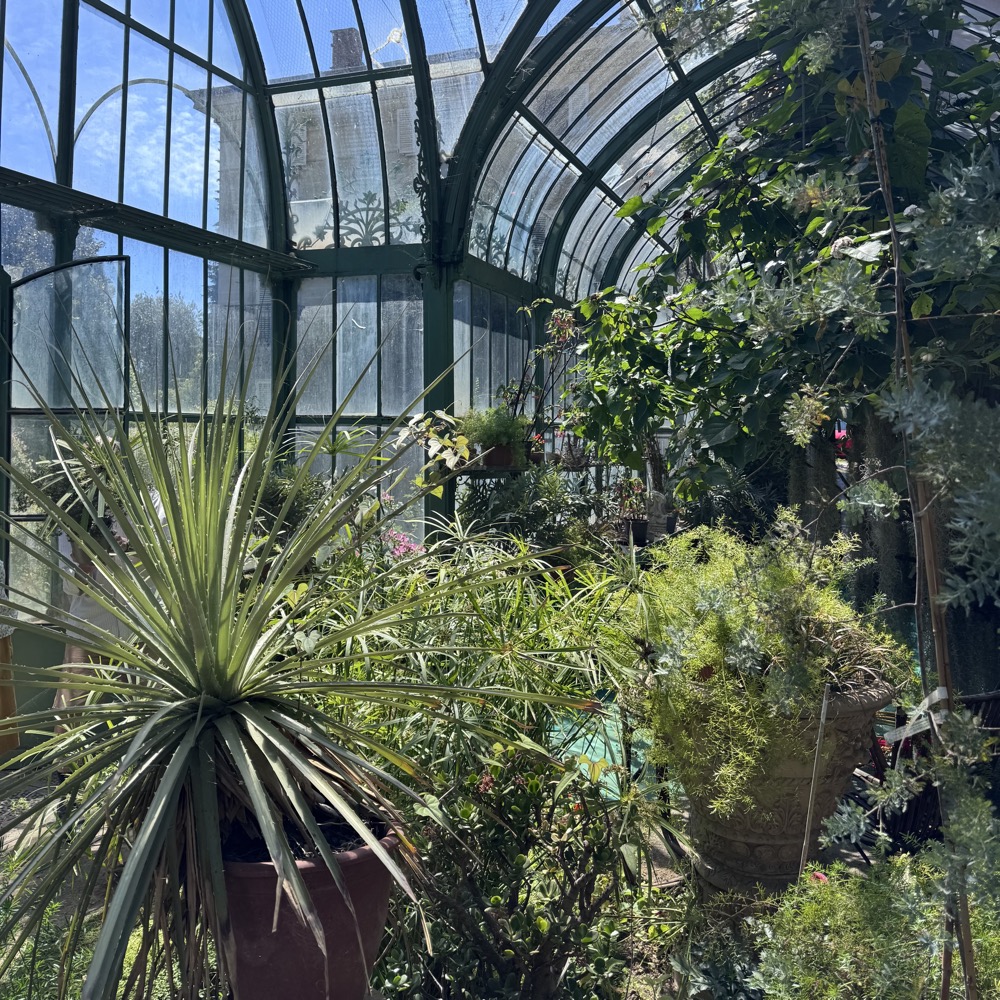
Figure 91
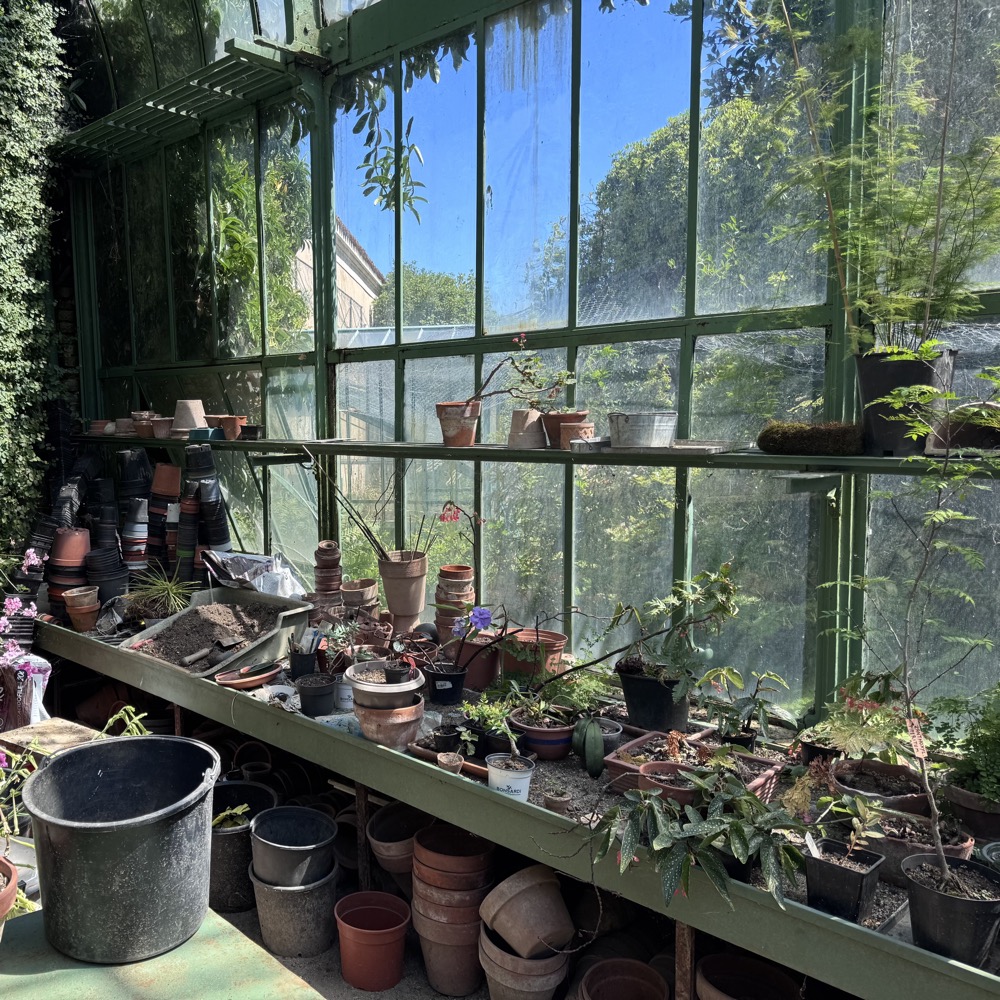
Figure 92
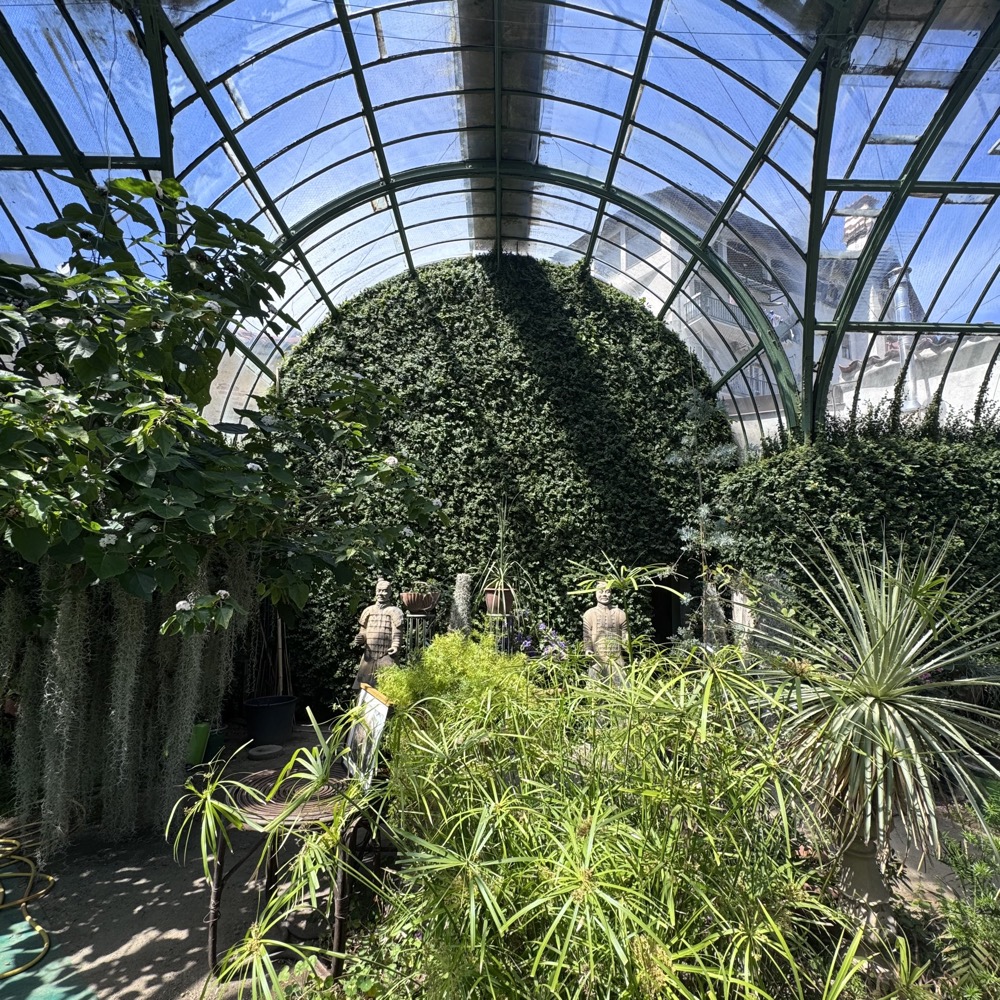
Figure 93
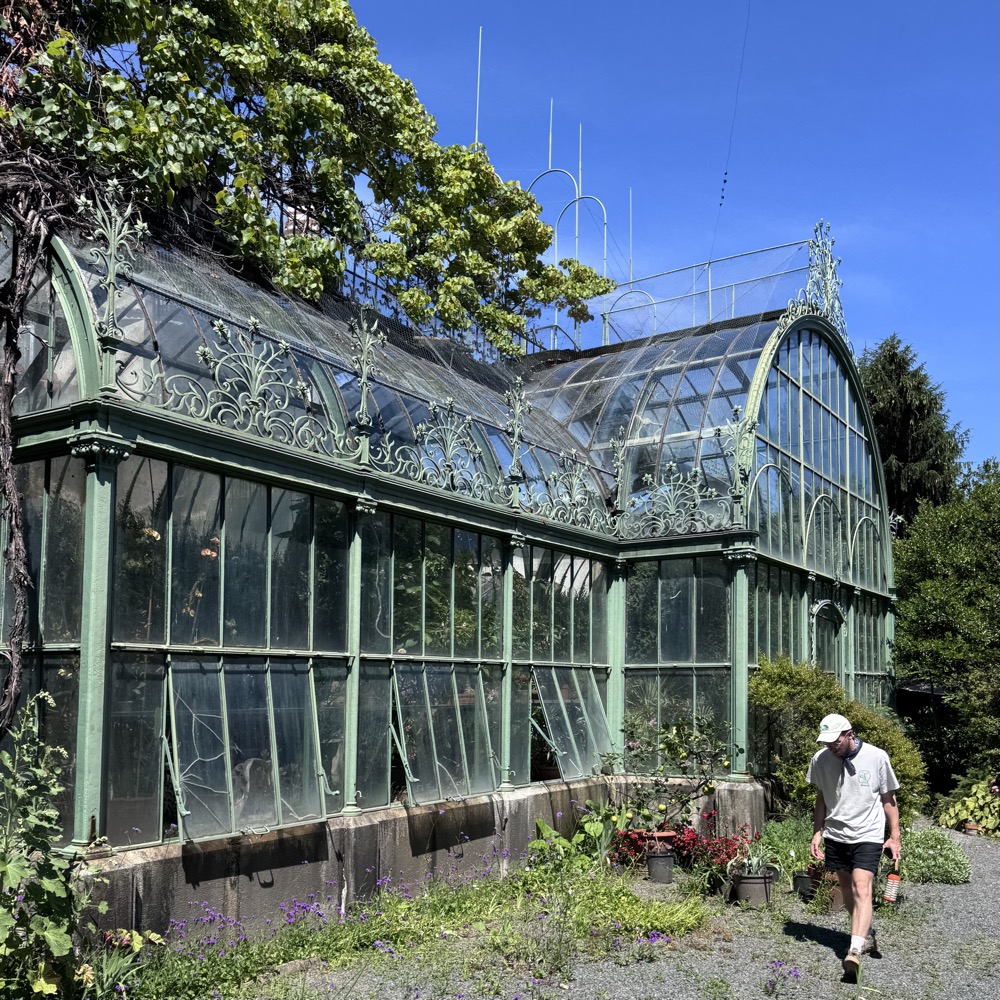
Figure 94
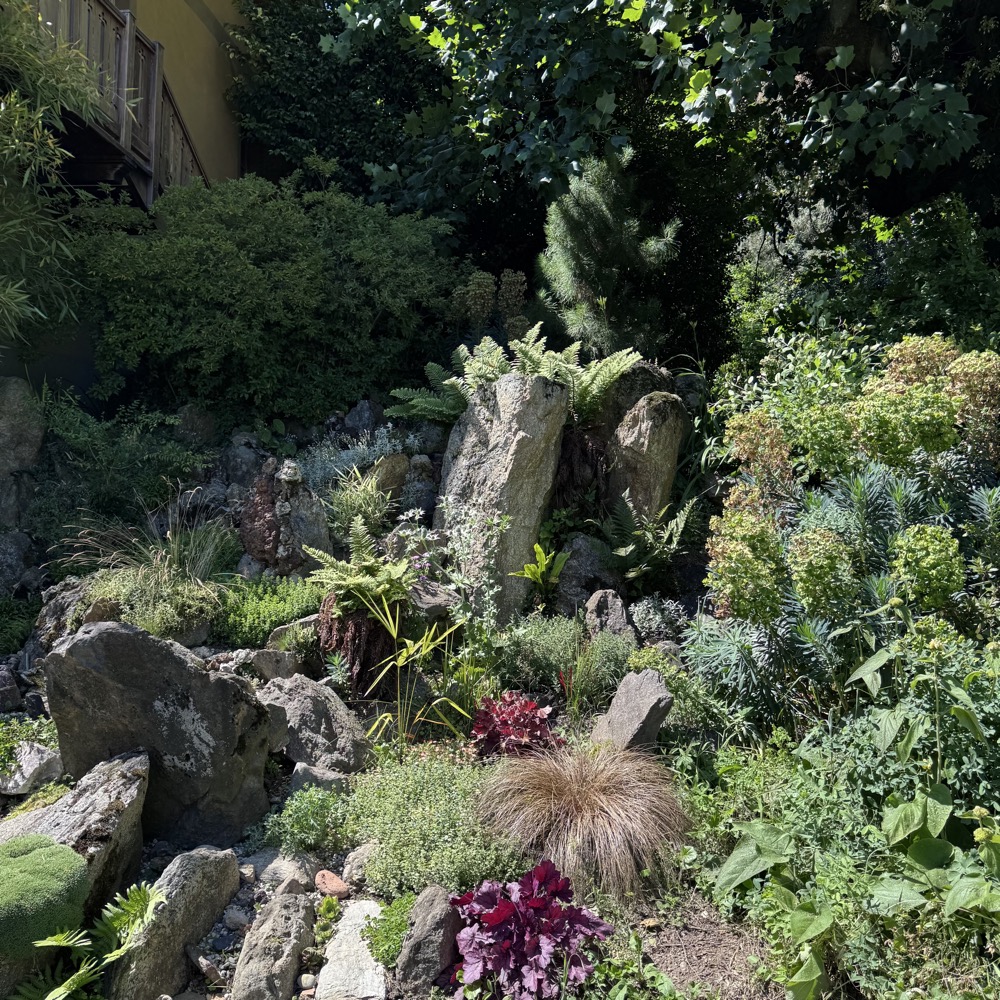
Figure 95
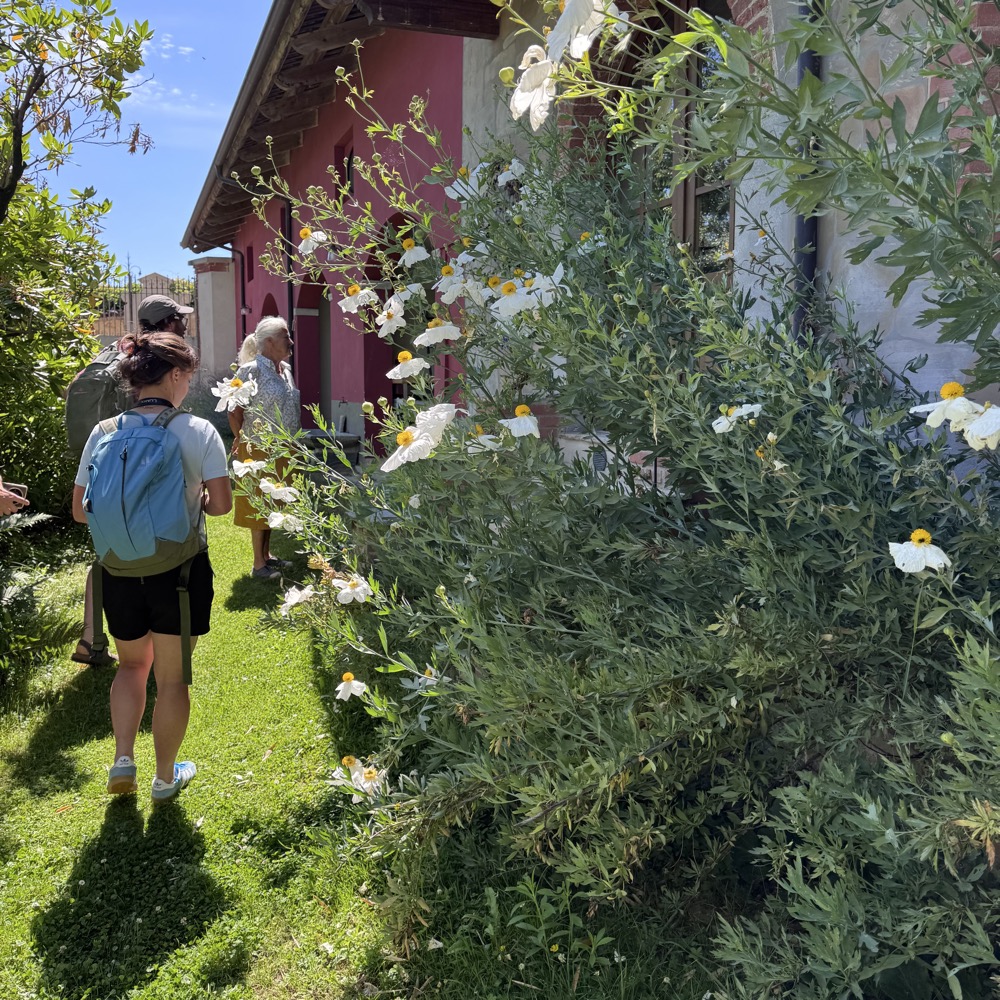
Figure 96
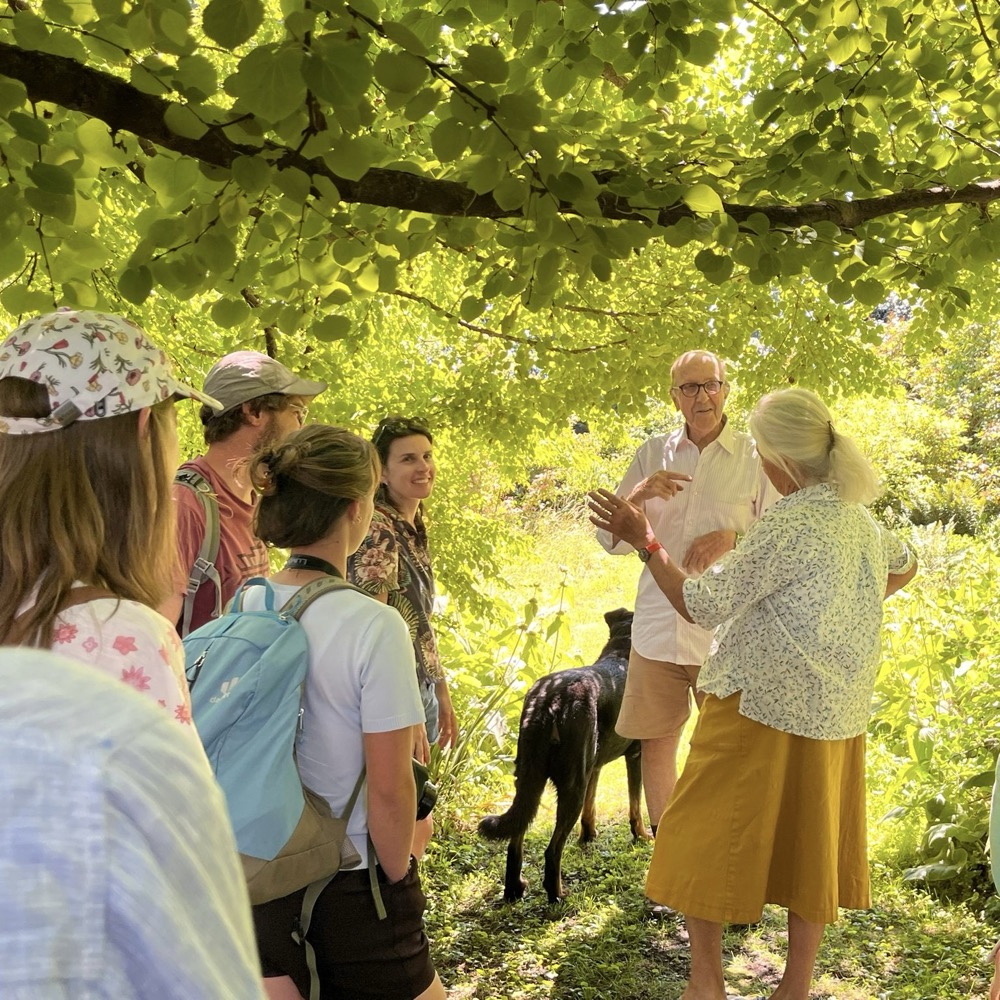
Figure 97
Highlights
The highlight here, apart from the magnificent glasshouse, was another mature Cryptomeria japonica (Figures 98 and 99). We also admired an incredible Pinus nigra subsp. nigra that was planted in 1850, had been struck by lightning at some point but had continued to grow into what is now a goliath of a tree; and an equally giant Magnolia grandiflora planted at around the same time.
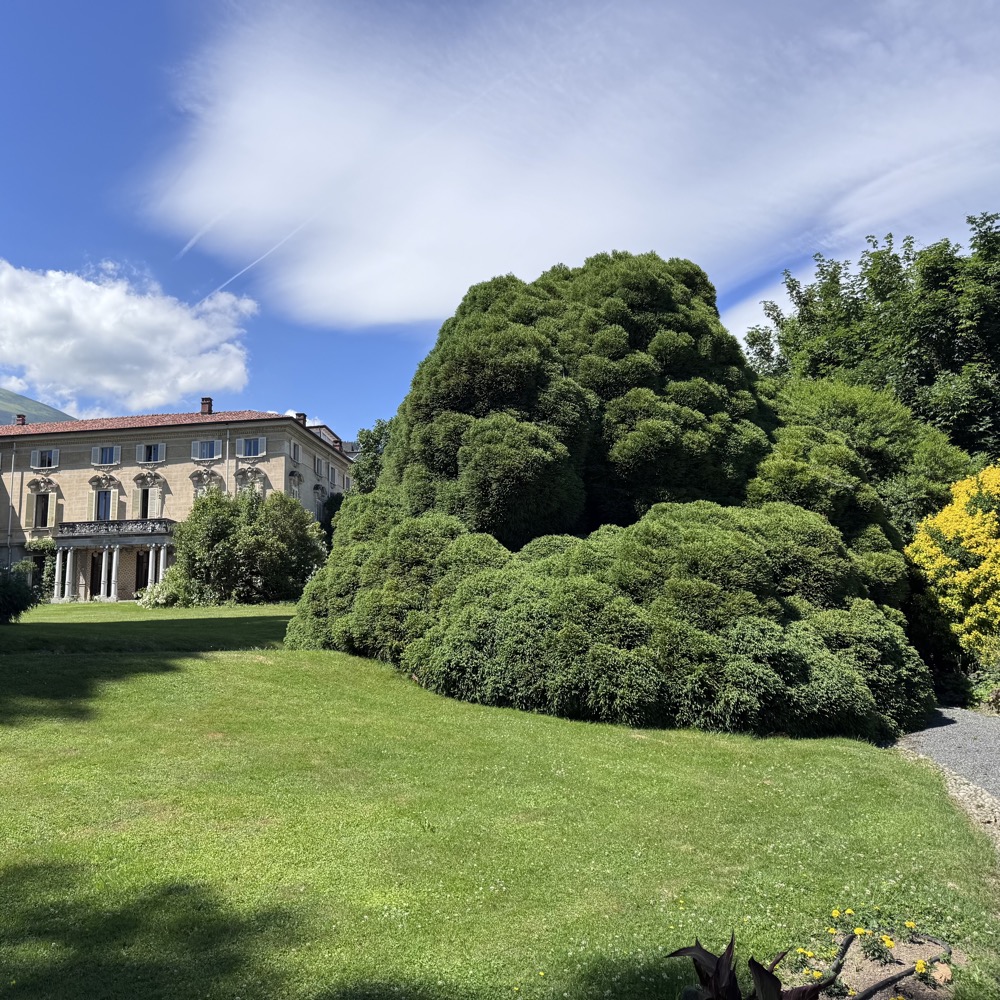
Figure 98
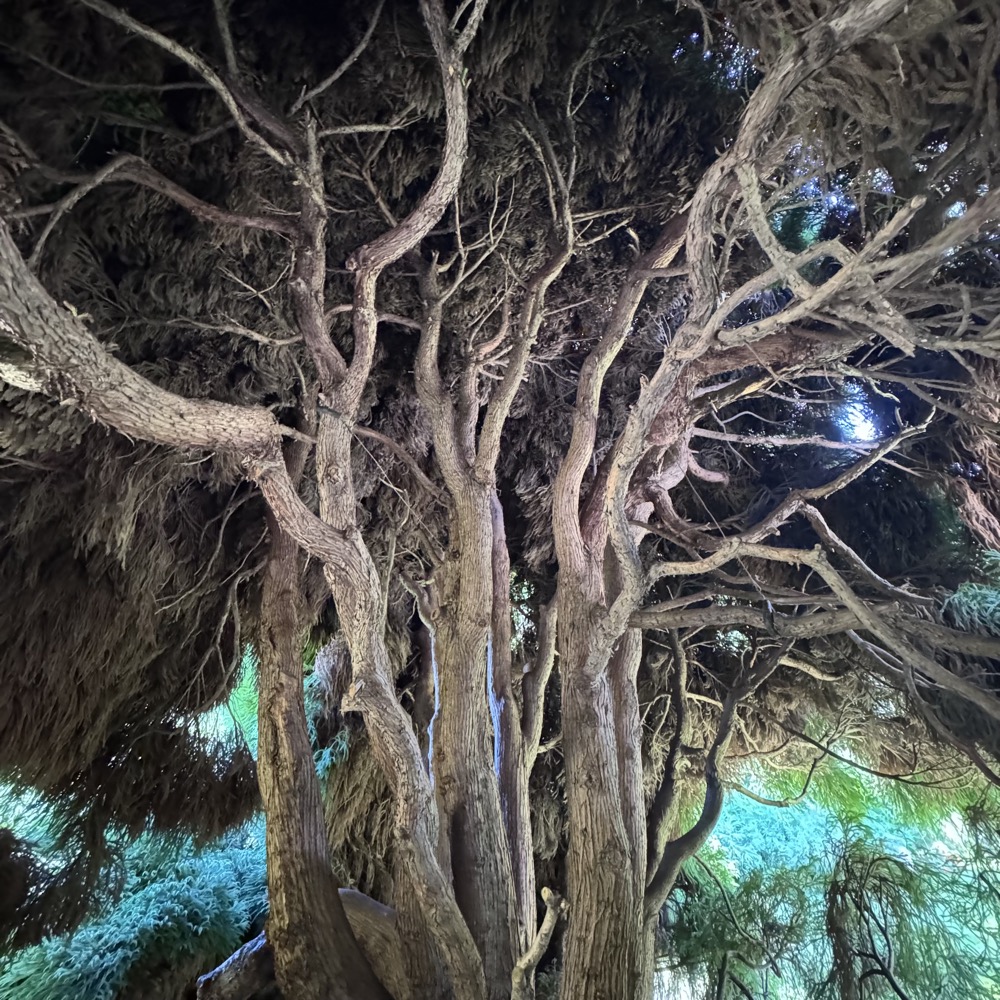
Figure 99
Villa Taranto
The 16-hectare botanical garden at Villa Taranto sits on the western shore of Lake Maggiore at Pallanza. The garden was created between 1931 and 1940 by Scottish-born Captain Neil Boyd McEacharn, who undertook a radical transformation of the site, felling over 2,000 trees, re-contouring the landscape, and installing a network of paths, terraces, water features, and garden buildings and structures. The garden is laid out in an ‘English’ style because McEacharn did not like formal Italian gardens. Kew-trained horticulturist Henry Cocker was head gardener here both before and after the Second World War.
The garden has been open to the public since 1952 and run by a non-profit organisation since McEacharn’s death in 1964. There are currently 11 gardeners, but they would ideally have 16. The garden is closed from November to February which allows the team to undertake large scale work without disrupting visitors. The gardens hold nearly 20,000 plant varieties across more than 3,000 species, including collections of azaleas, cornus, and dahlias. There is a dedicated greenhouse for growing and displaying Victoria cruziana waterlilies (Figures 100 and 101), other waterlily ponds (Figure 102) and a large Nelumbo nucifera (sacred lotus) pool (Figure 103), an arid display house for showcasing succulents and cacti, a small herbarium, and the founder’s mausoleum (Figure 104).
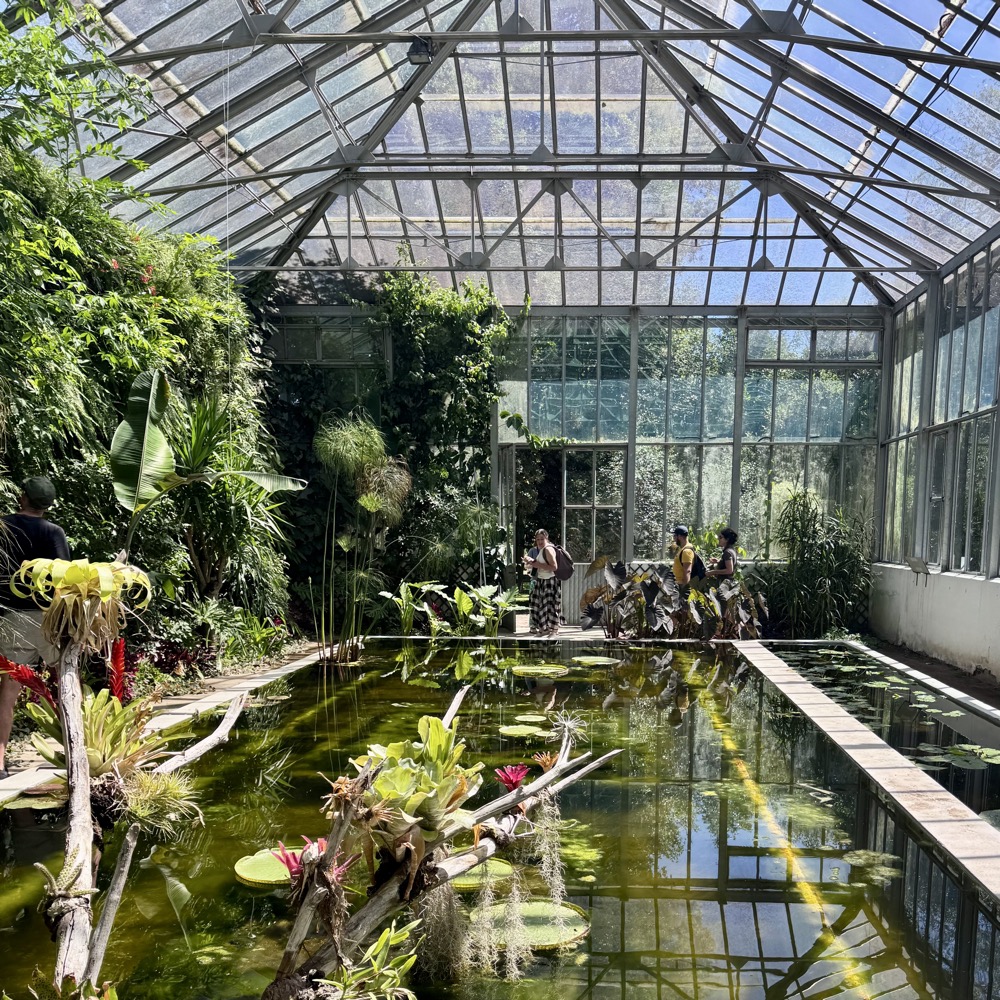
Figure 100
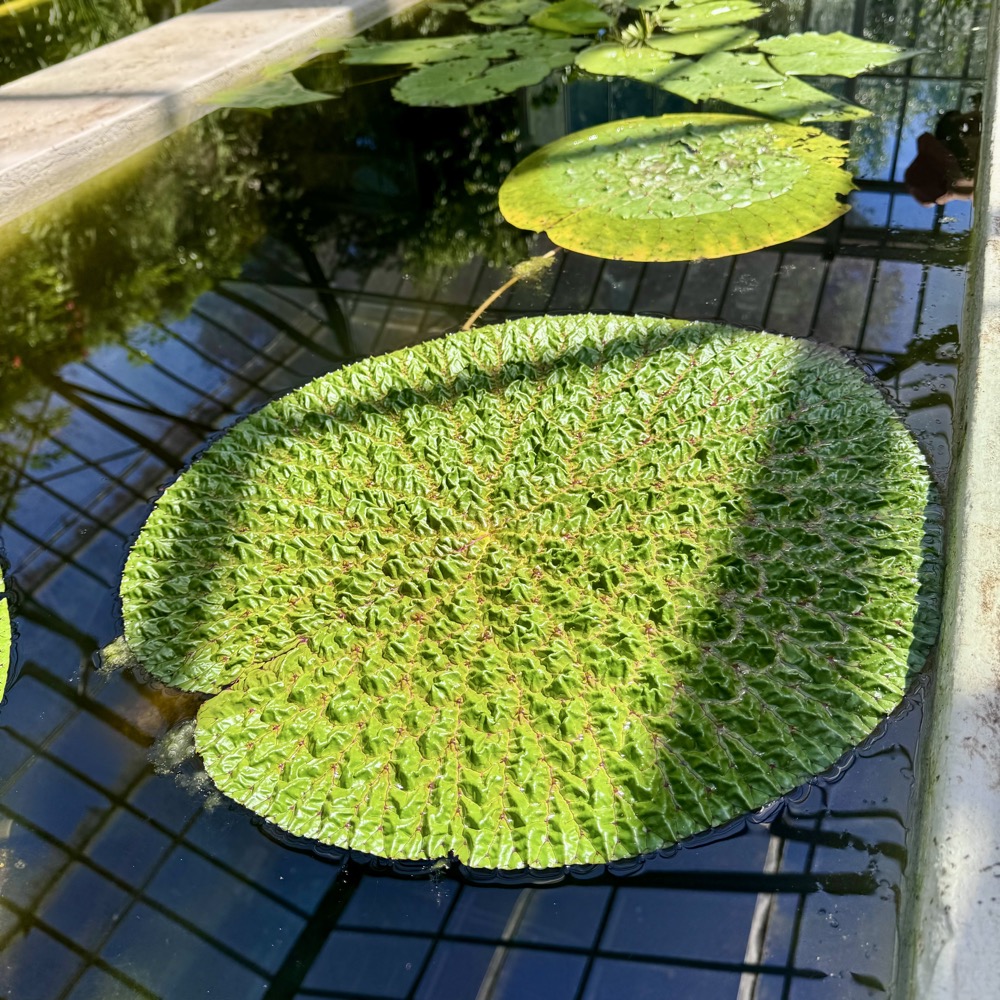
Figure 101
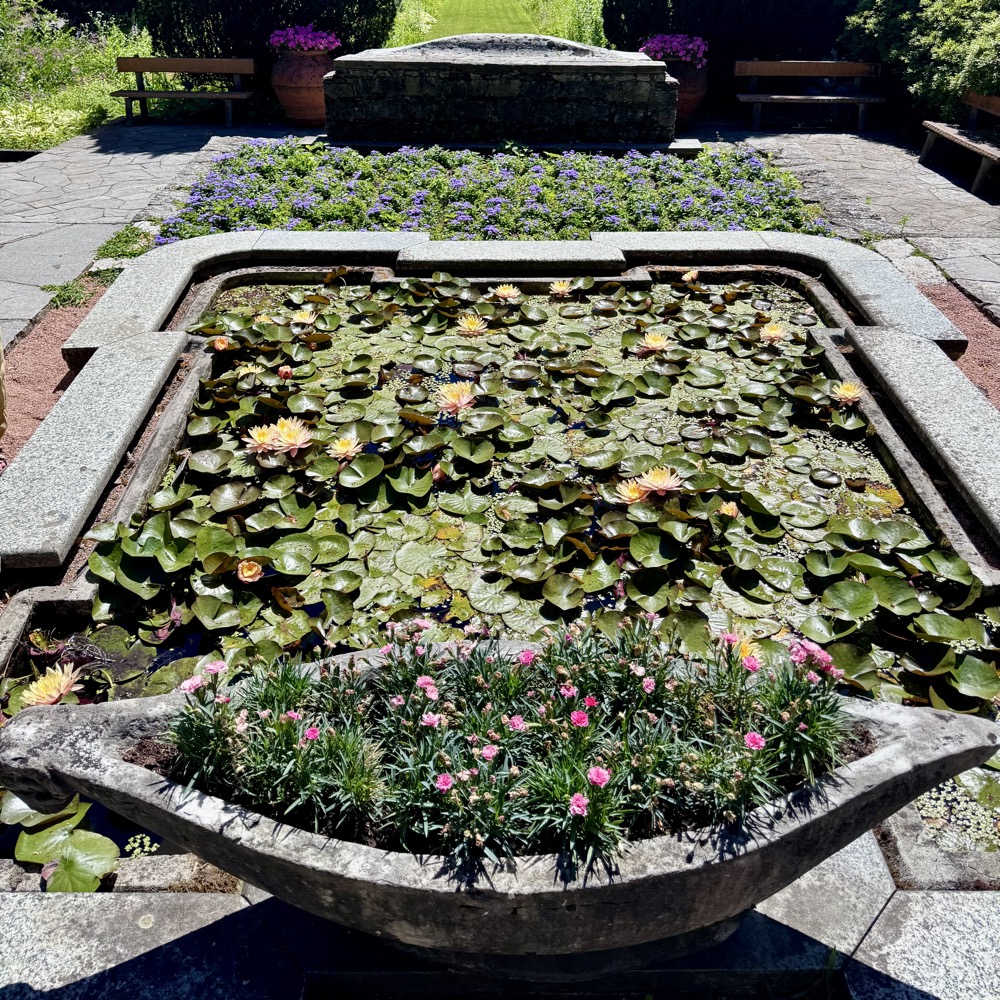
Figure 102
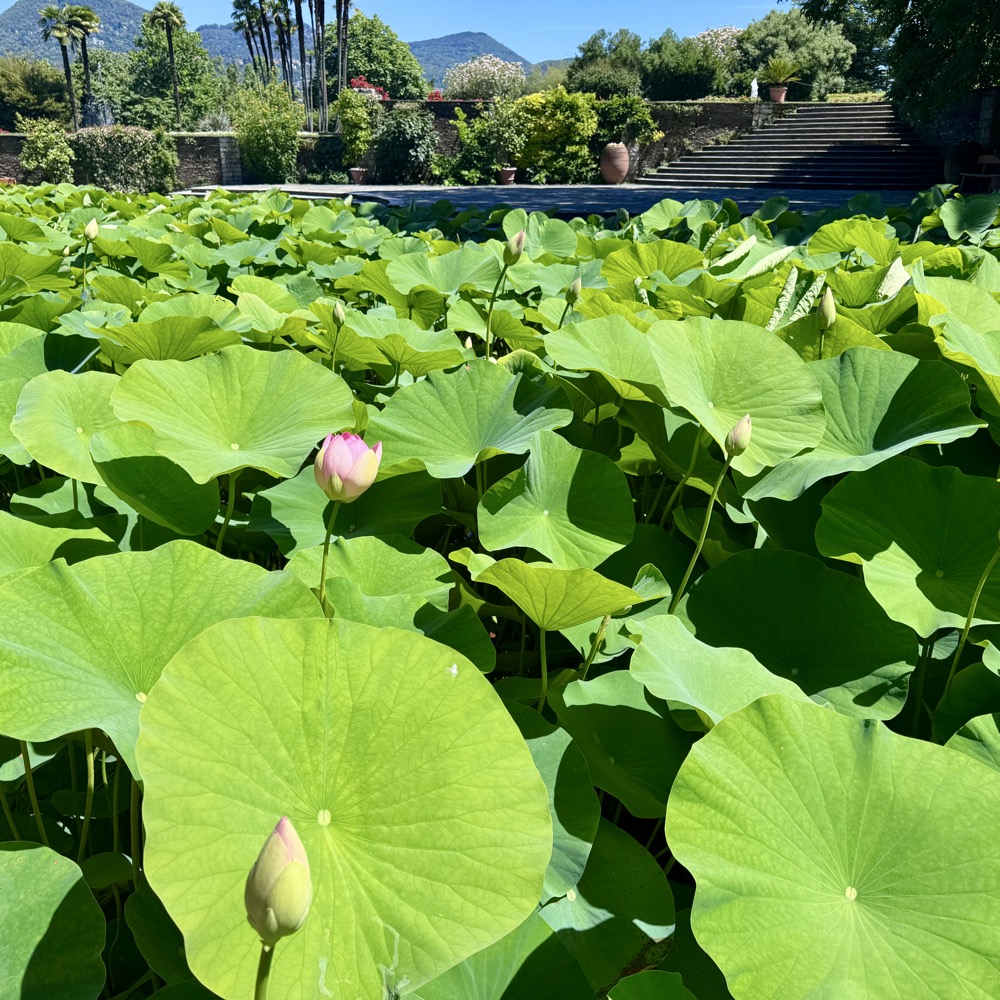
Figure 103
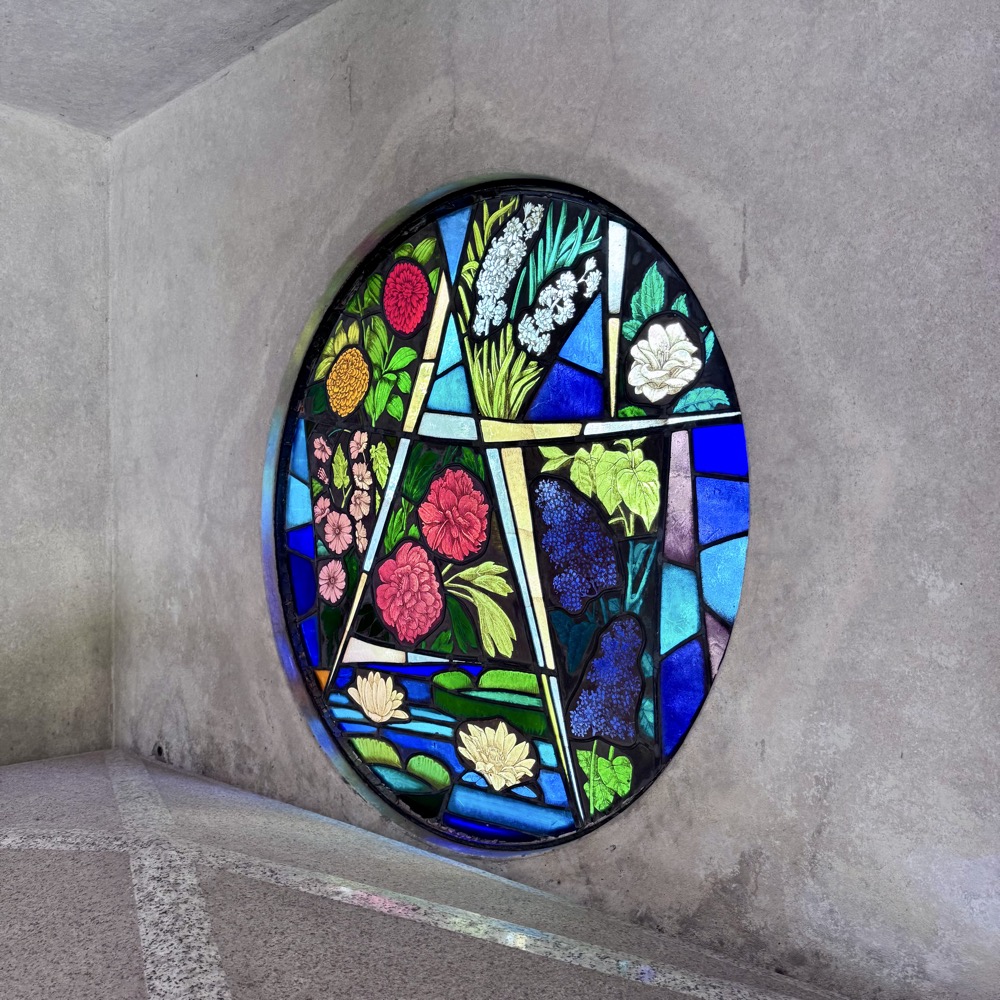
Figure 104
The visit
Assistant Curator, Alessandra Sana, met us at the gates and proceeded to give us a detailed tour covering every area of the garden, including the nursery and service areas (Figures 105 to 110).
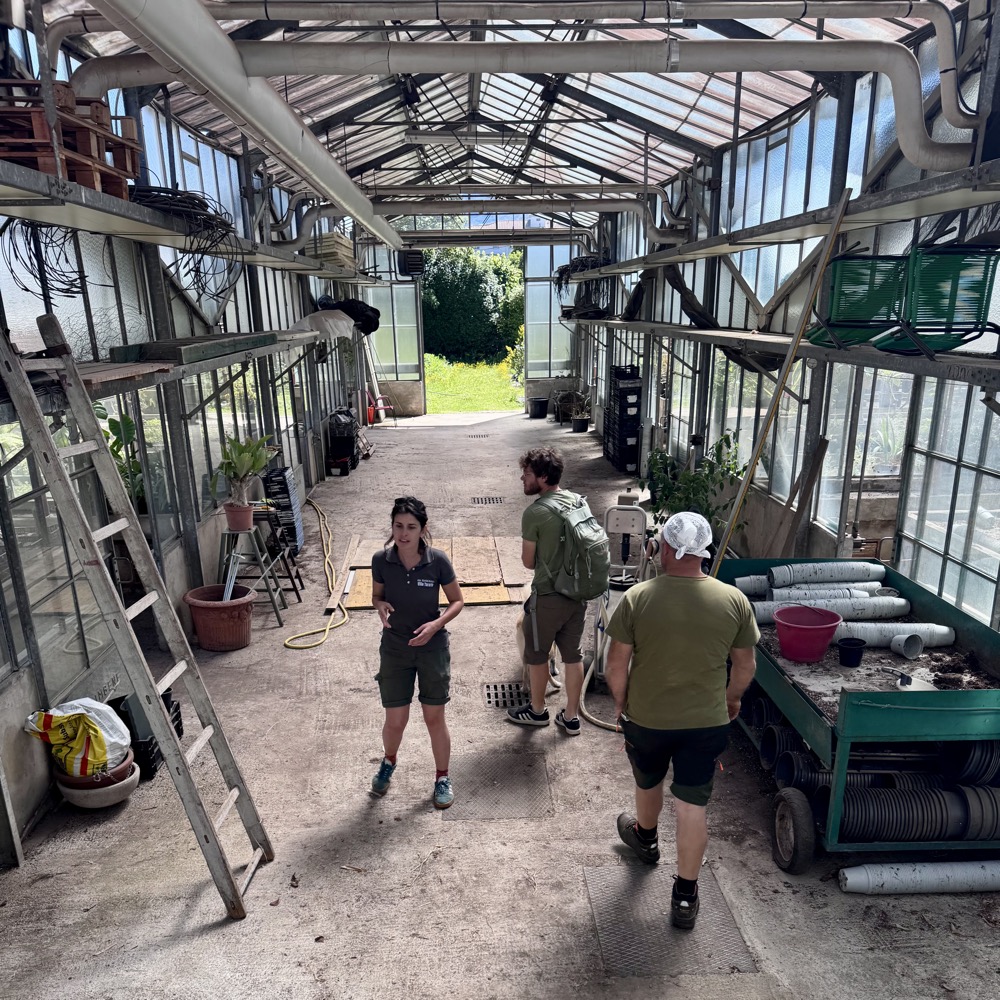
Figure 105
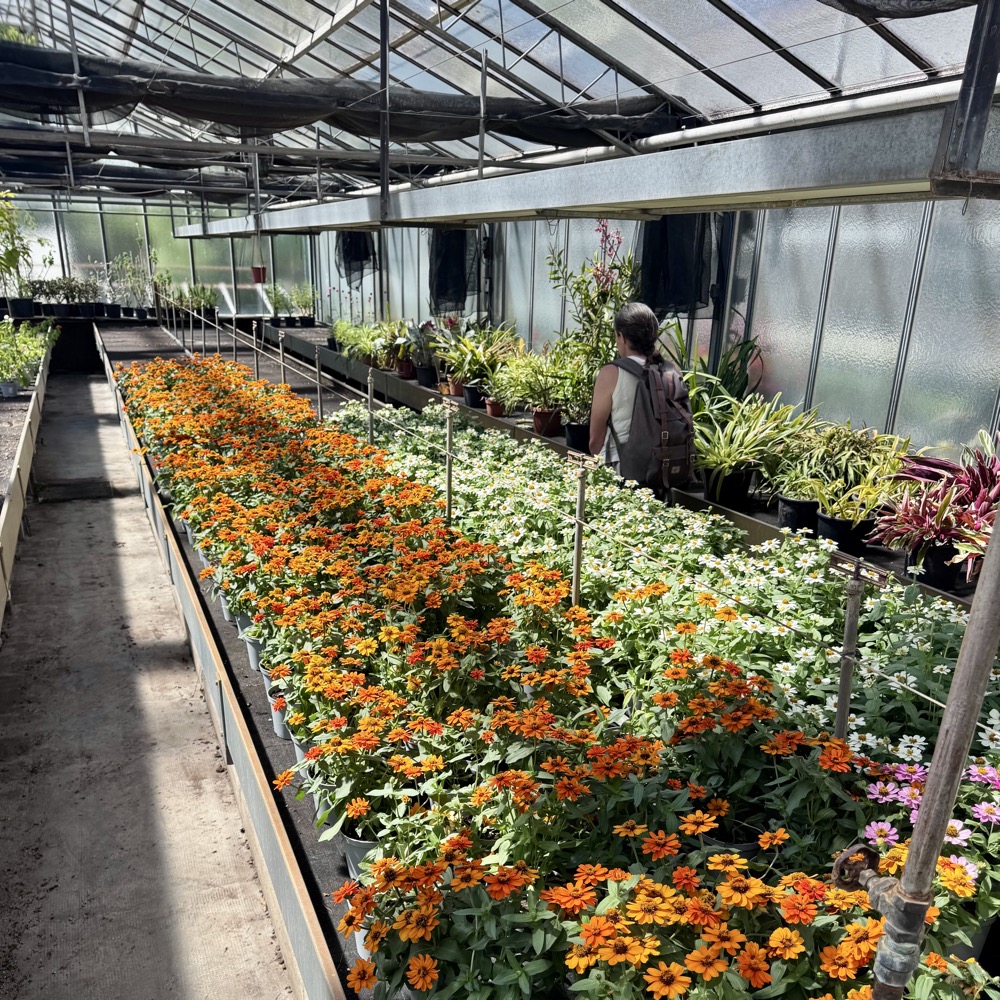
Figure 106
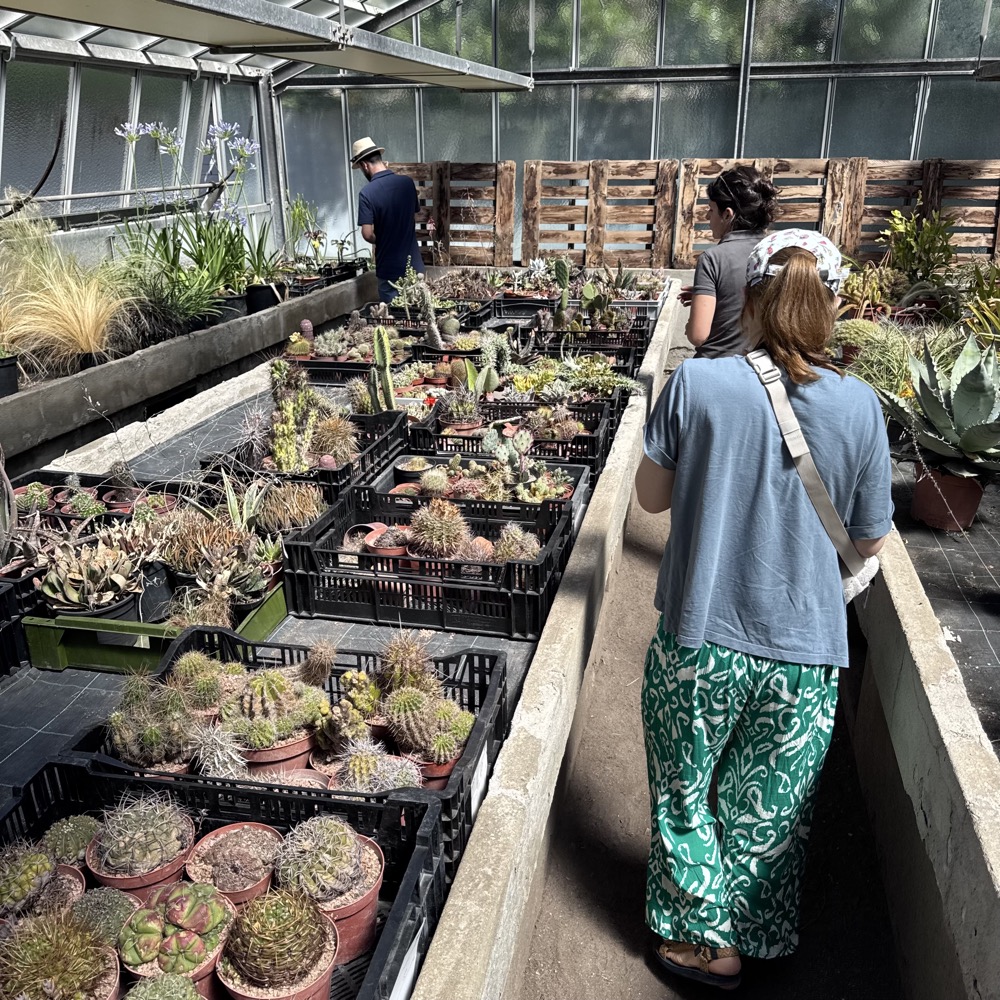
Figure 107
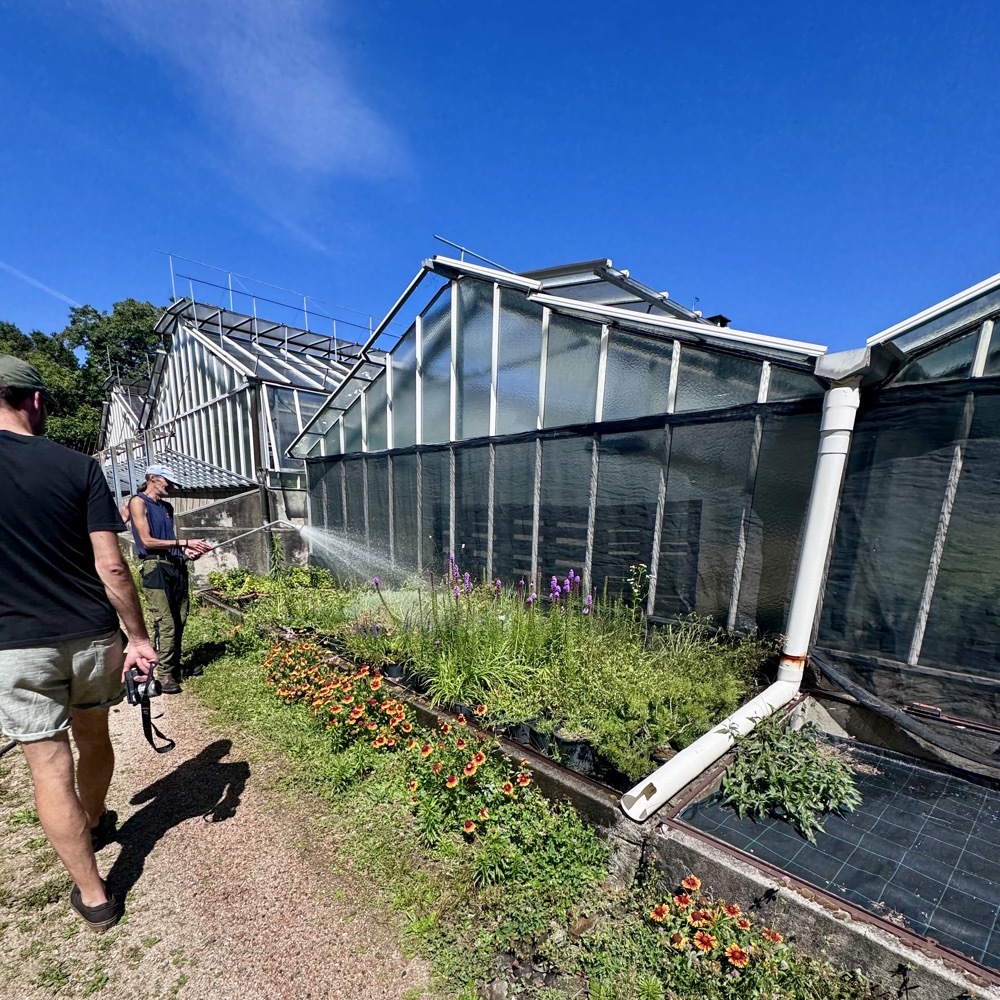
Figure 108
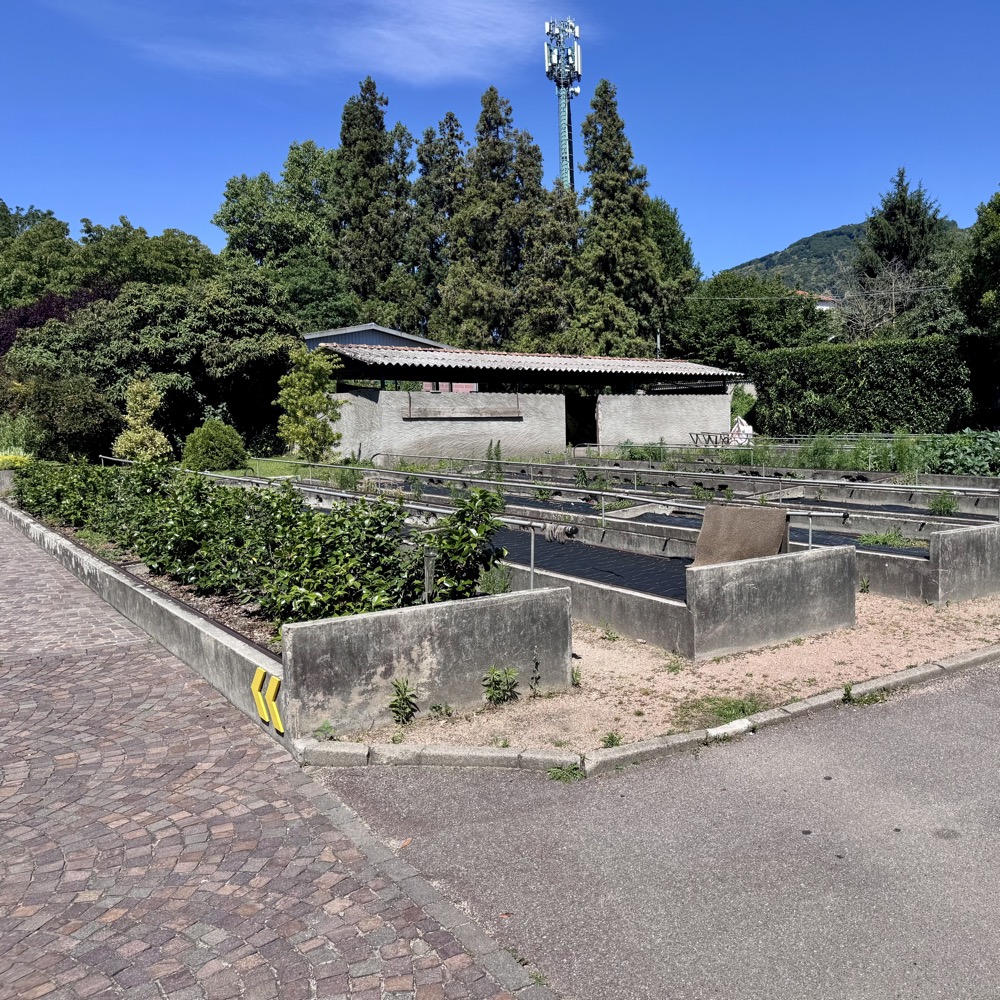
Figure 109
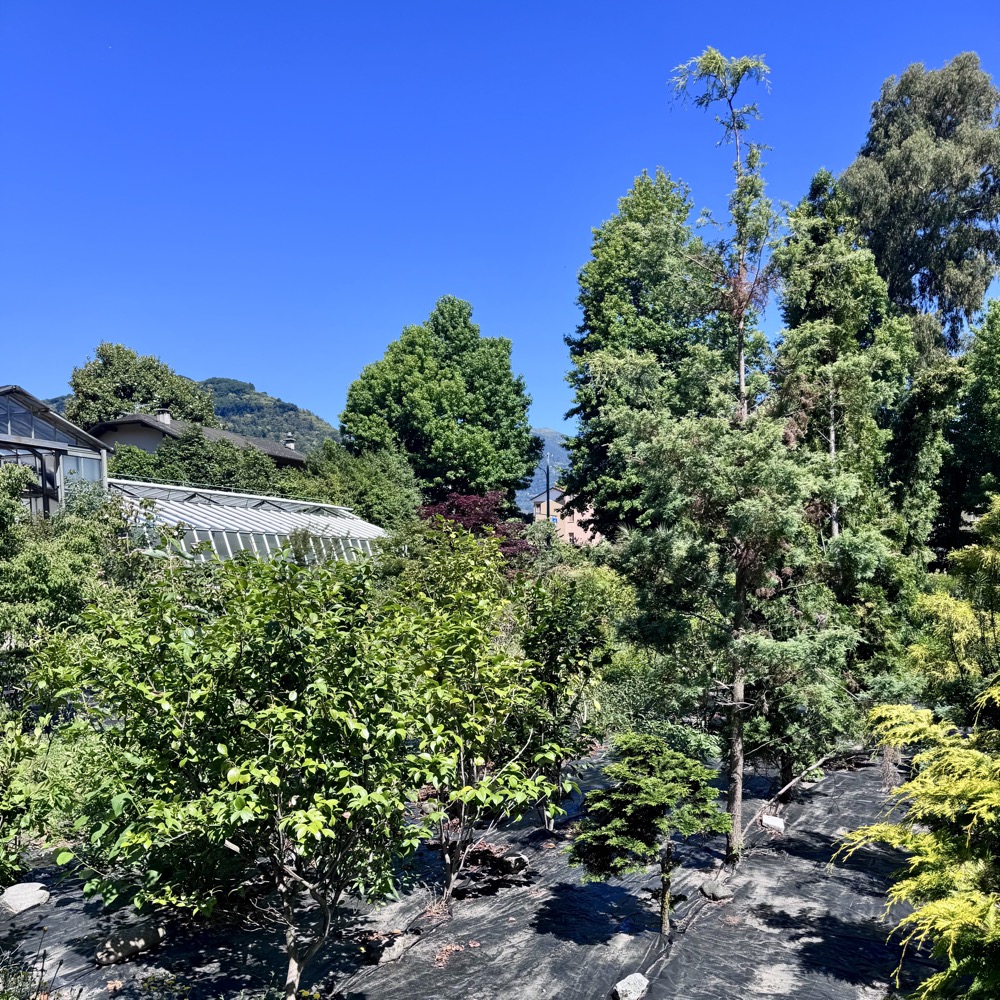
Figure 110
We were joined by Fabrizio Buttè (Curator) and Diego Cerutti (Head Gardener). We walked up one of the main routes from the entrance, admiring an impressive Metasequoia glyptostroboides on the way. In the ‘Fern Valley’ we were told that, like at Villa Carlotta, they grow their tree ferns (Dicksonia antarctica) in giant pots sunk into the ground, and that they move them in for winter to protect them (Figure 111). Again, they said they are planning to experiment with leaving them outside year-round. Around the corner from the ‘Fern Valley’ is the ‘Dahlia / Tulip Maze’ which is a long serpentine bed with a path running through it, planted with tulips for a spring display and dahlias for a summer display (Figures 112 to 114). The dahlias had been planted out recently and were just getting going. Alessandra expressed her displeasure at the aesthetic of the staking and asked for suggestions on how to improve it. We wandered around to have a brief look at the Mausoleum Chapel before seeing the garden’s most famous tree, a 400-year-old chestnut (Castanea sativa) (Figure 115).
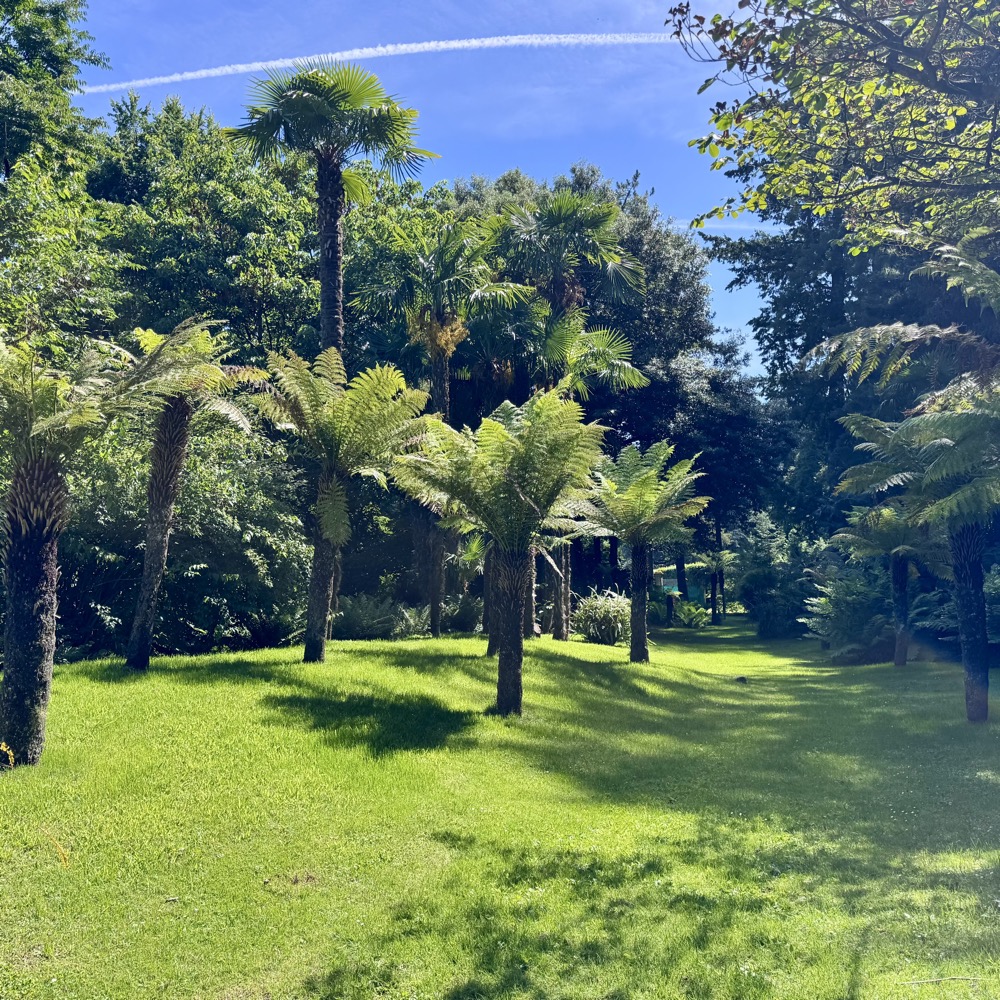
Figure 111
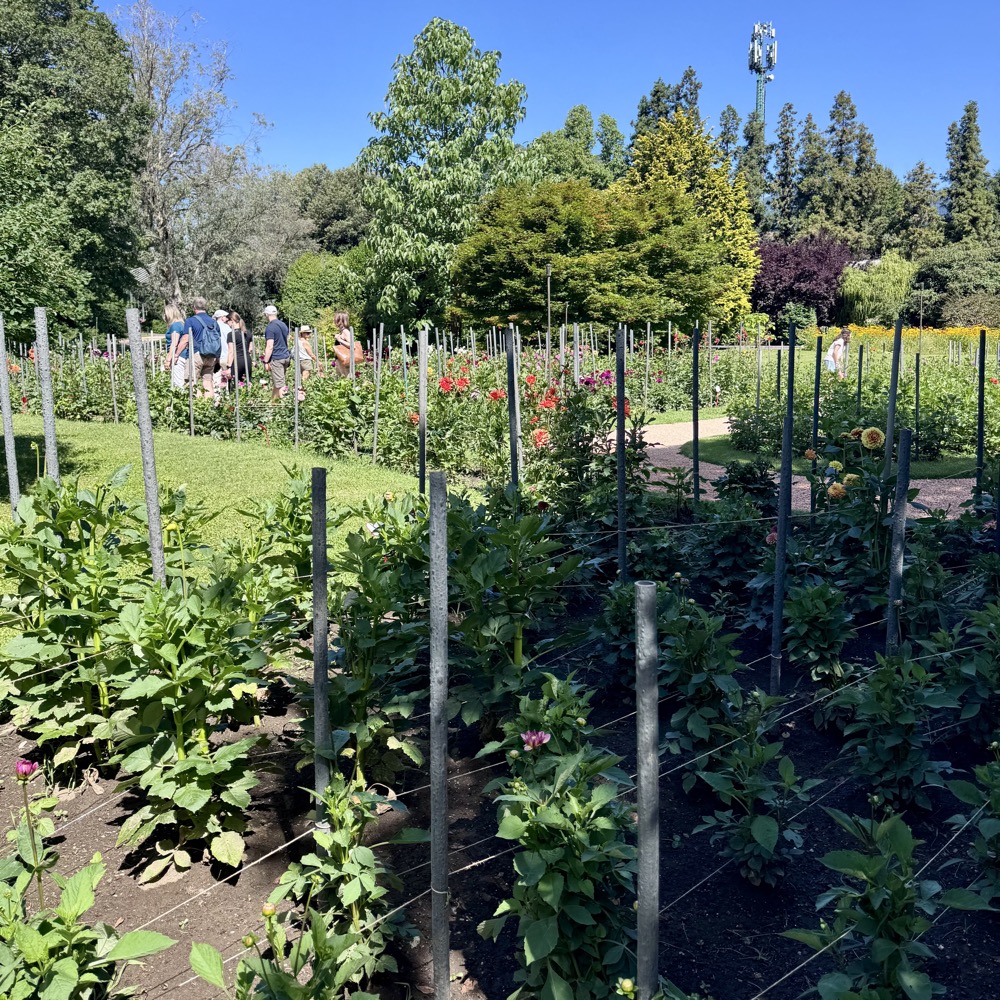
Figure 112
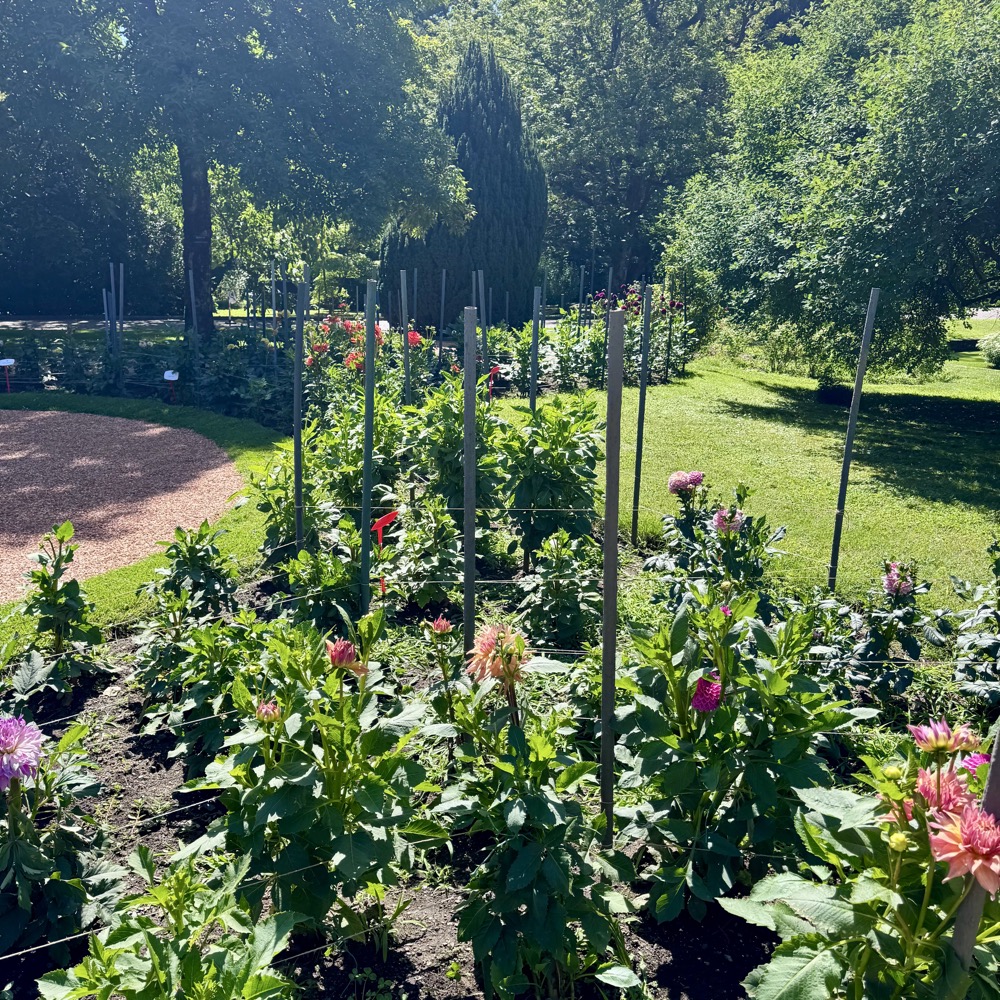
Figure 113

Figure 114

Figure 115
We passed by the Rhododendron Wood but didn’t linger because the plants had finished flowering. McEacharn is credited with introducing many Rhododendron cultivars to the region, some of which came from his Scottish estate. We were led off the path and into the valley which was dug by hand and is not an original feature of the landscape (Figure 116). We emerged from the top end of the valley at the Lotus Pond (Figure 117). This is drained in winter, but the plants are left dormant, in situ. They come back to life when the pond is refilled in spring. We then made our way up to the most iconic spot in the garden, the view that looks out over the terraced gardens across to the Villa and beyond to the mountains in the distance (Figure 118). Originally planned as a rose garden, the formal terraced gardens are now planted out with colourful bedding for spring and summer. This had recently been planted out so the beds weren’t quite at their ultimate fullness and colour. While this might look a little dated in some respects, it works with the mid-century design of the space. Further up the slope from here is the ‘Personality Lawn’, a mini arboretum of specimen trees and shrubs each of which was planted by a notable person, politician or celebrity visiting the garden. There is a Magnolia ‘Kewensis’ that was planted by Margaret Thatcher in 1988, and a magnificent Davidia involucrata that was planted by the Infante of Spain Don Jaime in 1938 (Figure 119). Our final stop on the tour was the cactus and succulent display house right at the top of the garden (Figure 120) which has another large waterlily pond in front of it (Figure 121). From here there is an impressive view across to Verbania (Figure 122). We meandered back down the hill through the Tourniquet and the Belvedere to the exit.
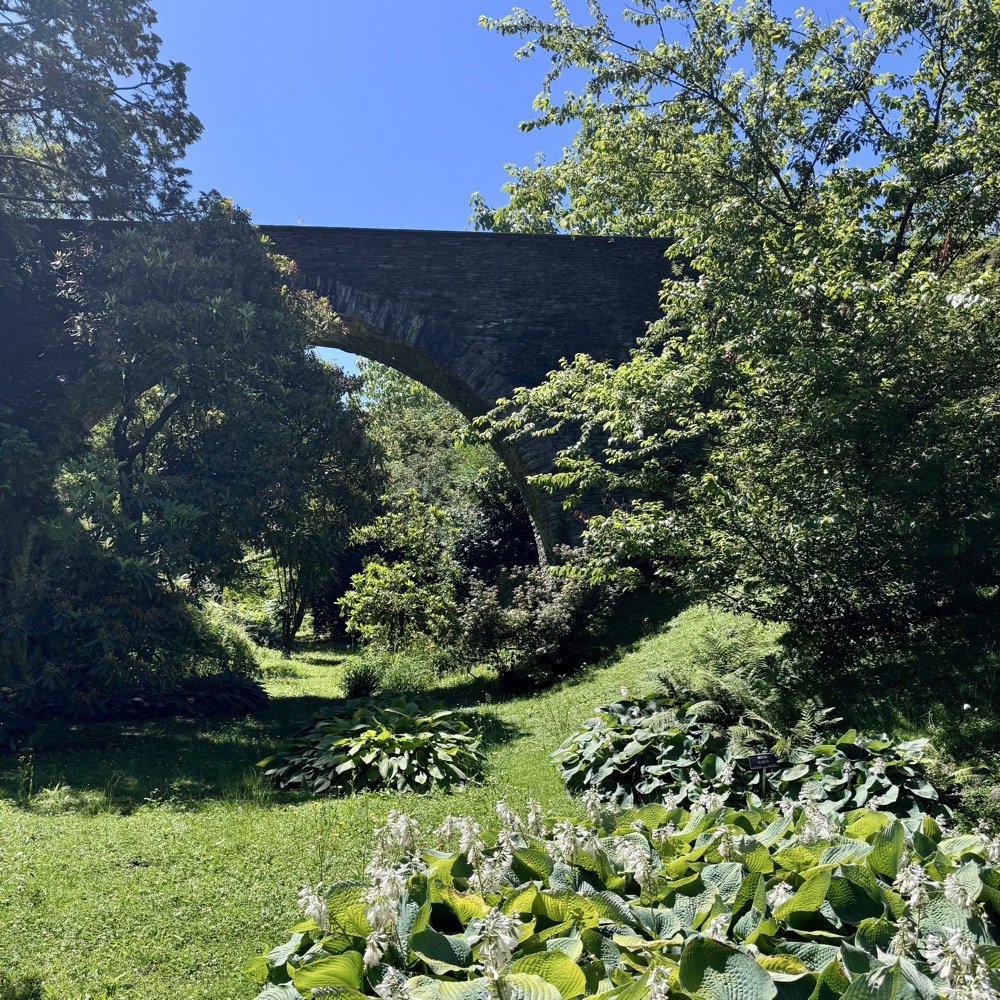
Figure 116
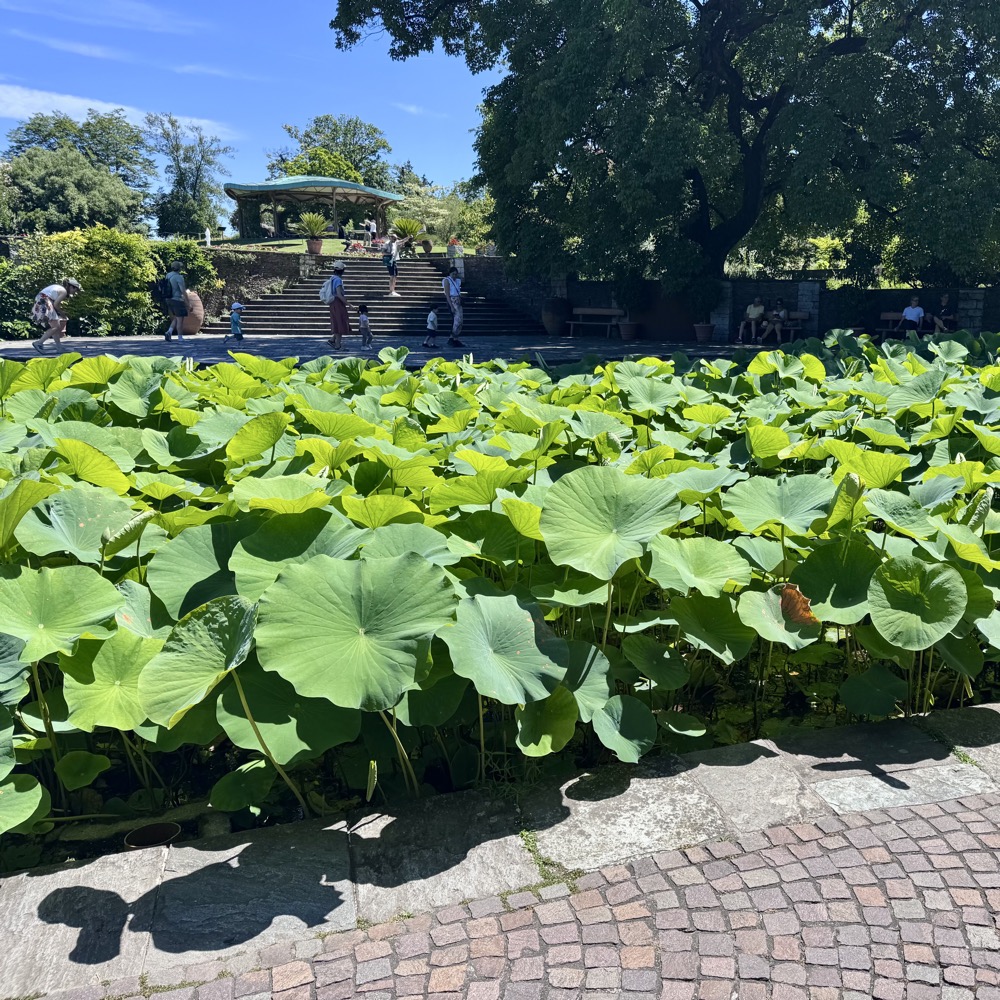
Figure 117
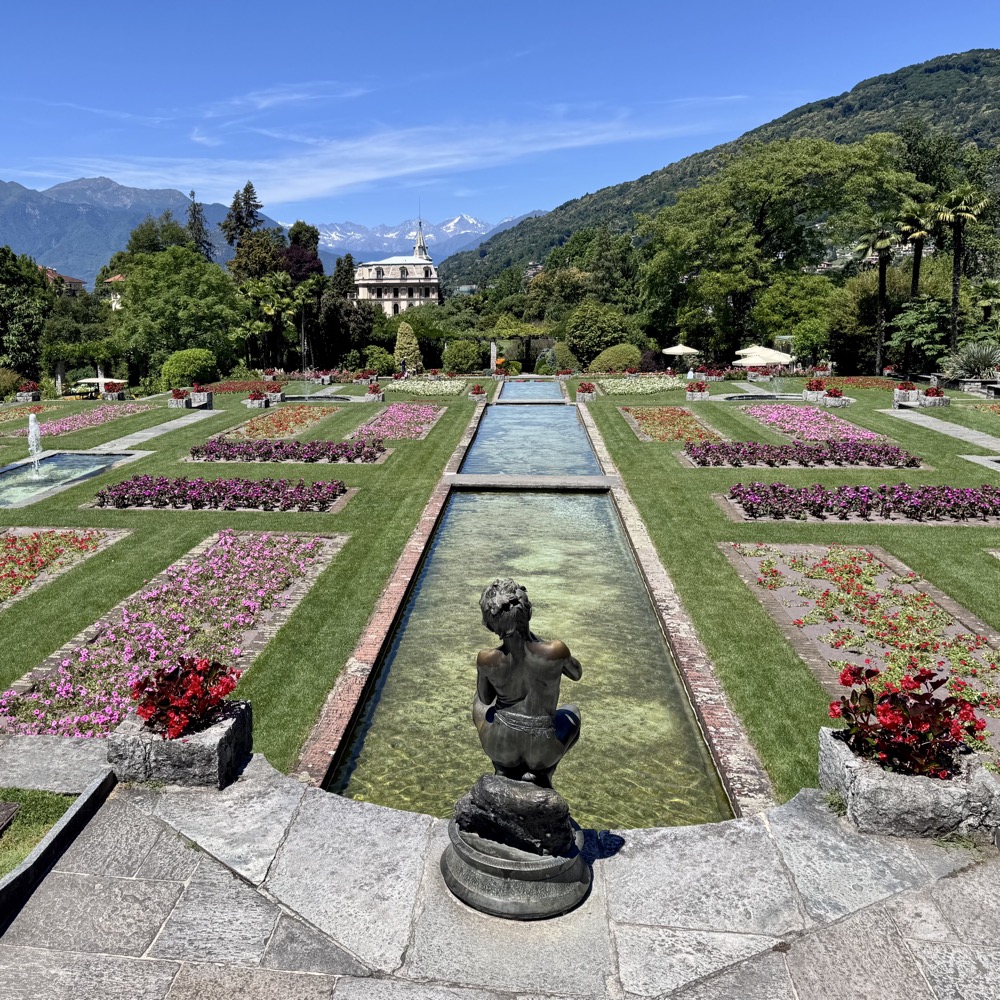
Figure 118
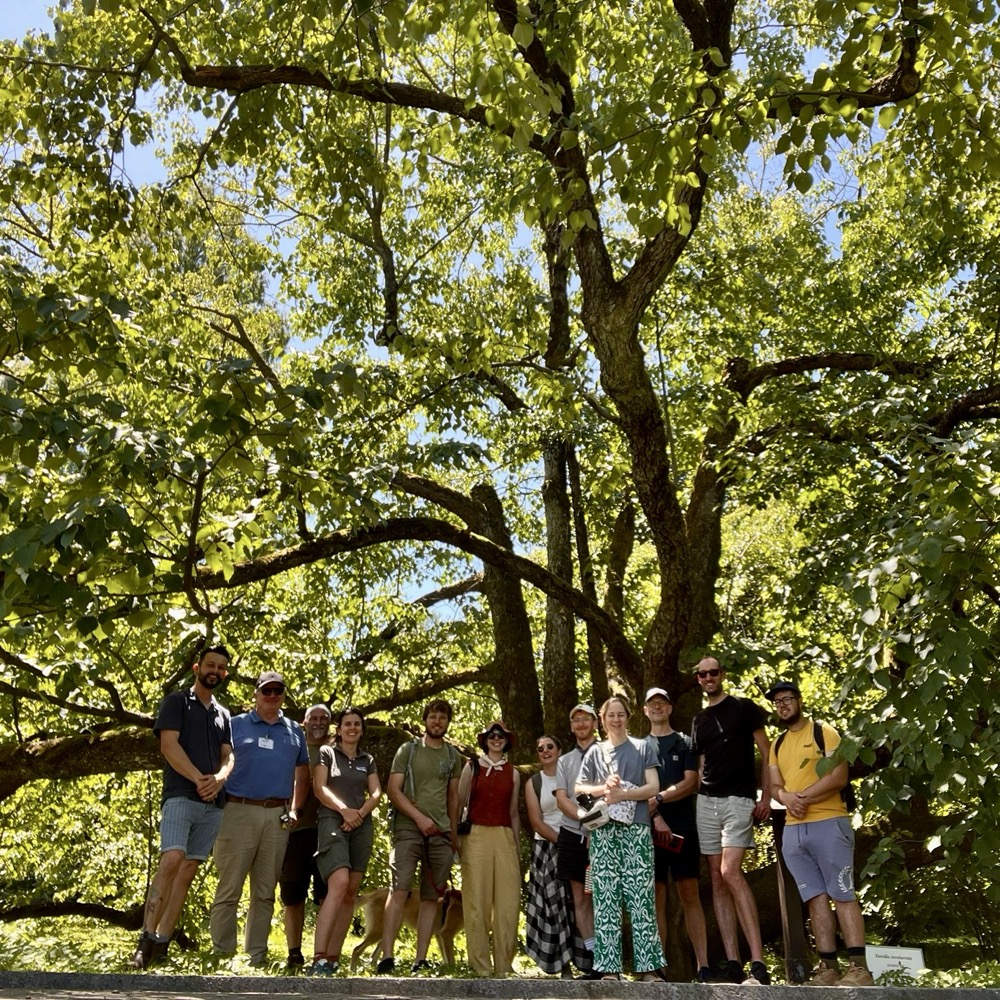
Figure 119
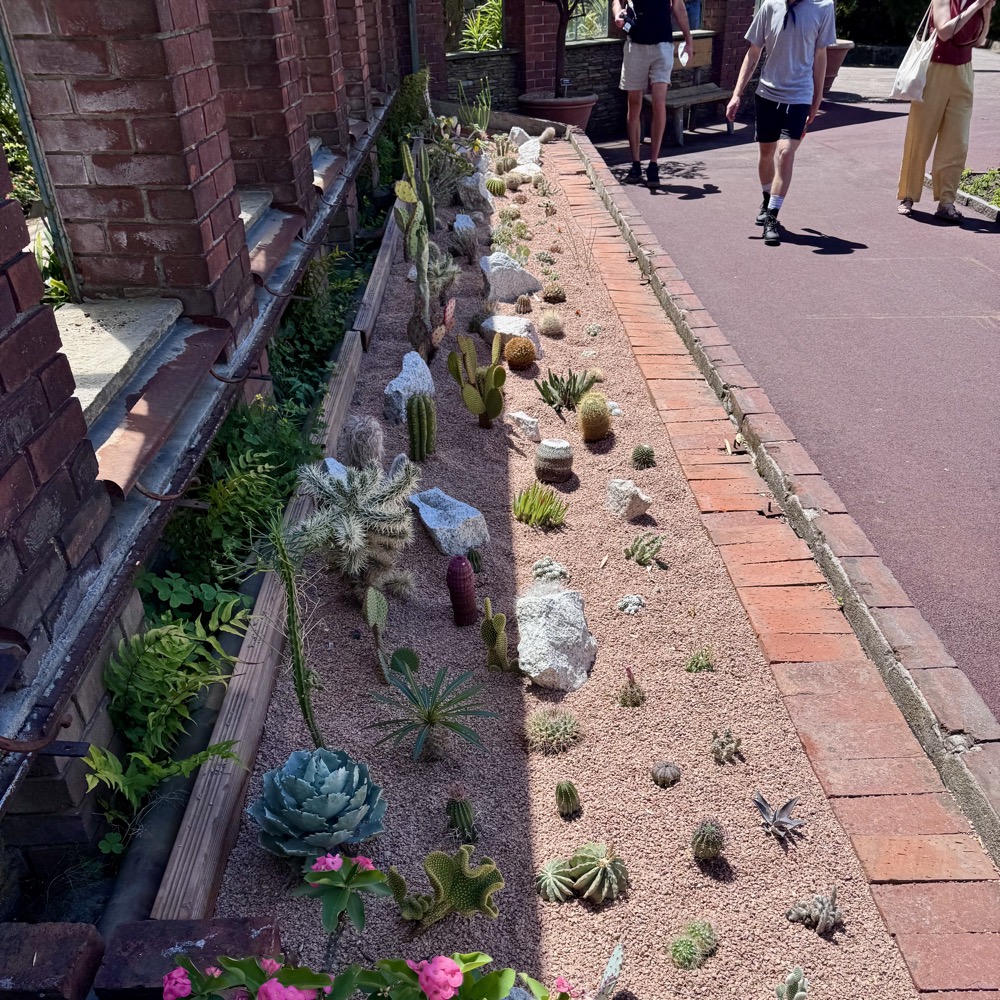
Figure 120
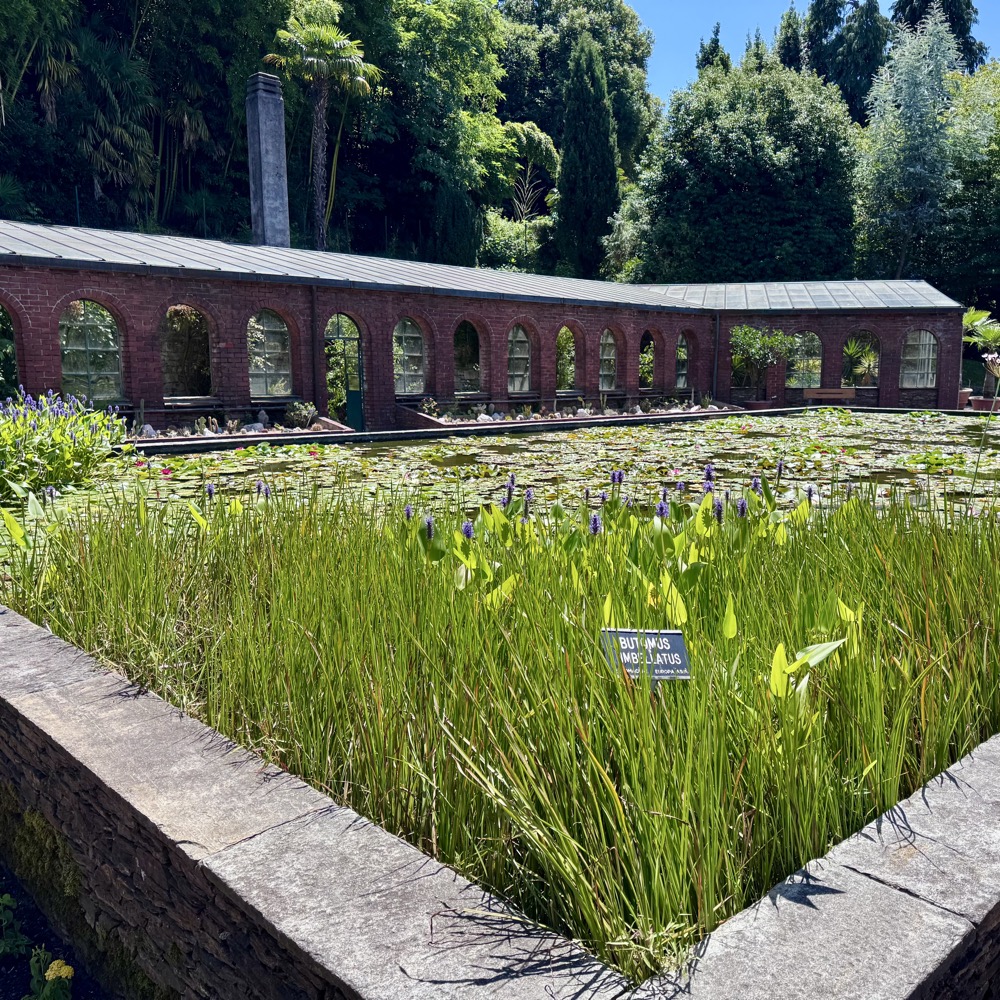
Figure 121

Figure 122
Reflections
The theme that surfaced most consistently throughout our trip was climate adaptation. At Isola Bella we saw Camellia cultivars in decline and a mature Taxus baccata specimen recently lost. At Villa Carlotta and Villa Taranto, both head gardeners are experimenting with leaving tender specimens such as Dicksonia antarctica outside year-round rather than lifting them for winter, mirroring what we already do at Wisley. It is worth continuing to identify which of our own borderline-hardy specimens might be candidates for the same kind of staged, monitored risk-taking.
A related and more pressing thread was pest and disease pressure. Xylosandrus crassiusculus (granulate ambrosia beetle) and Popillia japonica (Japanese beetle) were present at several of the gardens we visited and have not yet reached the UK, while Paysandisia archon (palm borer) already has. None of these currently have an effective treatment and they serve as a useful reminder to stay alert for early signs of unfamiliar pest damage at Wisley, and to keep an eye on biosecurity for these species in particular.
None of this would have been possible without the generosity of the gardeners, curators, and owners who gave us their time, and particularly Alessandra Sana, whose local knowledge and connections shaped the itinerary. We come away with a set of professional relationships we hope to keep building on, and a stronger sense of ourselves as a team, having spent a week comparing notes and learning together.
On a personal note, having grown up in South Africa, seeing Protea, Leucadendron and Leucospermum thriving in open ground on an island in Lake Maggiore was a highlight I hadn’t expected, a small reminder of how far climate adaptation and careful microclimate selection can push what is possible.