

Gardens of the Côte d’Azur, France
Wednesday 22 October – Wednesday 29 October 2025
Text and main images by Liz Ware
Menton was an ideal base for the MPG visit to the gardens of the Côte d’Azur. The group stayed in the Hotel Napoleon, just a short walk from several of the gardens on the itinerary and close to the beautiful old town with its narrow streets and spectacular views over the harbour.
It’s easy to understand why Menton has been popular for British visitors for well over a century. From the 1880s, Queen Victoria was a regular visitor. Her doctor believed the air to be good for respiratory illness. Sheltered by a ridge of mountains, it does enjoy an average of 316 sunny days a year but the winter protection it provides for the town traps humidity during summer, creating perfect conditions for a wide range of subtropical plants but less than ideal conditions for anyone suffering from respiratory disease.
Over the last century, the majority of the 11 gardens visited have experienced highs and lows – times of thriving and periods of neglect. Many were either abandoned or badly damaged during WWII but were restored within a few years. Today, all of them face an unpredictable climate and the challenges, pests and diseases that accompany it.
Thursday
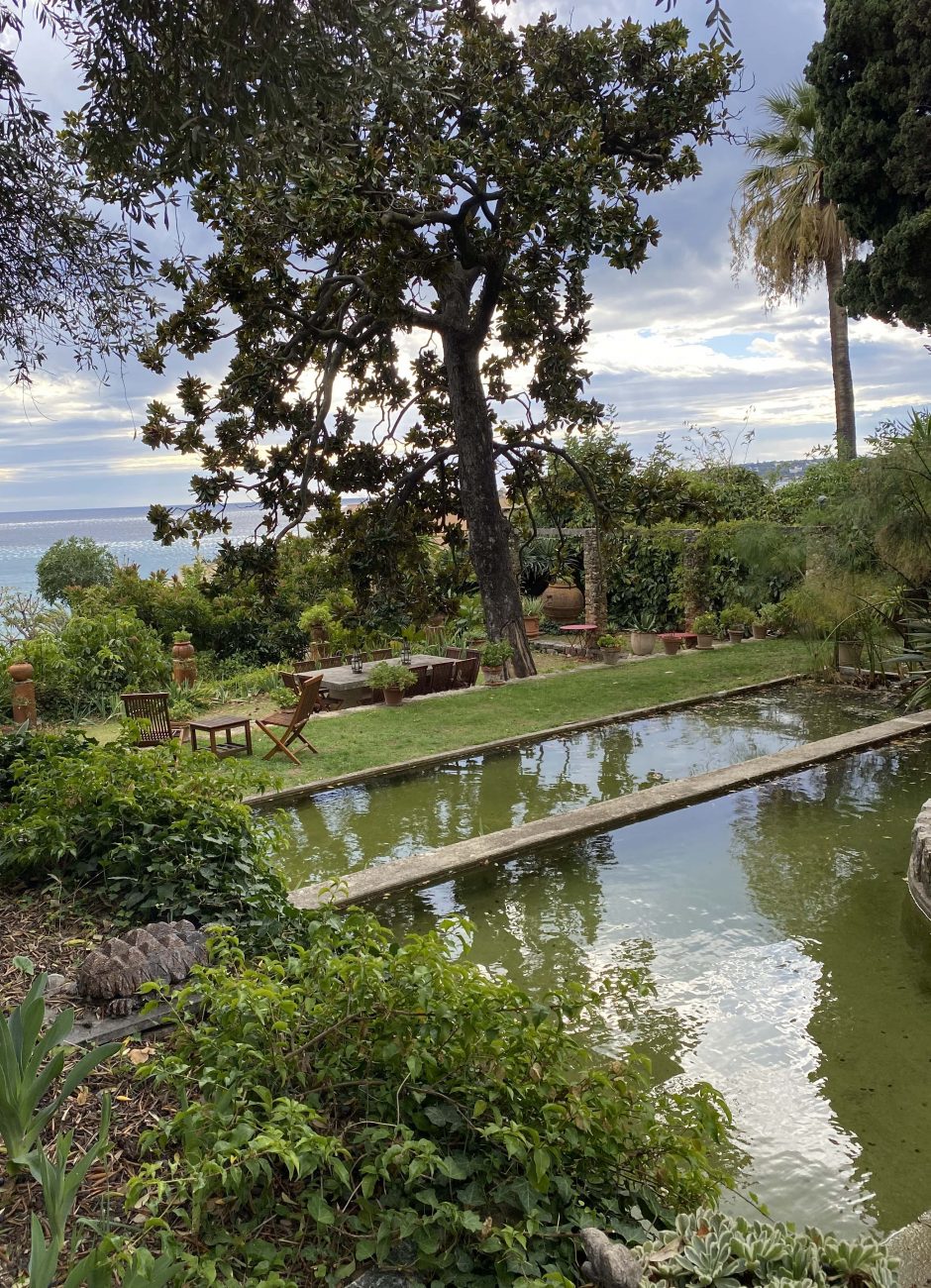
Clos du Peyronnet was built in an olive grove in the late 19th century. It was bought by Derick and Barbara Waterfield in 1921 and remained the family home until the death of their grandson, renowned plantsman William Waterfield, in 2021.
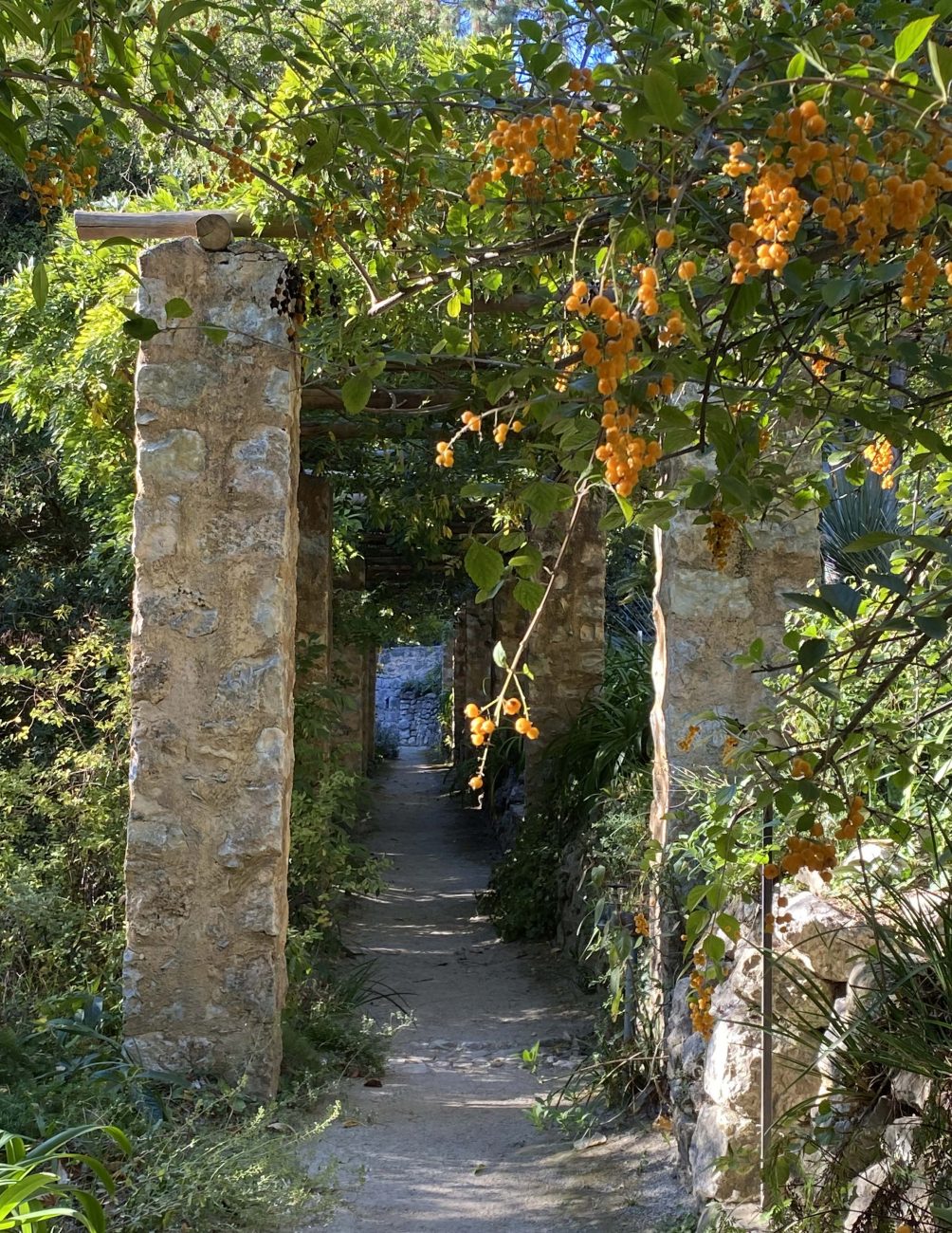
During the war, Menton was occupied by the Italians, and the property was badly damaged. William returned in 1946 and rebuilt the house and restored the garden, constructing a stone arcade along the old olive terrace and a staircase of reflecting pools descending towards the sea. Over the next 40 years he filled the garden with plants and his collection of bulbs.
Since William’s death there have been changes in the way the property is run. Visitors are less welcome than they once were. Our MPG group was lucky to visit. The group entered discreetly through a gate at the top of the garden, following the narrow paths across and down through the terraces, and buffeted by a wild wind. On the lowest terrace of the formal garden, the magnificent Magnolia grandiflora was looking as splendid as ever.
Members who had visited in William’s lifetime found it less impressive now. In the past, visitors entered the property along the wide drive leading into a large turning circle in front of the house. On this visit we did not see the lovely pillars, splendid terrace and lower level from which there used to be a magnificent view.
As is the case in almost all the gardens we visited, wild boars are causing a lot of damage at Clos de Peyronnet. The property is on the edge of a busy urban area, but the blisteringly hot summer pushed them down from the hills in search of food.
In flower in October:
Scilla madeirensis
Friday
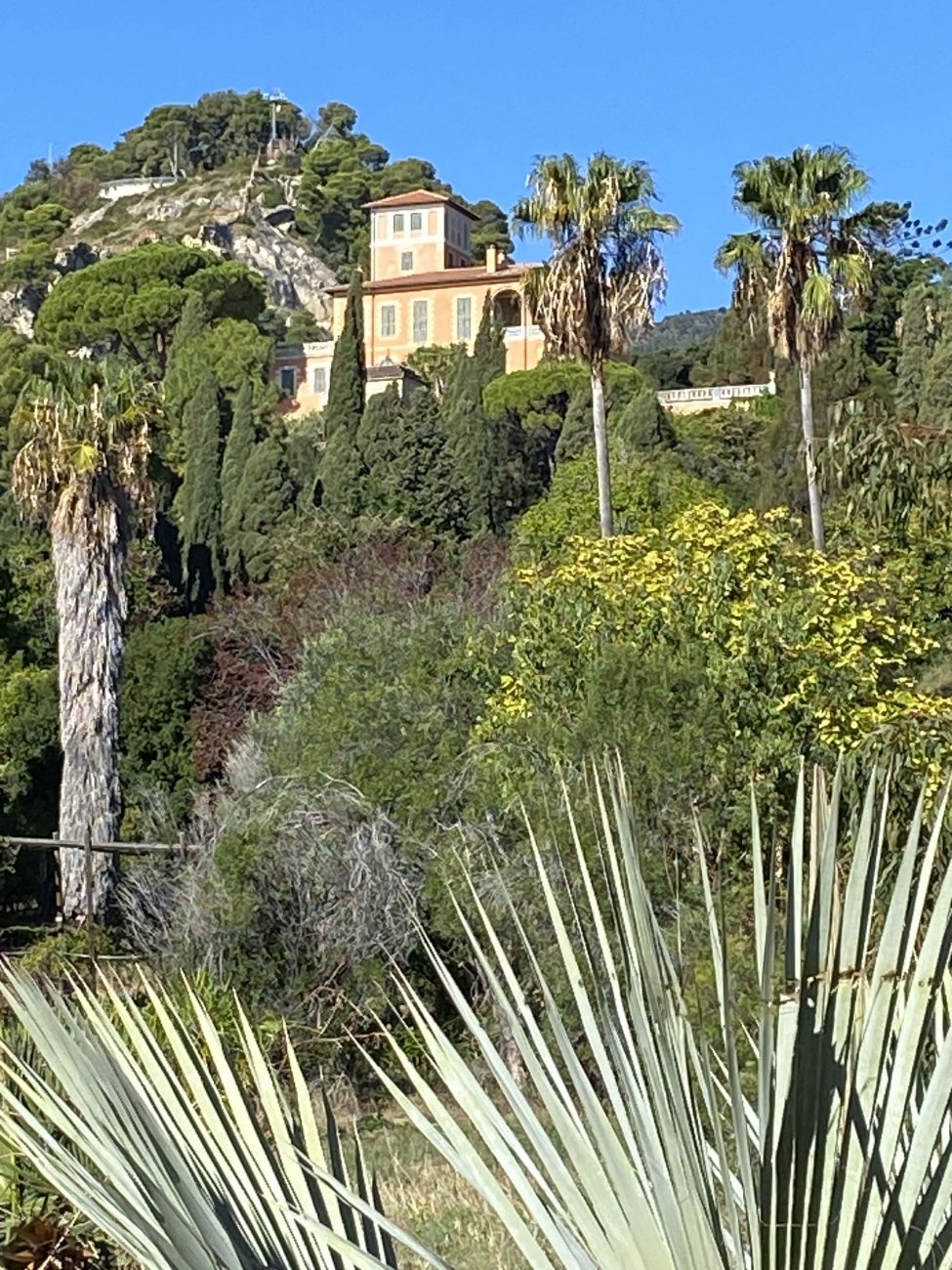
Hanbury Botanic Garden at La Mortola is just two miles over the French/Italian border from Menton. Land on this steep peninsula was bought in 1867 by Sir Thomas Hanbury who made his fortune in Shanghai, trading silk, cotton and tea. Apparently, Sir Thomas and his brother, Daniel, a pharmacologist with the family business Allen & Hanbury, spotted it from the sea. They judged it to have perfect conditions, not for themselves but for the plants they intended to acclimatise here. The first roses they experimented with came from their father’s garden in Clapham Common.
From the early years, South African, Australian and American plants grown at Hanbury attracted international attention. Plants were of interest for many reasons including pharmaceutical research and for their economic importance. In 1868 agronomist and landscape architect Ludwig Winter became the curator. By 1912, the garden’s catalogue contained 5800 plants.
Sir Thomas died in 1907 and his daughter-in-law, Lady Dorothy Hanbury, continued the family’s interest but the World Wars took their toll. In 1960, Lady Hanbury sold the garden to the Italian state. In 1983 it was passed to the University of Genoa.
MPG enjoyed a self-guided morning, savouring the incredible sight and sound of
the wild sea stirred up by Thursday’s storm. Among the plants in flower were brugmansia, thunbergia and salvia.
Boccanegra
During lockdown, author Sandra Lawrence wrote Miss Willmott’s Ghosts – a book about the extraordinary English woman, Ellen Willmott, who owned Boccanegra between 1906 and 1923. Unable to leave England to visit, Sandra spent hours on zoom in conversation with Ursula Salghetti Drioli who, in the 1980s, took on Boccanegra with her husband and fellow botanist, Guido Piacenza.
As Sandra Lawrence discovered when she eventually visited, “The first thing you need to know about Boccanegra is that it’s on a cliff face. It’s steep. No – not a little bit steep; practically vertical.” After listening to Ursula’s introduction high up on a windy terrace near the entrance, MPG members walked, gingerly at times, along the narrow terraces that stretch down the hillside to the mainline railway and the sea.
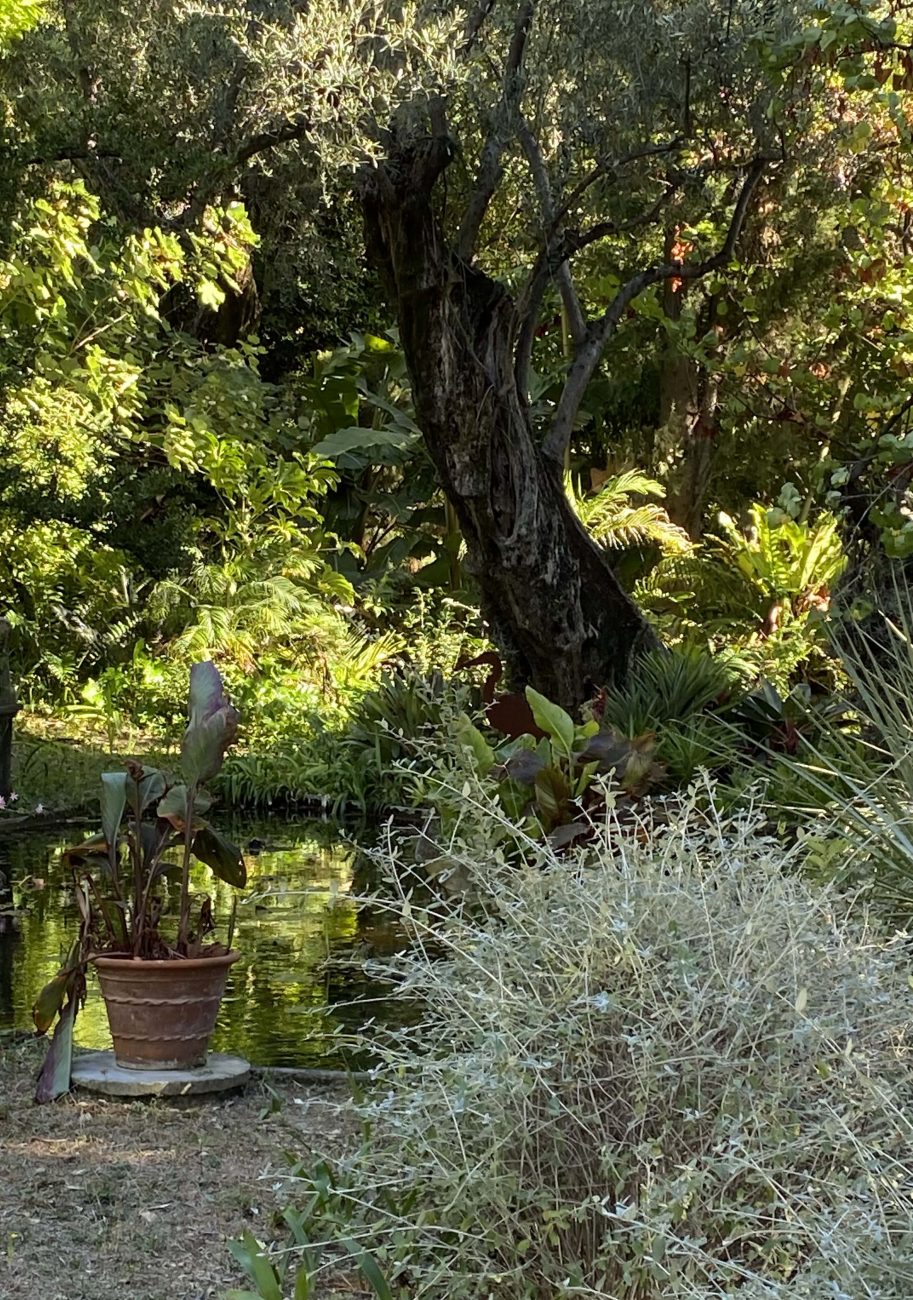
When Ellen Willmott bought the property there was already a single-track railway at the bottom of the cliff. The area of garden closest to the sea was lost when the mainline railway was built, something she fought hard to prevent. Further up the slope she installed irrigation tanks and disguised them well. One still looks much like a tranquil garden pond (see image above left).Today, having experimented with drip irrigation, Ursula finds a sophisticated system of sprays to be the most efficient way of watering.
When Ellen Willmott bought Boccanegra, she already owned Warley Place in England and Tresserve in France. She indulged her love of exotic and rare plants in all three properties. By 1923 she was seriously in debt, and the garden was sold to John Tremayne of Heligan.
Ursula’s husband’s first task when he began working here in 1984 was to remove self-seeded shrubs. By 1986, Ursula was involved and began planting. There was an archive of old photographs but no documentation to record whether elements of the garden were planted by Ellen Willmott or by the Tremaynes. Ursula knew about Ellen Willmott’s love of rock gardening, and it was while clearing away a mass of trailing plants that she discovered the Boccanegra rock garden and began replanting it.
Plants of interest in October were:
Agathis robusta (Kauri pine) from Western Australia, planted near the house
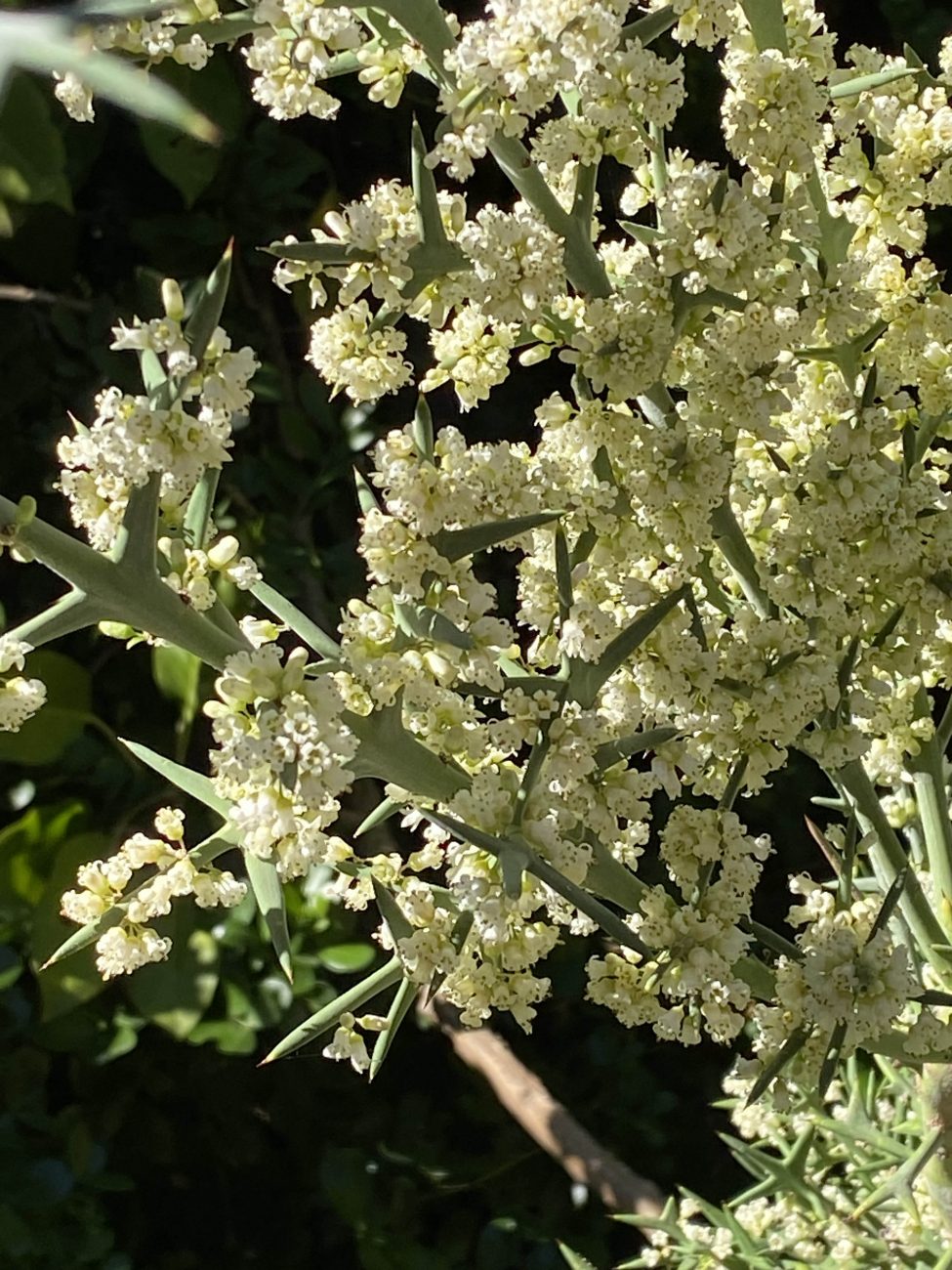
Colletia hystrix
Aloe plicatilis (Ursula has a national collection of aloes)
Semele androgyna
Saturday
Val Rahmeh
Sir Percy Radcliffe settled here in 1905 with his wife Rahmeh (“compassion” in Arabic). He added buildings to the property and a handsome palm avenue that leads from the entrance to the house.
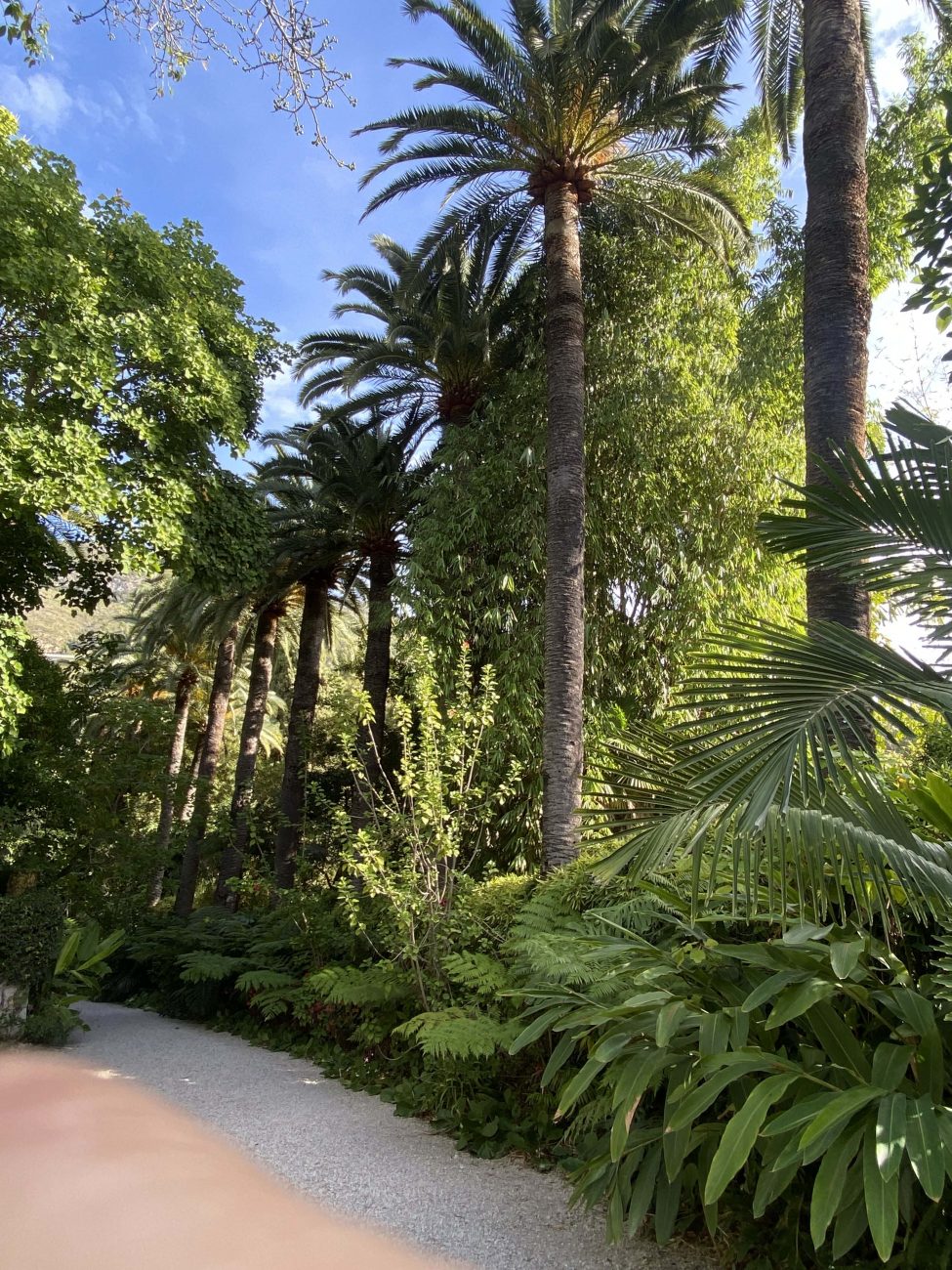
In 1957 Val Rahmeh was bought by Miss Maybud Campbell. She increased the size of the garden, adding the lower gardens – now the home of the pond and its Victoria cruziana. In 1966 the management of the estate passed to the National Museum of Natural History. The museum turned it into a botanical garden and research centre. It now plays an important role in the acclimatisation of exotic plants.
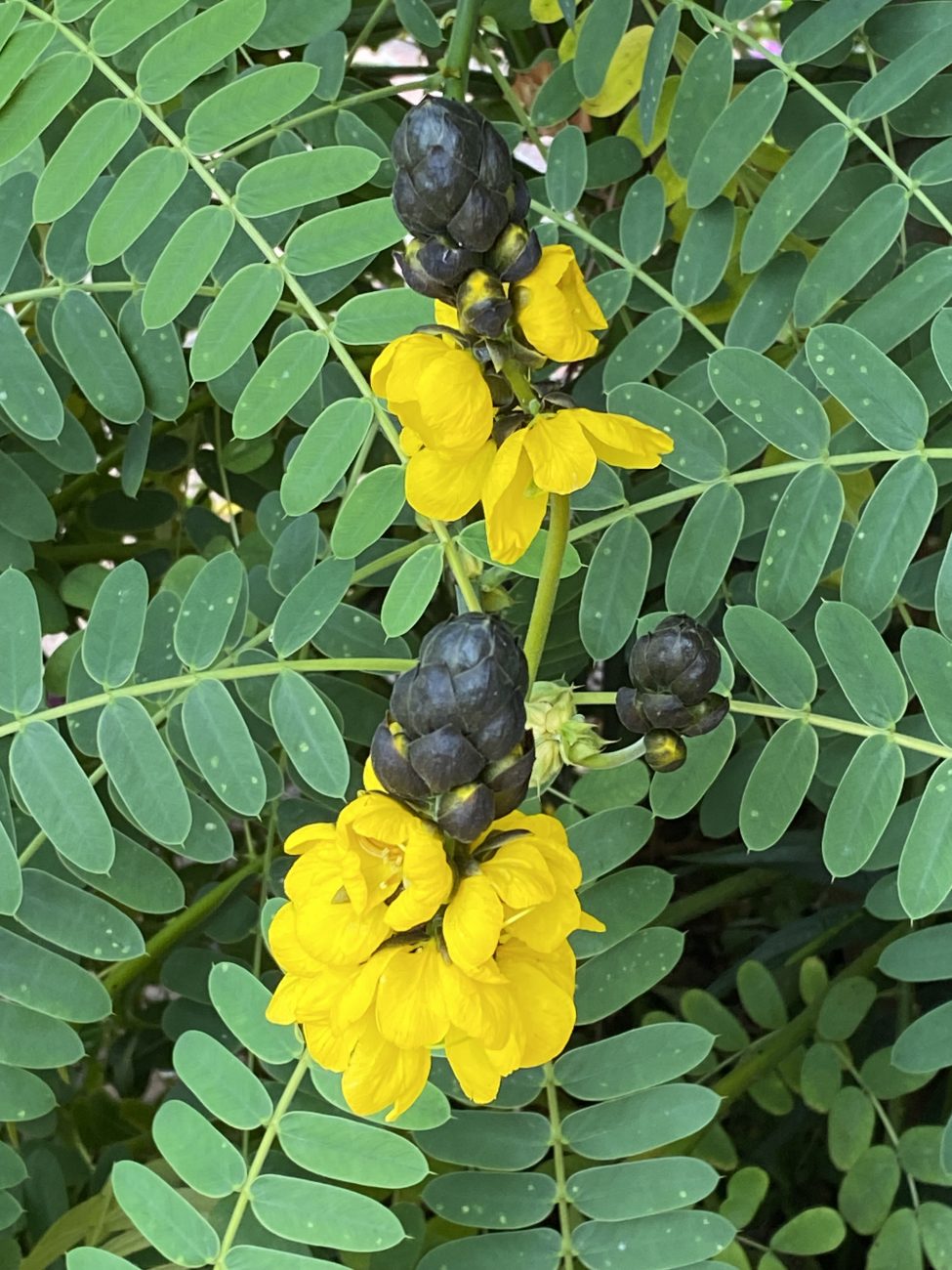
Plants of interest in October
Senna didymobotrya (See image immediately above)
Aristolochia gigantea ( Giant Dutchman’s pipe)
Victoria cruziana
Citrus medica var. ‘Sarcodactylis’ (Buddha’s Hand)
Carica (Papaya)
Les Colombières is within walking distance of the Hotel Napoleon and is owned by the Likierman family who also own the hotel. The property is named after the three dovecotes that used to stand in the garden, two of which were destroyed in a WWII bombing
In 1920, Emile and Caroline Ladan-Bockairy asked their friend, artist, writer, and landscaper Ferdinand Bac to design their villa and gardens. At Les Colombières he created a garden he considered expressed the spirit of the Mediterranean. Old pines and olives already existed but he added Italian cypresses to the mix. The mostly green landscape provided a background around its seven hectares for a series of follies. In the 1920s and 1930s it was considered to be one of the great gardens in the area.
During WWII the property became a military hospital. In 1990 it was saved from a speculative property development by a last-minute listing as an historic monument. By the time Margaret and Michael Likierman bought the property in 1995, it had been reduced to a still considerable three hectares.
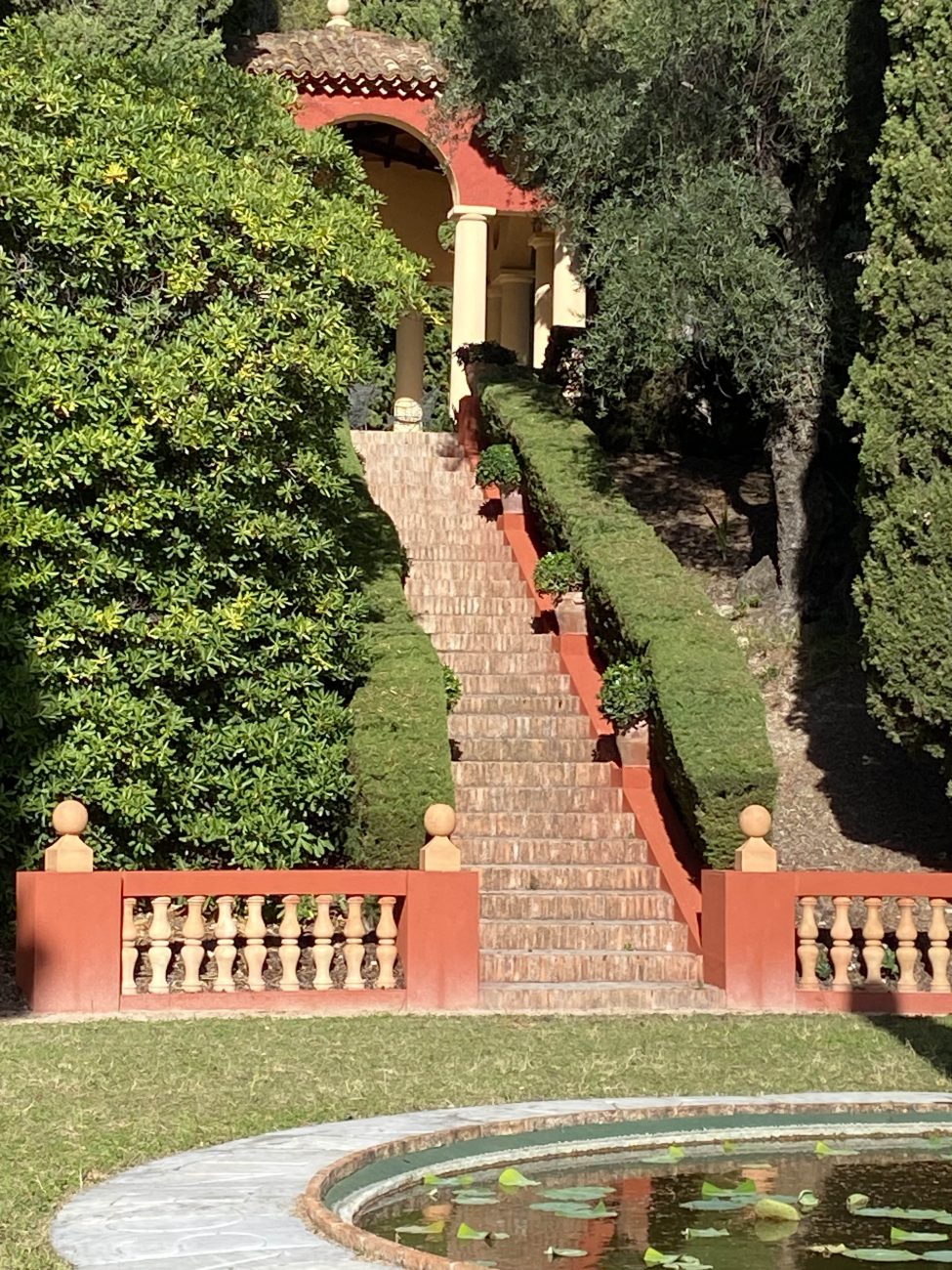
The Likiermans spent five years restoring it with the guidance of Arnaud Maurier and Eric Ossant who also designed the garden at the Hotel Napoleon. Sadly, Margaret died in 2018 but had already replanted land beneath Orpheus’s Cliff Top Walk with many plant species which Ferdinand Bac would not have considered – bringing new life to the garden. Unfortunately, there was a tree down when we visited so the area was closed.
Sunday
Eze Exotic Garden
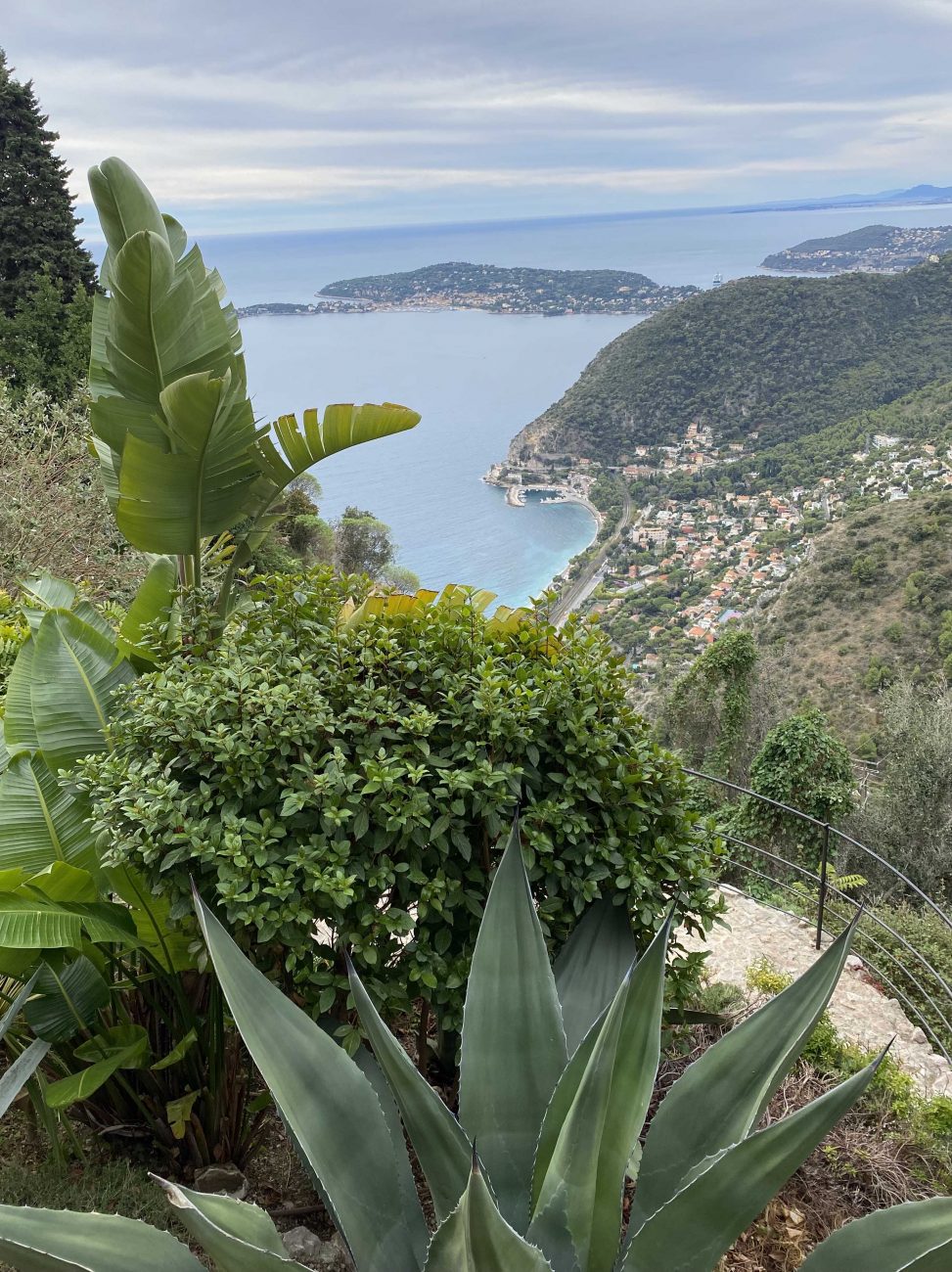
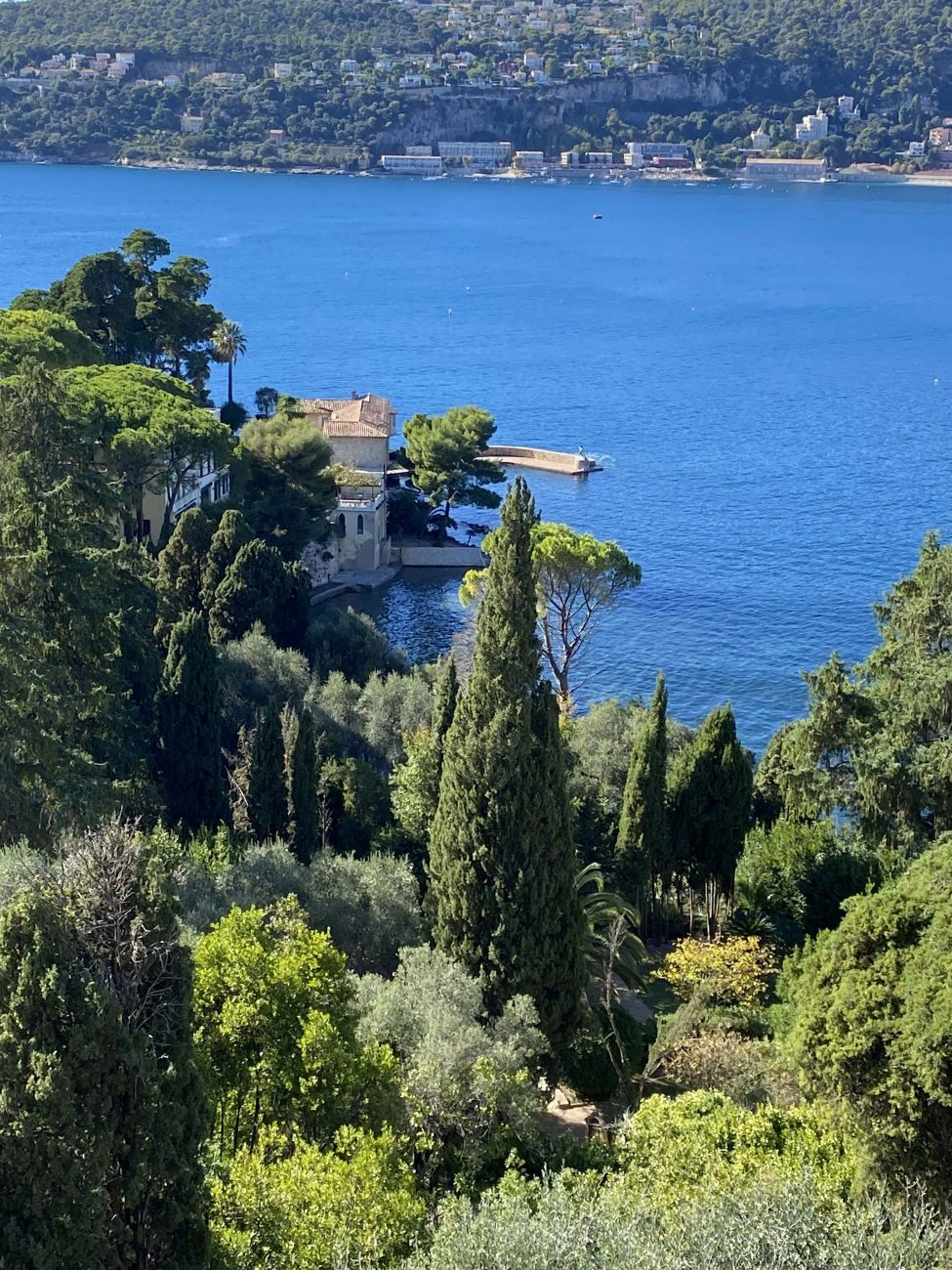
The Exotic Garden sits at the highest point of Eze, a medieval hilltop village with spectacular views over the peninsula of Saint-Jean-Cap-Ferrat.
In 1949, Mayor René Giaton decided to create a garden on the site of an old medieval fortress. All the materials had to be carried up the narrow path. Terraces and rock beds were built, and plants were chosen to suit each aspect – cactuses and succulents on the south side and shade-loving plants on the north side.
Serre de la Madone
This garden, built between 1924 and 1939 by the plantsman and creator of Hidcote Gardens, Major Lawrence Johnston, has seen better days. Not all owners have treated the historic garden with respect. For those who had visited before, it was sad to see so many closely planted trees struggling to reach the light. It has been rescued before, and fortunately, it appears that rescue is on its way again.
In the 1990s it was under threat from property developers. The state intervened, bought it and made it a historic monument. Since 1999 it has been owned by the Conservatoire du Littoral and co-managed by the town of Menton and Association for Preservation of Exceptional Gardens of Menton (ASJEM) since 2022.
Today, French TV personality, Stéphane Bern heads a mission focused on preserving French heritage. In 2025 there were 700 submissions for funding. Only 18 sites were successful. Serre de la Madone was one of them, and the only garden selected. Despite this good news, the garden needs to raise more funds and encourage more voluntary help to help keep on top of maintenance.
Now that its future has been secured, the next steps for Serre de la Madone are to renovate the water features and then restore the planting. Work is already taking place to mitigate the effects of the dramatic weather patterns this part of France is experiencing. Ranks of chestnut trunks are being used to build terraces on the slopes above the house. These should protect the steep banks during the heavy downpours that now seem to follow periods of drought throughout Europe.
Monday
La Citronneraie
La Citronneraie is a 6 km drive above Menton. Its lemon and olive groves and 800 varieties of cactus, tropical and sub-tropical plants are owned by former racing driver, François Mazet.
Lemons reached San Remo in the 12th century via the Silk Route. By the 15th/16th centuries they were growing in Menton and soon became one of Menton’s biggest sources of wealth. Entire families were dependent upon them.
In 1934 the fame of the area’s citrus was so great that the first Fête de Citron drew visitors from all over the world. But after WWII lemon growing almost disappeared apart from the groves of a few key families, La Citronneraie being one of them.
More recently, François Mazet was one of a group of growers pushing to reestablish the Fête de Citron and citrus growing in general. Today, the fête has grown to such an extent that 180 tons of lemons are needed to create its display. It would be impossible to grow that number locally so the lemons for the occasion are imported.
The Menton lemon is quite distinct. It is low in acidity and high in essential oils. It has a thick and textured skin, a round base, and an excellent flavour. Unlike the lemons we buy in supermarkets, the lemons here are never picked until an order is received. This ensures they retain their full flavour.
Unfortunately, the very hot summers France experiences now are causing problems. Lemons do not like strong sun on their bark. They need the high humidity that prevails around Menton. They also need sun – but not too much of it. Growers are experimenting with planting lemons closer together and pruning olives differently to create a canopy.
Ephrussi de Rothschild
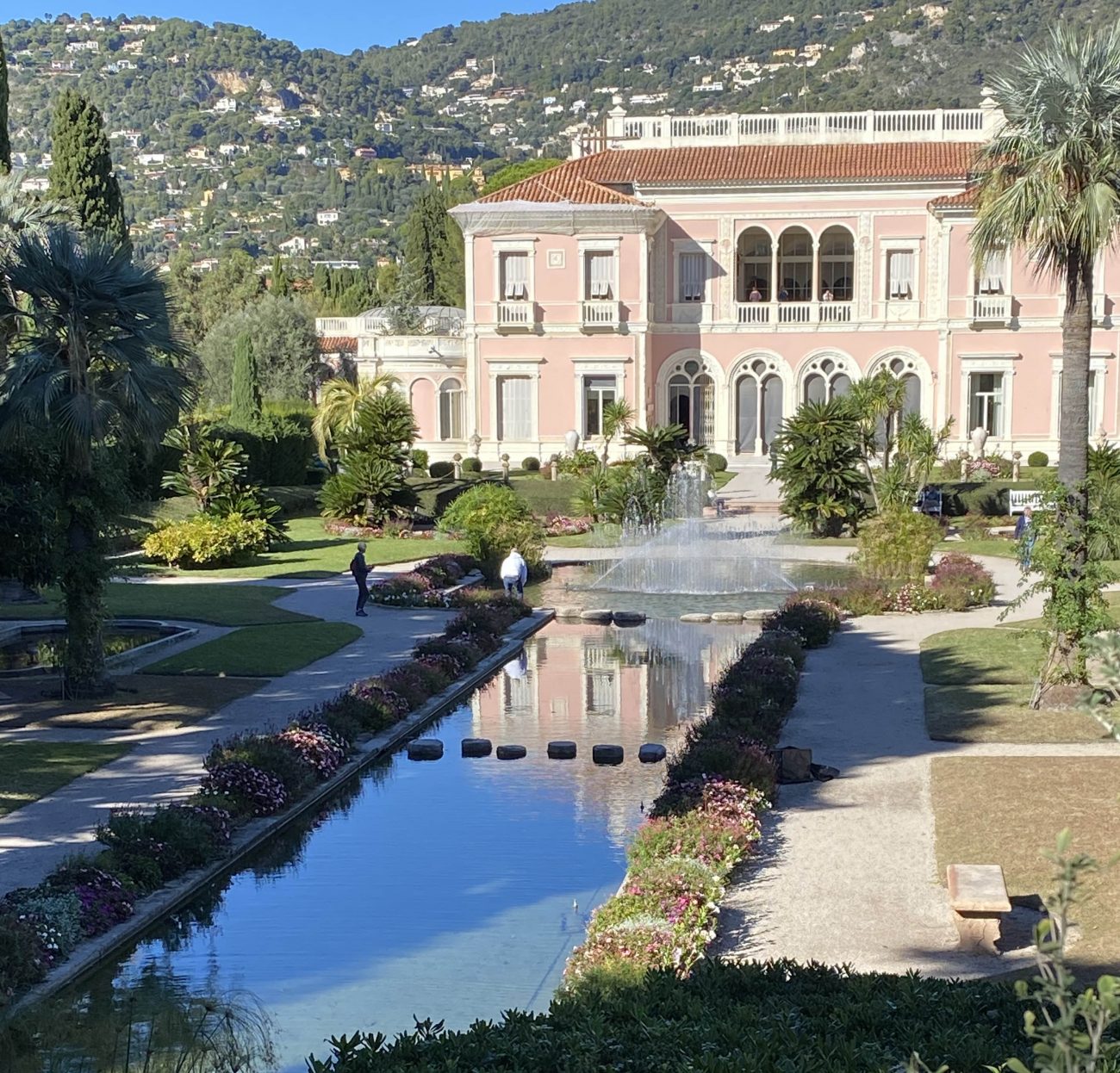
In 1905, Béatrice de Rothschild inherited her father’s fortune and created a winter residence on 17 acres of land on Cap Ferrat. Louis Marchand was responsible for designing the nine themed gardens that surround it.
In the year before her death in 1934, Béatrice bequeathed the villa and its art collections to the Académie des Beaux-Arts. Cap Ferrat was abandoned during WWII. Louis Marchand returned after the war and re-started work. One of the most troubling times was the harsh winter of 1984 when the estate lost many trees and the Mexican garden. Fortunately, neighbours had a collection of cacti and rare plants and contributed to the restoration of what is now called the exotic garden. In 2023 the Académie des Beaux-Arts took over management.
Tuesday
Domaine Saint Jacques du Couloubrier
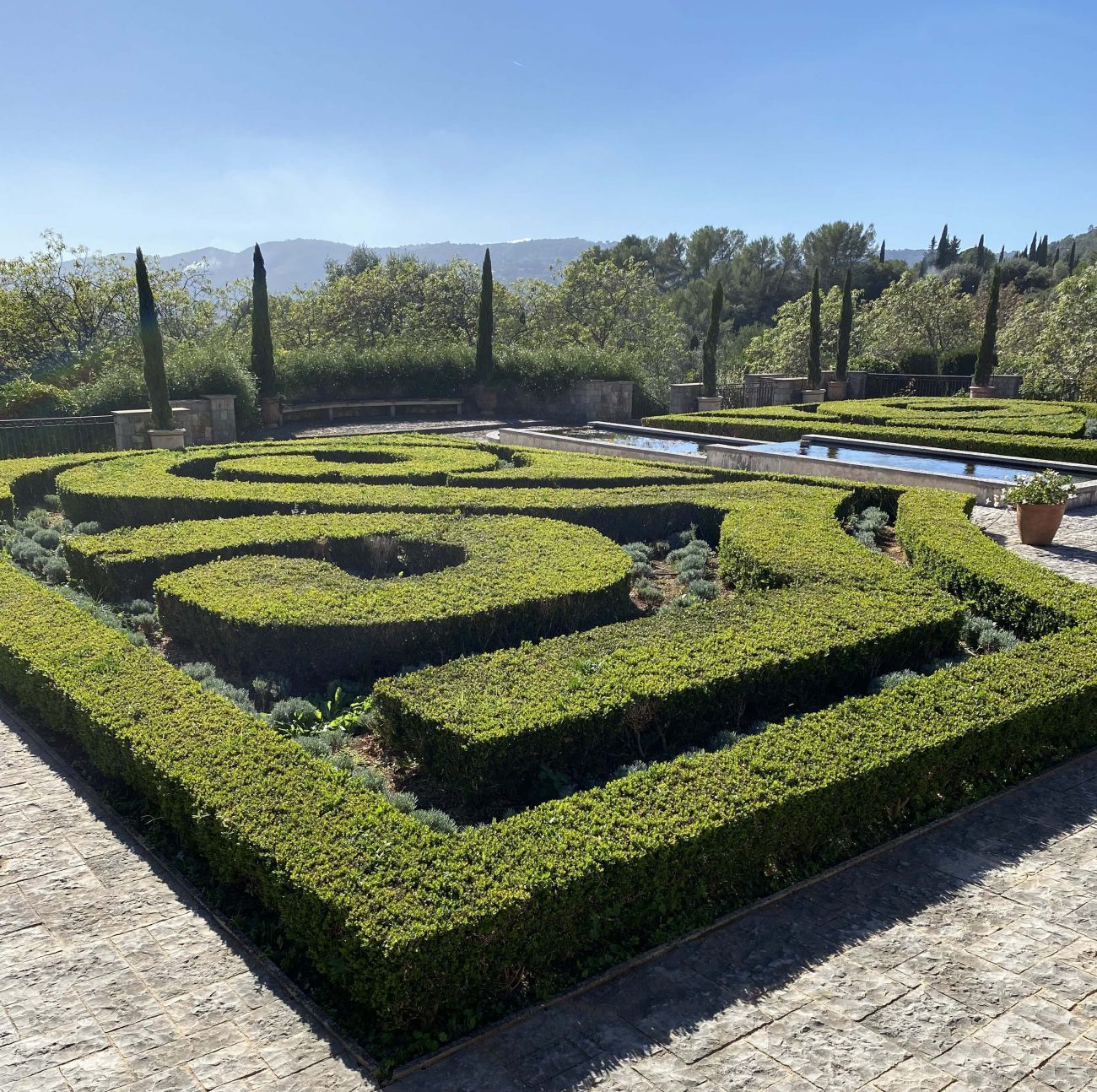
This garden has its origins in the 19th century perfume trade. Between 1929 and 1940 it was owned by Jean Provost, a press magnate and the owner of Paris Match. He bought the estate as a place to entertain celebrities appearing at the Cannes Festival and to interview them in preparation for future issues of the magazine. He employed Russell Page to create an extraordinary garden. This glamorous time was followed by a long period of neglect which ended in the early 2000s when the current owners began the property’s restoration.
When the current owners arrived, the lower section of the garden was completely overgrown. Underneath they discovered a path and a staircase which appeared to belong to the late 19th century. They believe it was probably a vegetable garden. They have reinvented it as a garden for salvias.
Nearby is the area of Nabonnand roses. This is an old French rose that is being grown again in France, not entirely successfully but here, the collection is doing well. Head Gardener Pierre Jeanjean believes that is because they were originally from this region and therefore are happy with the conditions. The jasmine growing through them was still in flower during our visit. It was introduced partly to acknowledge the property’s 19th century history, but also to add to the year-round interest in this part of the garden.
A little further on is a rose garden. The roses here are planted in sections – organised and labelled according to their original French grower. The exception is one section of planting dedicated to David Austin. The roses aren’t planted in isolation as they find that including other plants helps with weed suppression.
Domaine Saint Jacques du Couloubrier is part of a group of gardens chosen by an ecological research team for study. All the gardens are inspected regularly. After the latest inspection, it ranks first in France on all counts. It has developed its composting and mulching strategy to such a degree that it is no longer necessary to bring in anything from outside. Obviously, this will help to minimise disease.
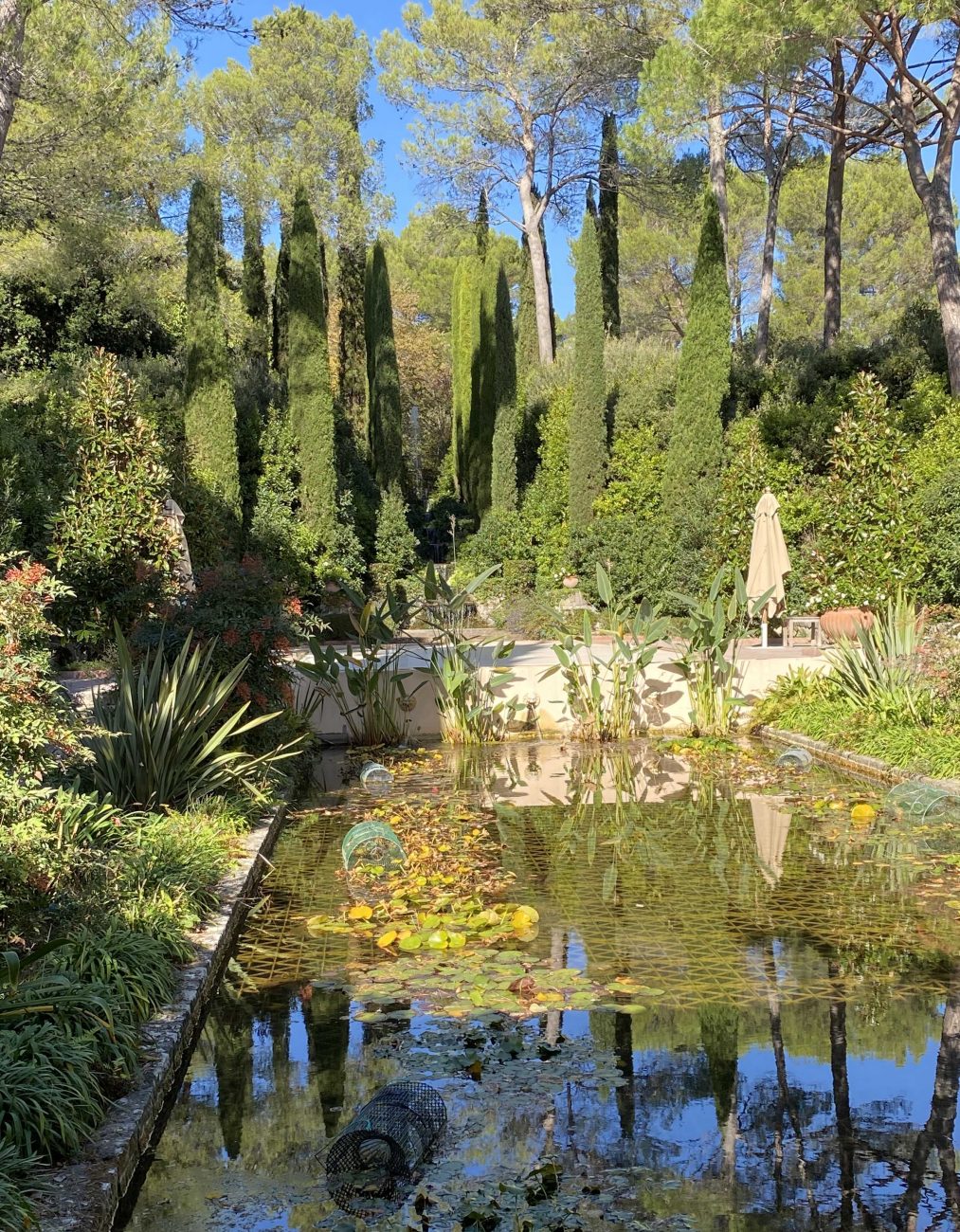
Several Russell Page features remain, notably the pool, one of the best of Russell Page’s creations. Designed to be admired sitting down, it is only when standing that the swimming pool section is visible.
La Mouissone
We were lucky be invited to visit La Mouissone, on the outskirts of Grasse, the garden of MPG member Maggie Lockett. The Locketts bought La Mouissone in 1988 and have developed it gradually since then. When they arrived, the early 18th century house was surrounded by an olive grove. The garden has grown but the olives remain and are productive.
It wasn’t a surprise to find that wild boar are causing problems here too. Recently they’ve destroyed climbing roses and a grass terrace.
The visit was a relaxed and peaceful end to a busy and very well-orchestrated week.
Note: A talk about the Hanbury Gardens at La Mortola was given for MPG in 2023.